

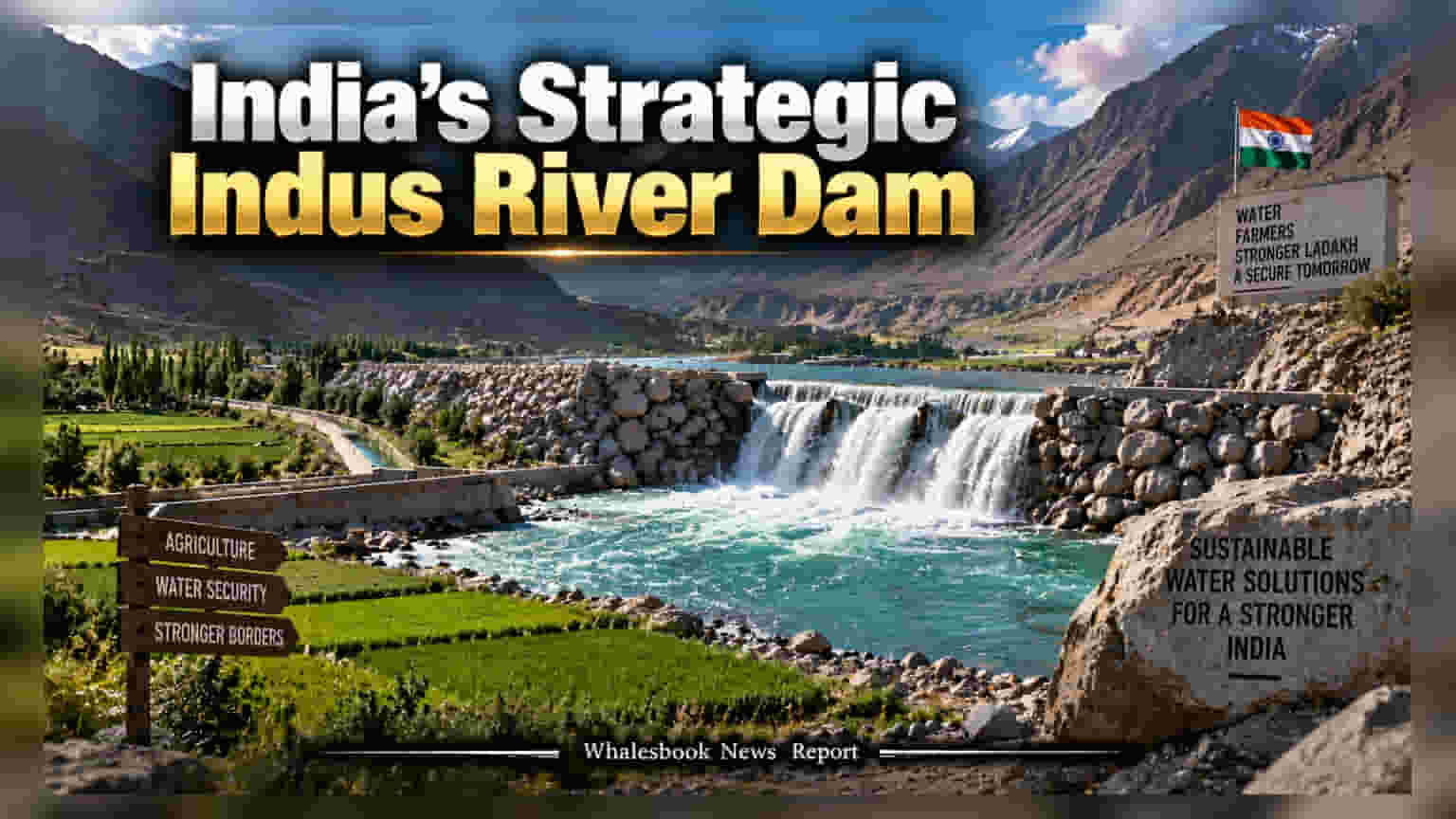
India has successfully built its first eco-friendly rock check dam in Upshi, Ladakh, boosting local irrigation. Following this, the administration has proposed a ₹56 crore plan for 36 additional dams to strengthen water security. These projects are now awaiting approval from the Union Ministry of Jal Shakti.
India has successfully operationalized its first rock-fill check dam on the Indus River at Upshi, Ladakh. This pilot project, which uses interlocked riverbed boulders rather than traditional concrete, has already begun delivering practical benefits to local agriculture. By raising water levels by approximately 10 feet, the structure creates a pondage area that helps fill the Igoo-Phey irrigation canal, ensuring better water access for farmers during the critical spring sowing season.
The project is a key component of the broader 'Sindhu Jal Samriddhi Abhiyan.' By using about 180 metric tonnes of local rocks, the builders avoided the high costs and logistical difficulties of transporting cement to such high-altitude, difficult terrain. This approach has provided a cost-effective solution to the long-standing problem of river water flowing too deep in the gorge to be easily pumped for farm use.
Building on this success, the Ladakh administration has submitted a formal proposal for a larger network of 36 check dams across the region. The plan includes seven structures in Leh and 29 in the Kargil district. The estimated capital requirement for this expansion is ₹56 crore. This proposal is currently under review by the Union Ministry of Jal Shakti. Investors and stakeholders in regional development are tracking this because the project's timeline depends on securing federal funding approval under government schemes like the Pradhan Mantri Krishi Sinchayee Yojana.
Beyond the immediate agricultural impact, these projects carry strategic importance. The development of water infrastructure on the Indus River is being watched closely due to its role in India's broader water management strategy and its relationship with the Indus Waters Treaty. By actively capturing and directing the river's flow for local use, the infrastructure demonstrates a push to maximize utility within India's borders.
While the project offers clear benefits, there are notable risks to monitor. The long-term durability of rock-fill, cement-free structures against the harsh weather and seasonal surges of high-altitude rivers is a technical challenge. Furthermore, the geopolitical sensitivity of construction on the Indus River means that diplomatic considerations remain a factor in regional infrastructure development. The key next step for the project will be the decision from the Union Ministry of Jal Shakti regarding the funding and approval of the proposed 36-dam network.