

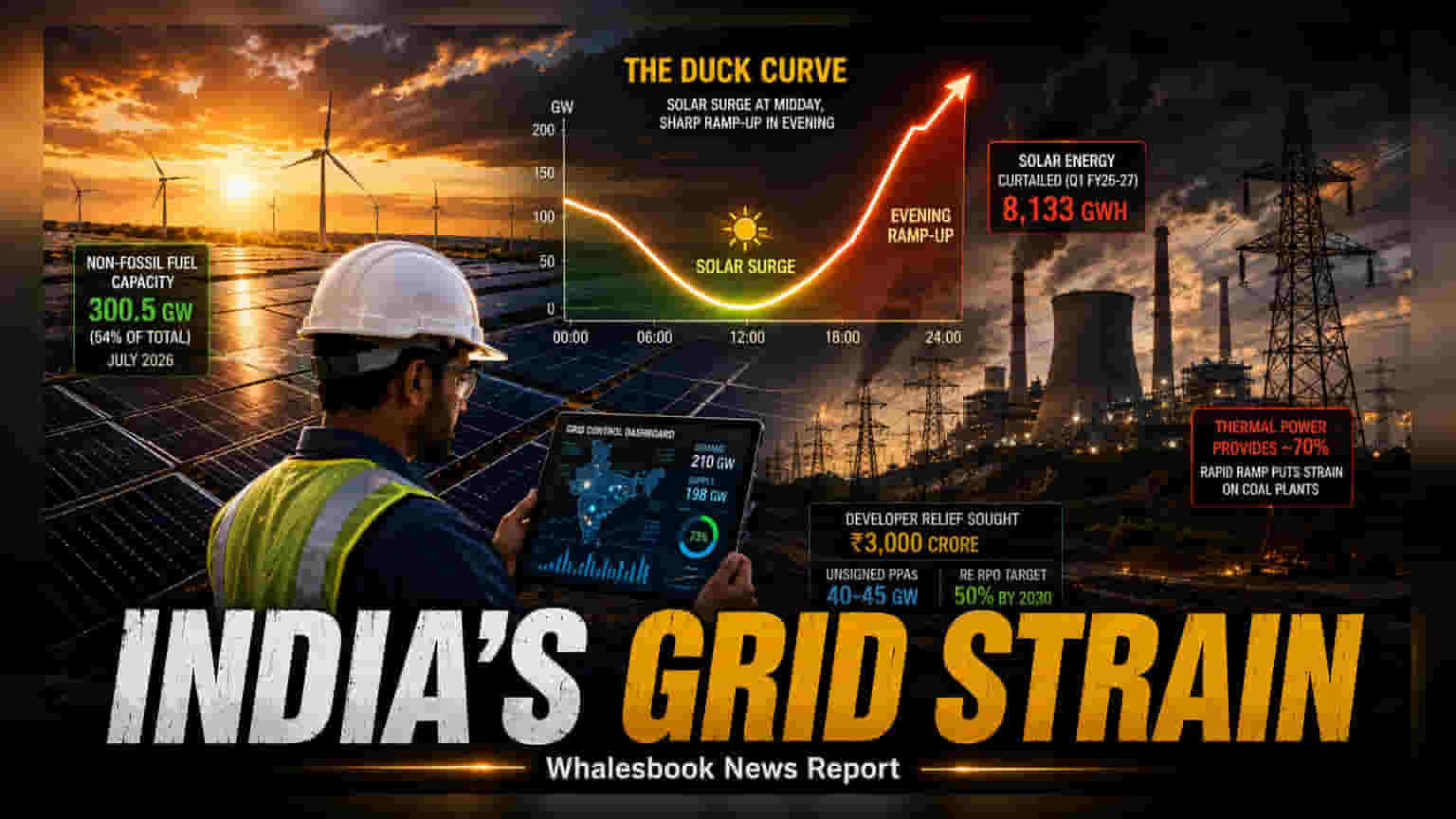
India's renewable energy capacity has crossed 300 GW, yet transmission constraints are leading to significant energy curtailment. Investors are watching for the impact on project revenues, as developers seek ₹3,000 crore in relief and bidding activity slows amidst grid instability and the 'duck curve' effect.
India’s power sector is currently navigating a significant paradox. While the nation’s non-fossil fuel capacity reached a milestone of 300.5 GW by July 2026—exceeding 54% of total installed capacity—the grid is struggling to handle this rapid influx. The infrastructure gap has become a primary bottleneck, leading to instances where renewable power cannot be fully transmitted to consumers. This has created a challenging environment for energy developers and power distributors alike.
Grid Constraints and Financial Pressure
The most immediate issue is energy curtailment, where power produced by solar and wind farms is not accepted by the grid due to limited transmission capacity. Industry data shows that in the first quarter of fiscal year 2026-27, approximately 8,133 GWh of solar energy was curtailed. Projects operating under Temporary General Network Access (T-GNA) have been particularly affected, with some reporting that 30% to 50% of their capacity is being restricted during peak hours. This has direct financial consequences, as renewable energy developers are facing lower-than-expected revenues, leading them to seek a ₹3,000 crore relief package from the central government.
The 'Duck Curve' and Systemic Strain
The fundamental challenge is often described as the 'duck curve.' During midday, solar power production is at its peak, often creating a surplus that the grid struggles to absorb. Conversely, as solar generation drops in the evening, demand for electricity surges, forcing thermal power plants to ramp up rapidly to prevent outages. This fluctuation puts immense pressure on coal-based plants, which still provide about 70% of India's generation. Operating these plants at low technical loads during the day and pushing them to maximum capacity in the evening increases fuel costs and leads to wear and tear, reducing overall operational efficiency.
Impact on Future Bidding and Investment
This grid volatility is impacting market sentiment. Renewable energy project bidding, which saw significant activity in previous years, has slowed down, with only 4.7 GW awarded through August 10, 2026. Developers and investors are becoming more cautious, focusing on projects that can guarantee reliability. There is a noticeable market shift toward Firm and Dispatchable Renewable Energy (FDRE) and hybrid projects that combine wind, solar, and battery storage. This suggests that the next phase of sector growth may be less about sheer capacity addition and more about integrating energy storage solutions like Battery Energy Storage Systems (BESS) and pumped hydro.
What Investors Should Monitor
For investors and market participants, the focus is shifting toward the pace of transmission infrastructure development and government policy on energy storage. The ability of the grid to stabilize these fluctuations will determine the long-term viability of renewable projects. Key monitorables include the approval and implementation of the requested financial relief for developers, the status of the estimated 40-45 GW of unsigned Power Purchase Agreements (PPAs), and the success of upcoming bids that prioritize dispatchable power over raw capacity.