
Government Moves to Preempt Economic Shocks
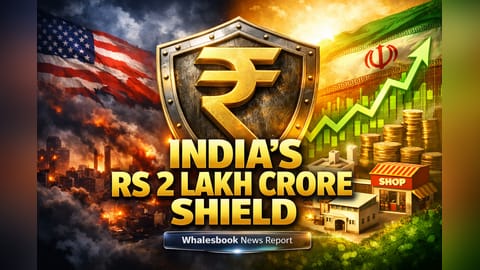
The government is rolling out a significant credit guarantee scheme as a proactive step to address economic risks heightened by rising geopolitical tensions. This initiative draws inspiration from the successful COVID-era Emergency Credit Line Guarantee Scheme (ECLGS). However, it targets shocks stemming from supply chain disruptions and fluctuating commodity prices, rather than the demand collapse seen during the pandemic. The plan, potentially valued at ₹2.5 lakh crore, signals a strong effort to provide liquidity and boost confidence in industries most vulnerable to the fallout from the Iran conflict.
Shielding Businesses from Conflict Fallout
The credit scheme, estimated between ₹2 lakh crore and ₹2.5 lakh crore, is a direct response to the economic impact of the conflict in West Asia. It aims to help businesses cope with higher input and logistics costs, shipping route disruptions, and rising insurance premiums. The government's strategy is to act before problems become severe, preventing cash shortages and stabilizing key economic sectors, especially Micro, Small, and Medium Enterprises (MSMEs) that are hit hard by these issues. The plan is similar to the COVID-19 pandemic's ECLGS, which offered government-guaranteed, collateral-free loans. That scheme is credited with saving an estimated 13.5 lakh MSME units and 1.5 crore jobs. However, the current challenge is different: it's about rising costs and supply issues, not a demand shock.
ECLGS Model and New Challenges
The Emergency Credit Line Guarantee Scheme (ECLGS) was crucial during the pandemic, supporting over 95% of the 117.87 lakh businesses, with most being MSMEs. Reports indicated that ECLGS loans helped MSMEs improve their financial health, showing fewer non-performing assets (NPAs) among borrowers who used the scheme. An SBI Research report estimated that ECLGS saved approximately ₹1.8 lakh crore in MSME loan accounts from becoming NPAs. The current situation differs, as the conflict raises commodity and logistics costs, potentially leading to stagflationary pressures. While ECLGS aimed to cover lost revenue during the pandemic, the new scheme needs to tackle rising operational costs and supply chain uncertainty. The government is also using other measures, like cutting customs duties on petrochemicals and controlling fuel prices. A specific scheme called RELIEF, with an outlay of ₹497 crore, already targets exporters facing higher freight and insurance costs due to Gulf disruptions.
Risks and Economic Projections
While the government's goal is positive, questions remain about how well a support model designed for the pandemic can work against current geopolitical supply shocks. The conflict's impact goes beyond immediate cash flow issues to include broader inflation and potential stagflation. Analysts predict India's economic growth could slow by around 1 percentage point, with consumer price inflation rising by approximately 1.5 percentage points if the conflict lasts through FY27. For example, Bank of America has cut India's FY27 GDP growth forecast to 6.5% and raised inflation projections to 5.2%, citing a revised crude oil price baseline of $92.50 per barrel. ICRA expects India's GDP growth to moderate to 6.5% in FY27, with the current account deficit widening to 1.7% of GDP. India is highly vulnerable due to its heavy reliance on energy imports, sourcing nearly 85% of its crude oil needs from abroad. Disruptions to the Strait of Hormuz, a key route for Gulf oil, worsen these risks by pushing crude prices up and increasing the trade deficit. Additionally, the uncertainty affects millions of Indian workers in Gulf countries who send home remittances, estimated at $50 billion annually, impacting a vital source of foreign currency. The credit scheme's success will depend on its capacity to handle these complex economic issues, which are different from the pandemic's direct demand shock.
Economic Forecasts and Policy Balancing
Analysts predict varying economic growth rates for India in FY27, with a general expectation of moderation due to geopolitical risks and increased energy prices. Goldman Sachs forecasts 6.9% growth for 2026, while ICRA projects 6.5%. The Reserve Bank of India faces the challenge of balancing inflation control with economic growth support, leading some analysts to anticipate a firm stance on interest rates, possibly including hikes. The new credit scheme is expected to play a key role in reducing these projected economic slowdowns and supporting the strength of Indian businesses, especially MSMEs. The government's overall strategy also includes measures like cutting customs duties, controlling fuel prices, and offering export incentives, showing a wide-ranging effort to manage the current difficulties. How effective these steps will be will be closely watched as the global geopolitical situation develops.