

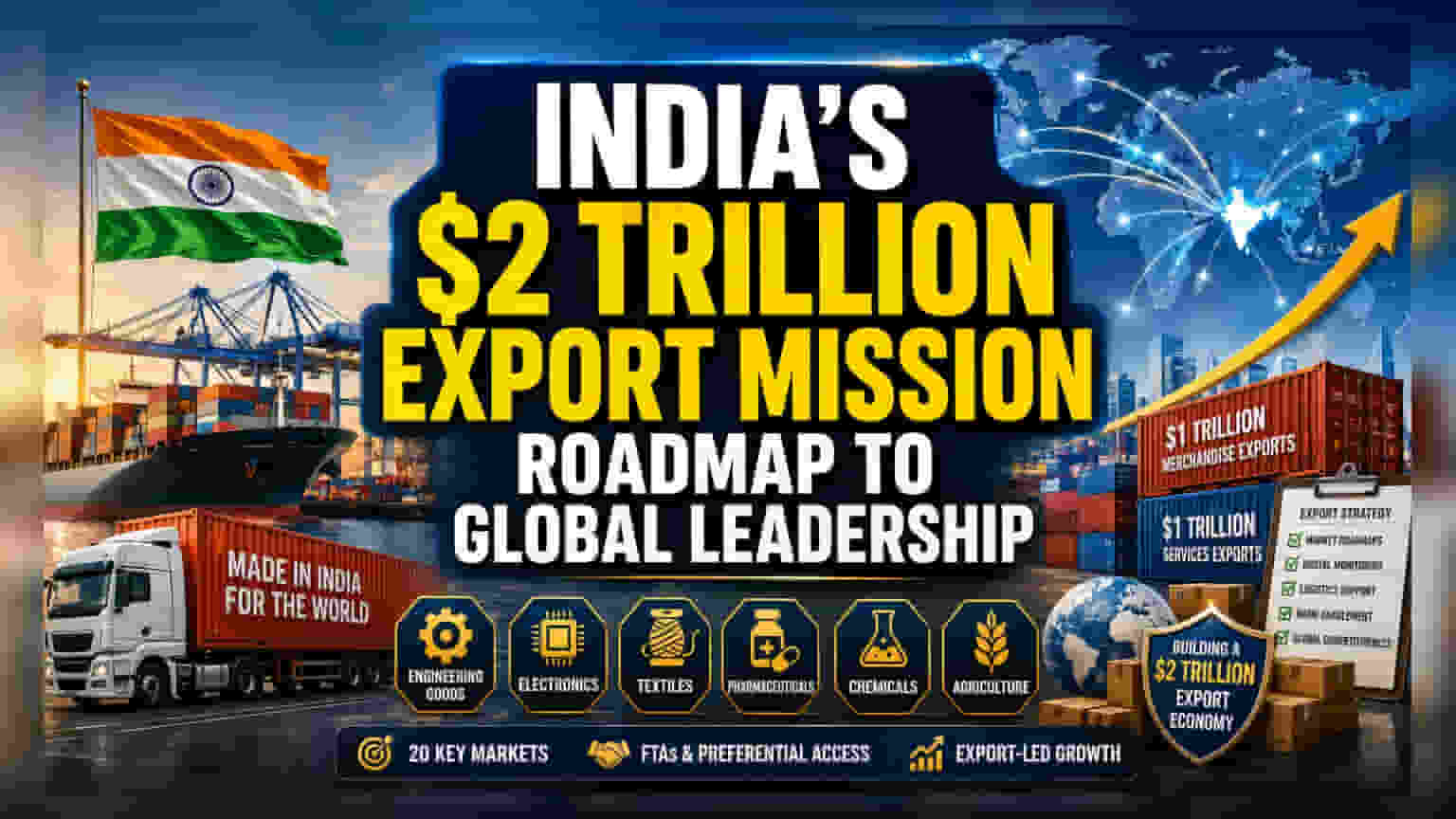
The Commerce Department is crafting targeted export roadmaps for 20 countries and six major sectors to reach a $2 trillion total export goal by 2030-31. This initiative aims to balance $1 trillion each in merchandise and services exports by addressing tariff barriers and logistics hurdles.
What Happened
The Ministry of Commerce and Industry is accelerating its national export strategy to achieve a combined target of $2 trillion in outbound shipments by the fiscal year 2030-31. This goal is split evenly, aiming for $1 trillion in merchandise exports and $1 trillion in services exports. To operationalize this, the department is developing market-specific roadmaps for 20 key nations, including the United States, United Kingdom, France, Germany, Japan, and the UAE. The plan focuses on high-growth industries to ensure India can compete effectively in global markets.
The Focus Sectors and Markets
The government’s export-led growth strategy centers on six critical sectors: engineering goods, electronics, textiles, pharmaceuticals, chemicals, and agriculture. These industries have been identified as having the scale and competitive advantage to capture global market share. The 20 targeted countries represent the largest trade partners and priority markets where India aims to leverage Free Trade Agreements (FTAs) to gain preferential access. Officials have initiated a structured Export Monitoring Framework, which includes a digital platform to track real-time progress and address bottlenecks through an automated escalation mechanism.
The Logistics and Tariff Hurdle
For investors and businesses, the primary challenges to this $2 trillion goal remain logistics and international trade policies. Despite recent efforts to lower domestic logistics costs—which account for a significant portion of product pricing—Indian exporters still face higher transit expenses compared to global benchmarks. Rising freight rates and shipping delays, particularly due to geopolitical uncertainties in trade corridors like West Asia, add pressure to profit margins.
Furthermore, protectionist measures, such as the European Union’s Carbon Border Adjustment Mechanism (CBAM) and varying tariff structures in key markets, pose risks to Indian goods. The government is attempting to mitigate these through specific support programs, such as the RELIEF initiative, designed to cushion the impact of higher freight and insurance costs. However, the success of this mission will depend on how effectively exporters can navigate these non-tariff barriers and optimize their supply chains to remain price-competitive.
What Investors Should Track
Investors monitoring sectors like engineering, electronics, and pharma should look beyond just volume growth. The ability of companies to manage international compliance standards—such as sustainability requirements—and their capacity to utilize FTA benefits will be critical. The effectiveness of the government's Export Promotion Mission in streamlining credit access and reducing operational delays for MSMEs will also be a major monitorable. As the ministry rolls out these market-specific strategies, company management commentary on export margin protection, hedging strategies against currency volatility, and progress in expanding into the identified 20 target markets will provide a clearer picture of long-term growth potential.