

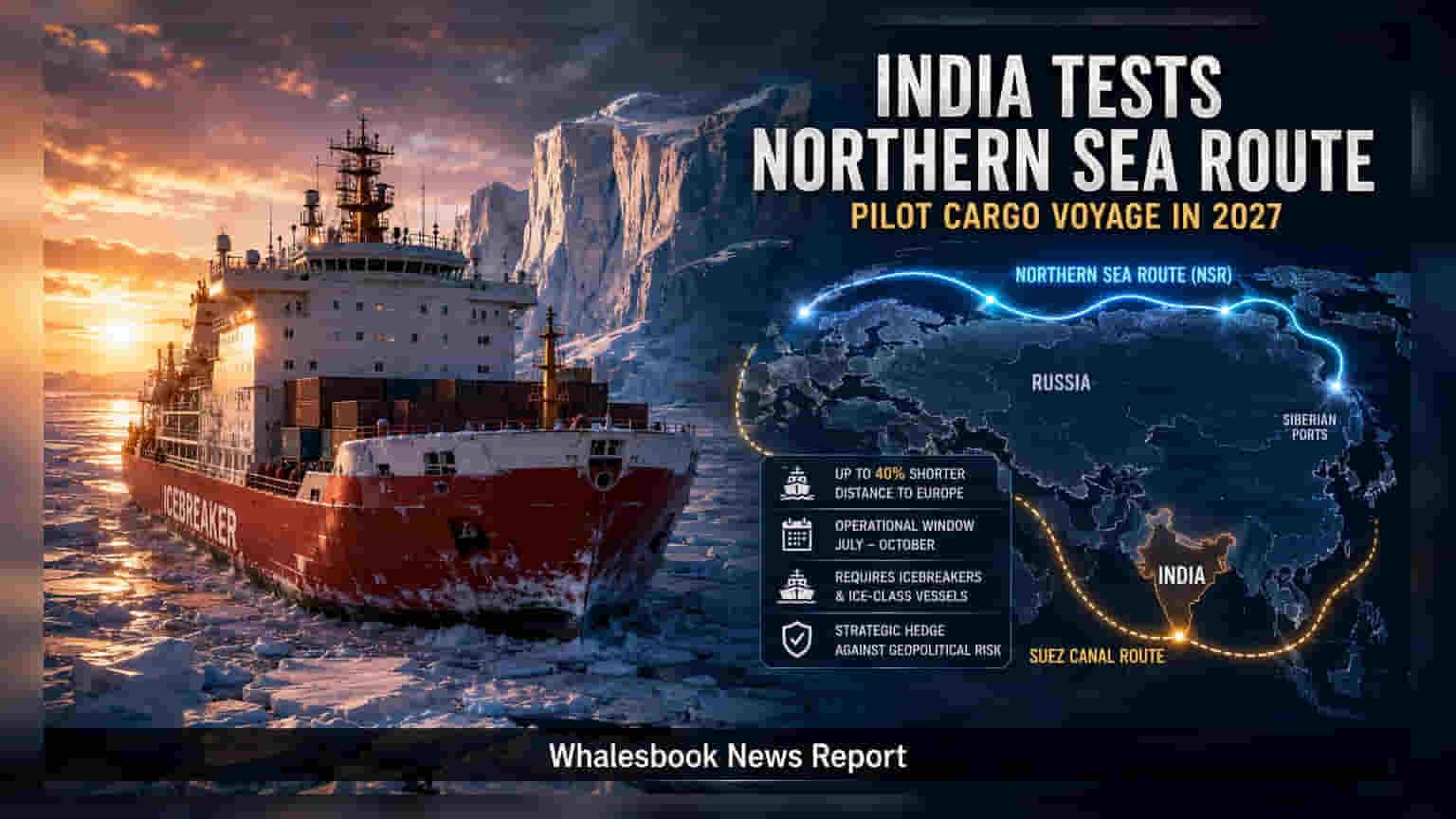
India aims to conduct its first cargo voyage via Russia's Northern Sea Route in 2027 to diversify supply chains against global maritime disruptions. While the route offers shorter travel times, it serves as a long-term strategic hedge rather than a total replacement for the Suez Canal due to high operating costs and seasonal ice limitations.
India is preparing to test the Northern Sea Route (NSR) with a pilot cargo voyage scheduled for 2027. This move is part of a strategic effort to secure alternative trade corridors, helping the country hedge against rising geopolitical instability that has repeatedly choked critical maritime passages like the Suez Canal and the Red Sea.
The Northern Sea Route offers a significant geographical advantage, potentially reducing sailing distances between Asia and northern Europe by up to 40% compared to traditional routes. However, investors and industry watchers should view this as a long-term insurance policy rather than an immediate commercial breakthrough. The corridor is not a year-round transit option; it is generally only open for navigation between July and October due to severe ice conditions.
Operating in the Arctic requires specialized, ice-strengthened vessels and expensive icebreaker support, which significantly increases shipping costs. Furthermore, the lack of developed container-handling infrastructure at Arctic ports means this route cannot currently handle the volume or frequency of traffic seen at the Suez Canal. For the bulk of India’s energy and essential raw material imports, traditional routes remain the standard. The development of this Arctic passage aligns with India’s broader maritime strategy, which includes initiatives like the Chennai-Vladivostok Eastern Maritime Corridor and the International North-South Transport Corridor. These projects aim to create multiple reliable arteries for trade, reducing dependence on any single route that might be vulnerable to global conflicts or regional bottlenecks.
From an investment perspective, this initiative highlights a shift in how India approaches supply chain security. While the immediate financial impact on any single company is minimal, the development is relevant for the long-term planning of logistics, shipping, and energy sectors. The primary challenges for any commercial scaling of this route include not only the extreme environmental conditions but also geopolitical complexities, such as the potential for sanctions that could affect vessel availability and insurance coverage. Investors should monitor how the 2027 pilot voyage performs, specifically looking for updates on the actual cost per cargo unit, the availability of insurance, and the success of securing necessary ice-class shipping capacity.