

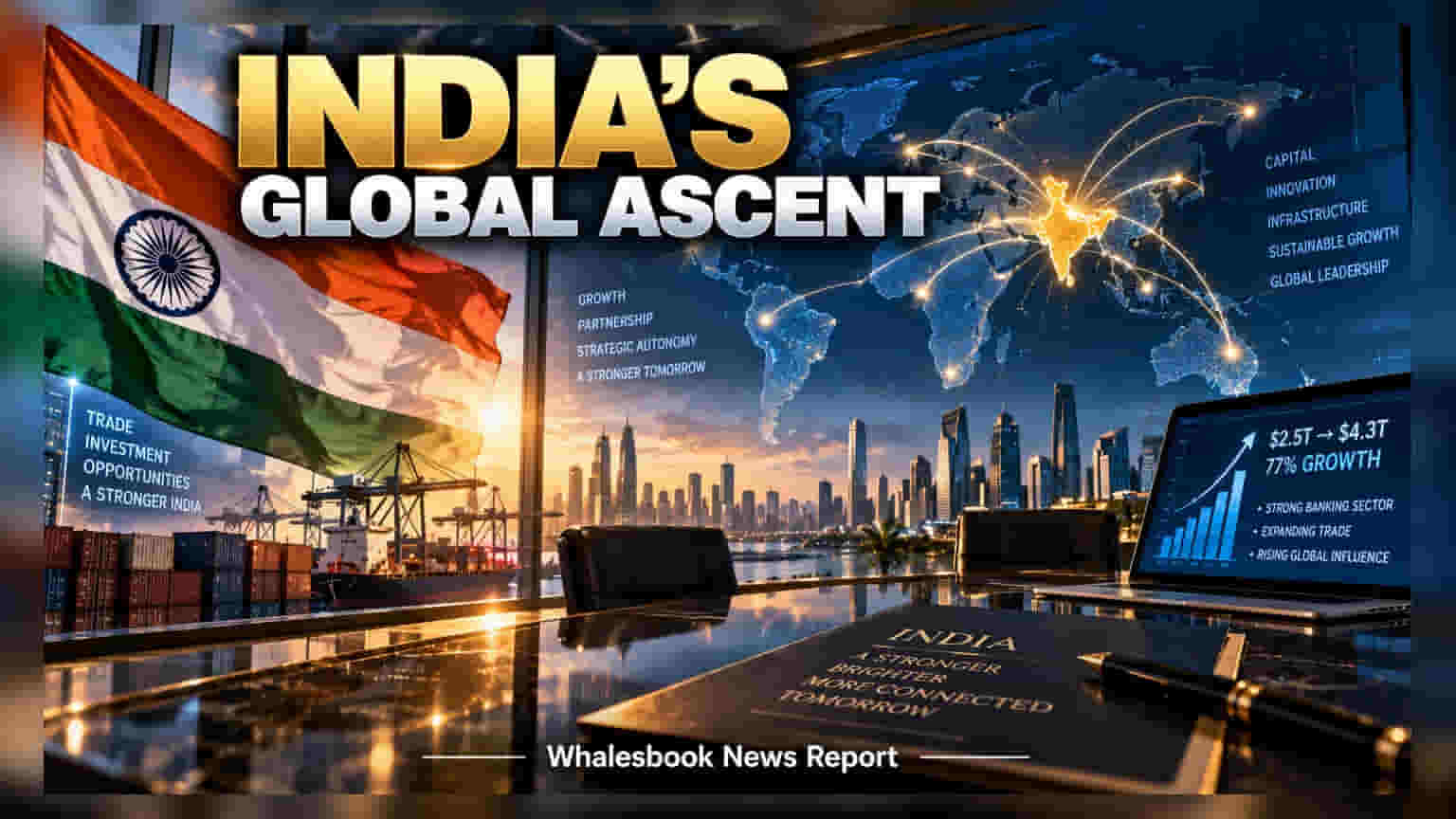
At the 13th SBI Banking & Economics Conclave, the Department of Economic Affairs highlighted India's rise to a $4.3 trillion economy. The government aims to leverage its growing influence in global financial and trade policies. Investors are tracking the impact of new trade agreements, particularly with the European Union, and the ongoing efforts to mobilize domestic household savings.
India is shifting its role in the international economic landscape from a participant to an agenda-setter, according to comments made by Department of Economic Affairs (DEA) Secretary Anuradha Thakur at the 13th State Bank of India Banking & Economics Conclave. This transition is being driven by structural changes in development finance, digital infrastructure, and a broader focus on strategic autonomy.
Economic Expansion and Global Positioning
The domestic growth narrative centers on a rapid rise in economic output, with the government reporting that GDP has scaled from $2.5 trillion to $4.3 trillion in inflation-adjusted terms. This 77% increase places India ahead of several large global economies in terms of growth trajectory. Beyond headline numbers, the government emphasizes its focus on fiscal discipline, which it notes has helped shield the Indian economy from the sovereign debt pressures currently impacting other international markets.
Strengthening Financial and Trade Sectors
The banking sector is a key component of this international profile. Institutions such as the State Bank of India and HDFC Bank have achieved rankings among the top 100 banks globally by asset size, reflecting the increased depth of the domestic financial system. Simultaneously, the agriculture sector remains a significant contributor to export revenue, with production figures for foodgrains reaching 357.73 million tonnes in 2024-25 and agricultural exports totaling $51 billion.
International trade strategy remains a priority for long-term growth. Over the past five years, India has entered into nine free trade agreements (FTAs) involving 38 countries. Investors are currently monitoring the progress of a potential trade agreement with the European Union, which is expected to address tariff barriers on key labor-intensive exports such as textiles and leather. If finalized, this deal could provide a major boost to these export-oriented industries.
Future Challenges and Monitorables
While the macro indicators show progress, the government has identified the mobilization of domestic household savings into the formal financial system as a critical area for improvement. The efficiency with which the economy can convert these savings into productive investment will be a key factor for long-term stability. Furthermore, as India deepens its integration into global trade, the success of these new FTAs in boosting export volumes and improving trade balances will be an important factor for market participants to watch. The ultimate goal is to establish Indian markets as a bedrock of stability, encouraging international counterparts to increase their reliance on domestic financial and economic institutions.