

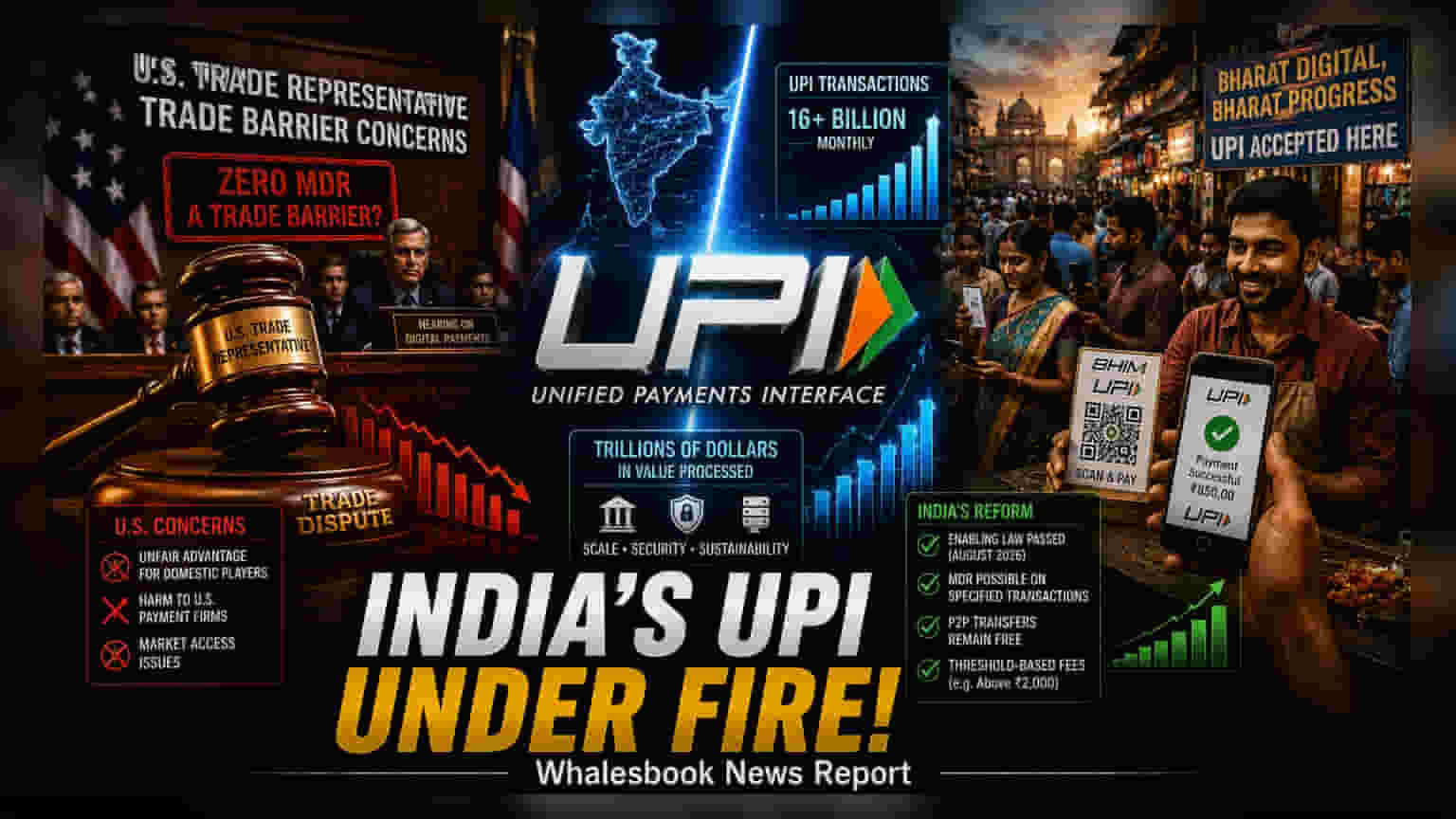
The Taxation and Other Laws (Amendment) Bill, 2026, allows for a potential merchant discount rate (MDR) on select UPI and RuPay transactions. The government has reassured citizens that person-to-person transfers remain free. This legislative change seeks to ensure the long-term financial health of India's digital payment infrastructure, navigating concerns about system sustainability and international trade standards.
India has taken a legislative step to change how its digital payment system handles merchant costs. With the passage of the Taxation and Other Laws (Amendment) Bill, 2026, in August, the government has created an enabling framework that allows banks and payment providers to potentially levy a merchant discount rate, or MDR, on specific UPI and RuPay transactions. This update marks a significant shift for a system that has historically operated with zero fees for both consumers and merchants.
The legislative change has sparked discussions about the balance between domestic policy and international trade concerns. A March 2026 report from the US Trade Representative identified India’s zero-MDR policy as a trade barrier for American payment firms, noting that it places domestic networks at an advantage. However, the Indian Ministry of Finance has officially rejected claims that this reform is a concession to international pressure. Instead, the government describes the move as a necessary step to secure the financial sustainability and cybersecurity of the massive UPI ecosystem, which has grown to handle trillions of dollars in value.
For investors and market participants, the core issue is the cost of maintaining high-volume payment infrastructure. Processing billions of transactions every month requires significant spending on servers, software updates, and security protocols. Without a revenue stream from the merchant side, this burden often falls on payment aggregators and banks, creating a challenge for long-term scalability. The new law provides the government with the flexibility to define specific categories of transactions where a nominal fee could be applied, rather than imposing a blanket charge across the board.
The government has provided clear assurances that this change will not affect ordinary users. Person-to-person transfers, which account for the vast majority of UPI volume, will remain free of charge. Future fees, if implemented, are expected to be threshold-based—potentially targeting only high-value transactions above a specific amount, such as ₹2,000. This approach aims to cover operational costs without discouraging the mass adoption of digital payments among small traders.
Investors should monitor upcoming notifications from the National Payments Corporation of India (NPCI) and the Ministry of Finance. These bodies are expected to determine the final structure, scope, and rates of any future MDR. While the law provides the legal power to levy fees, the actual impact on business margins for fintech companies and the potential reaction from merchants will depend entirely on how these specific thresholds and fee structures are eventually set.