

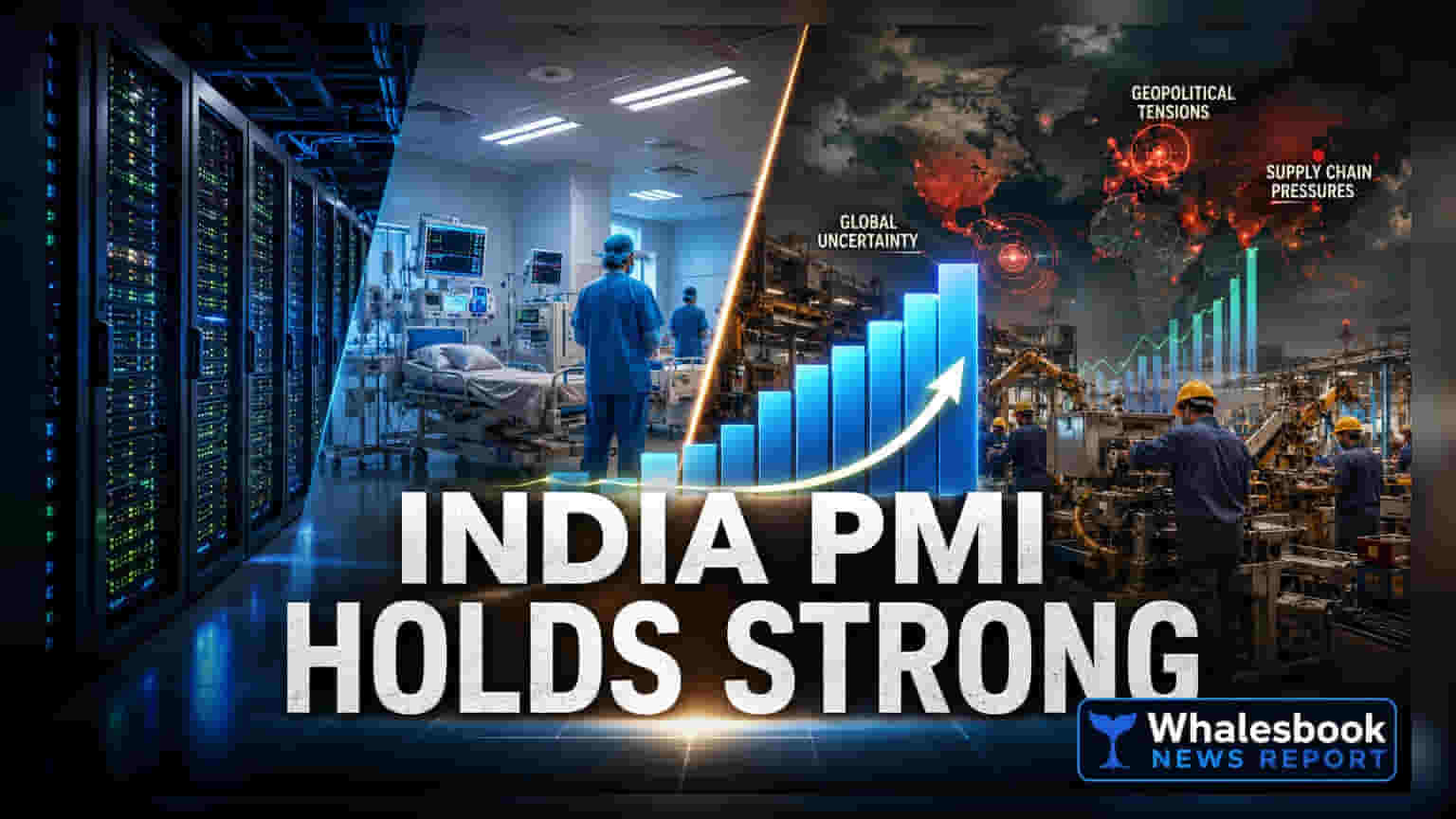
India’s Purchasing Managers' Index (PMI) is projected to stay steady between 57-59 in FY27, according to a recent Brickwork report. While the services sector remains a strong growth engine, manufacturing activity faces headwinds from rising input costs and global geopolitical tensions. Investors should track how these macro trends impact corporate margins and broader economic growth.
What Happened
A new report by Brickwork Ratings suggests that India’s business activity is likely to remain resilient throughout the 2026-27 financial year (FY27). The Purchasing Managers' Index (PMI)—a key indicator used to measure the health of business sectors—is projected to stay in the 57-59 range.
For context, a PMI reading above 50 indicates that business activity is growing, while a reading below 50 suggests a contraction. The report highlights a clear difference between the services and manufacturing sectors. The services sector, especially IT and healthcare, is expected to continue supporting consumption and job growth. Meanwhile, the manufacturing sector is seeing more cautious growth due to external challenges.
Why This Matters For Investors
Investors track PMI data because it acts as an early signal for company performance. When the PMI remains in the expansionary territory (above 50), it suggests that companies are seeing higher orders, better demand, and increased output. This generally bodes well for earnings growth.
However, the divergence between services and manufacturing is important. If the manufacturing sector—which includes industries like autos, metals, and construction materials—continues to face pressure, it could eventually impact profit margins for companies in these fields. Investors often look at this data to gauge whether businesses will be able to pass on higher costs to customers or if profitability will be squeezed.
The Macro Economic Backdrop
This outlook aligns with the Reserve Bank of India’s (RBI) broader economic assessment. The RBI recently adjusted its GDP growth forecast for FY27 to 6.6%, acknowledging that global uncertainties—specifically rising energy costs and tensions in West Asia—are creating hurdles.
While industrial production remains steady, supported by government spending and better capacity utilization in sectors like steel and cement, the economic environment is not without friction. Record export orders have helped offset some of the slower demand within India, but the overall growth path is sensitive to how quickly these global geopolitical issues are resolved.
Challenges To Growth
Manufacturing growth, while resilient, is currently facing several headwinds. The primary concerns noted by industry reports include:
Rising Input Costs: Increases in the price of raw materials and energy are putting pressure on factory-gate costs, which can limit profit margins.
Geopolitical Uncertainty: Tensions in West Asia continue to pose risks to global supply chains and energy prices, which directly impact the cost of doing business.
Demand Sensitivity: While domestic fundamentals remain strong, some sectors are seeing a moderation in sentiment as global trade and demand become less predictable.
What Investors May Read This
For investors, the core takeaway is that while the Indian economy shows strong underlying support through services and government spending, the manufacturing sector is navigating a tougher environment. The resilience of the services sector, particularly in IT and healthcare, provides a buffer for the overall economy. However, shareholders in manufacturing-heavy companies should be mindful of how commodity prices and geopolitical developments might influence quarterly results.
What Investors Should Track
Moving forward, the key monitorables include:
Input Price Trends: Watch company management commentary on raw material costs and their ability to protect margins.
Geopolitical Updates: Any changes in the West Asia conflict situation could significantly impact global energy prices and supply chains.
RBI Policy and Inflation: With the RBI focusing on balancing growth and inflation, any future updates on interest rates will be critical for interest-sensitive sectors like auto and real estate.