

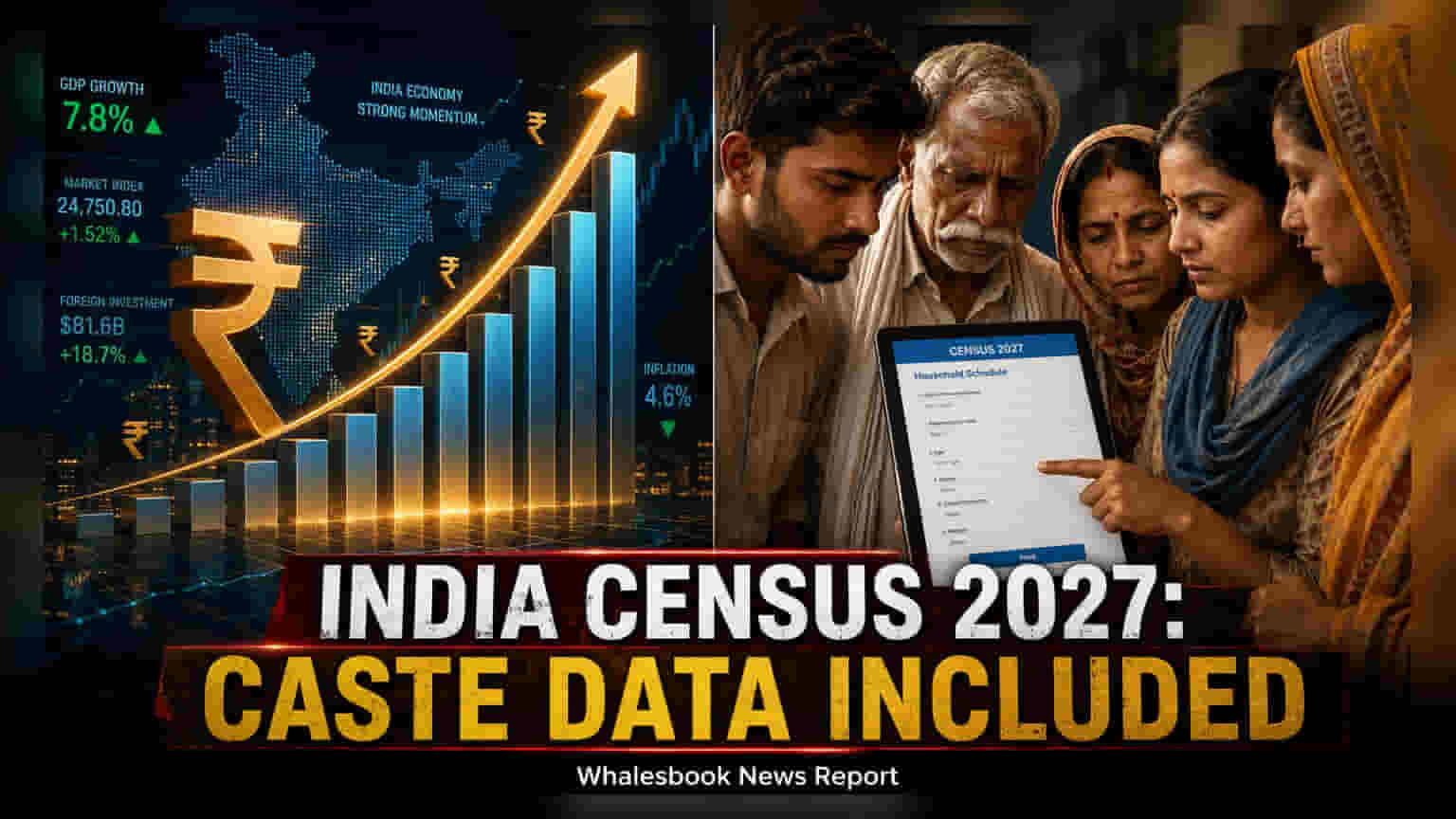
The Indian government has finalized 40 questions for the 2027 Census, including a granular caste inquiry and COVID-19 vaccination data. This marks the first major demographic update since 2011, providing the private sector with crucial data for market sizing, demand forecasting, and long-term planning. The transition to a fully digital, mobile-based census aims to improve data accuracy.
The central government officially notified 40 questions for the upcoming 2027 Census on August 14, 2026. This move sets the stage for the country's first fully digital population enumeration, which will use mobile technology to collect data. The questionnaire is notable for including specific inquiries about caste, including Scheduled Caste (SC) and Scheduled Tribe (ST) status, marking a significant shift in data collection practices. It also includes questions regarding the location of COVID-19 vaccinations.
Economic Significance of Updated Data
For the Indian economy and private sector, this update is a crucial development. Businesses have relied on population estimates based on the 2011 Census for over a decade. The availability of fresh, granular demographic and socio-economic data is expected to help companies in sectors like fast-moving consumer goods, retail, and infrastructure to better understand consumer profiles, identify new markets, and refine their supply chain strategies. Accurate data on population distribution and social categories allows for more precise market penetration and long-term capital allocation.
Digital Roll-out and Schedule
The enumeration process will begin with a pilot phase in snow-bound regions, including Ladakh, Jammu and Kashmir, Himachal Pradesh, and Uttarakhand. Population enumeration for these areas is scheduled from September 1 to September 30, 2026. To facilitate a smoother process, the government has introduced a self-enumeration option for residents in these regions, which will be open from August 17 to August 31, 2026. The move to a digital platform is intended to streamline the collection of information and reduce the time required for data processing compared to traditional paper-based methods.
Implementation and Sensitivity
While the digital format offers potential for improved accuracy and faster results, the large-scale exercise faces operational challenges. The transition to a mobile-based system across diverse geographies requires robust digital infrastructure and training for field enumerators. Additionally, the inclusion of caste-based data carries significant social and political sensitivity. Investors and market analysts will likely monitor the execution of this census to ensure that the collection process remains consistent and that the final data sets are reliable for planning purposes. The main nationwide population enumeration is scheduled to follow in 2027, which will provide the comprehensive dataset required for broader economic planning.