 Whalesbook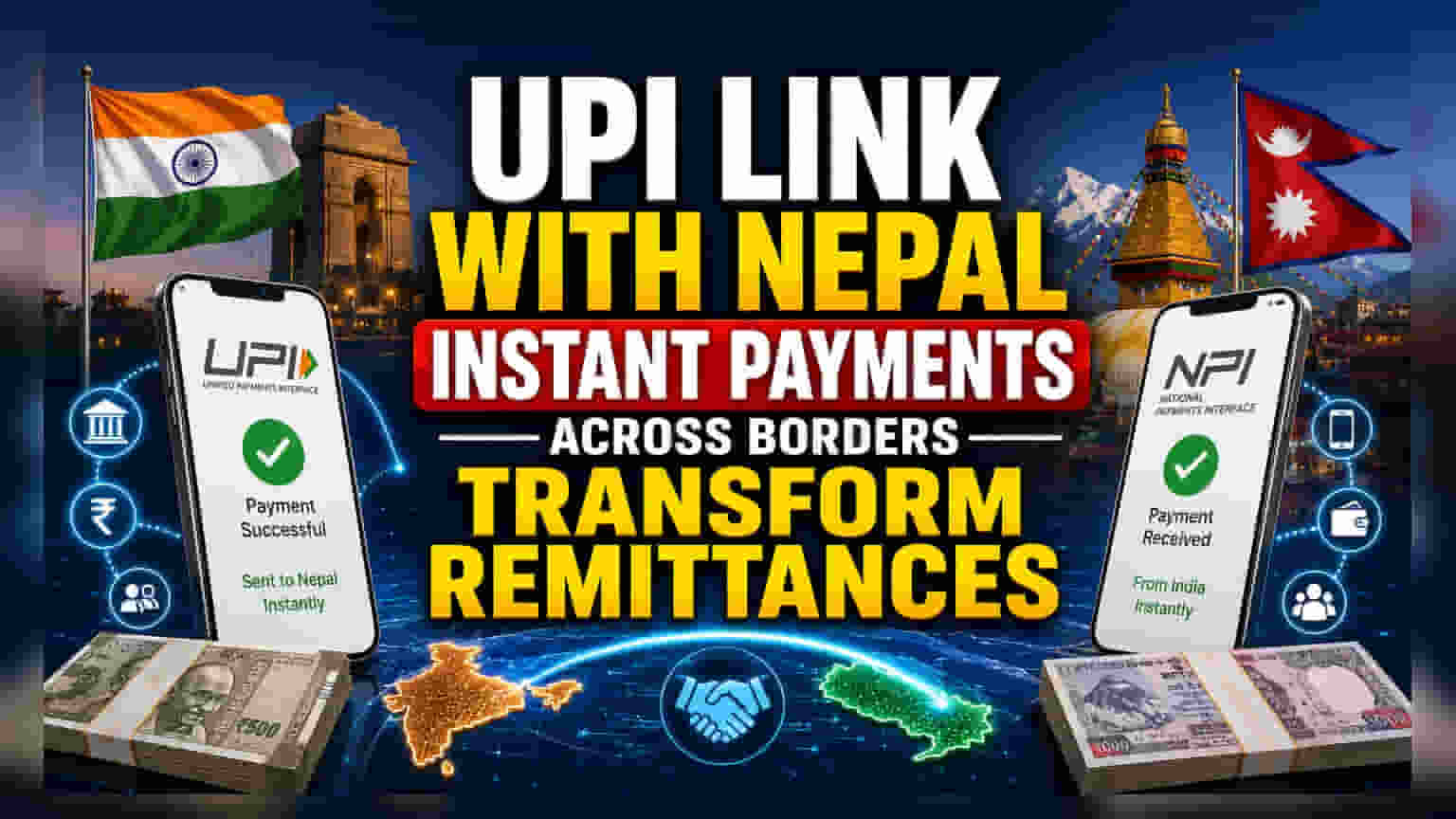


India and Nepal have operationalized a real-time cross-border payment link between India's UPI and Nepal’s NPI. While the system promises to streamline remittances and travel spending, the real test lies in managing foreign exchange spreads and overcoming structural cash reliance in the Nepali informal economy.
The Shift in Cross-Border Velocity
The integration of the Unified Payments Interface with Nepal’s National Payments Interface serves as a strategic maneuver to digitize the vast remittance flow between the two nations. By bypassing traditional banking intermediaries and money transfer operators, the infrastructure effectively lowers the cost of cross-border retail transactions. This move is consistent with the broader export of India’s digital public infrastructure, which now reaches into markets across Asia and Europe. The shift essentially moves the clearing process from legacy batch-processing systems to immediate, automated settlement, reducing the capital tied up in liquidity buffers for financial institutions.
The Competitive Reality and Macro Context
While the technology stack is robust, the adoption trajectory depends heavily on currency volatility and the regulatory spread applied to the Indian Rupee and the Nepalese Rupee. Unlike UPI’s domestic dominance, where the merchant discount rate is negligible, cross-border use involves complex currency conversion layers that may dilute cost advantages for end-users. Furthermore, the Indian National Payments Corporation faces the challenge of interoperability in a region where cash penetration remains high. While countries like Singapore and the UAE offer a more mature digital consumer base, the Nepal corridor is primarily driven by migrant labor remittances, which remain sensitive to the fees imposed by participating banks. Analysts observe that this digital shift will likely force traditional remittance providers to compress their margins to remain competitive against the friction-free alternative now offered by mobile wallets.
Structural Hurdles and Friction Points
The optimism surrounding instantaneous digital payments is tempered by significant structural risks. Nepal’s economy remains deeply rooted in cash-based informal commerce, particularly in rural regions bordering India. The digital-first approach assumes a level of smartphone and banking penetration that may not align with the demographic realities of the migrant worker population who primarily drive these capital flows. Additionally, the regulatory alignment between the two central banks is subject to potential shifts in trade policy. Should bilateral relations fluctuate, payment corridors are often the first infrastructure components to face heightened compliance scrutiny or technical throttling. There is also the persistent challenge of cybersecurity; as the volume of high-velocity, cross-border digital transactions increases, both systems face a higher exposure to sophisticated fraud attempts that could undermine consumer confidence in the early stages of adoption.
Long-Term Integration Outlook
The sustainability of this payment bridge will be measured by its ability to transition from a niche tool for travelers and tech-savvy urbanites to a standard utility for the working-class demographic. As the NPCI continues to expand its international footprint, the Nepal corridor serves as a critical proof-of-concept for its capability to handle volatile emerging market currencies. Future growth will likely be dictated by the integration of more non-bank financial institutions and the potential expansion into B2B trade payments, which currently remain reliant on cumbersome letters of credit and traditional correspondent banking relationships.