

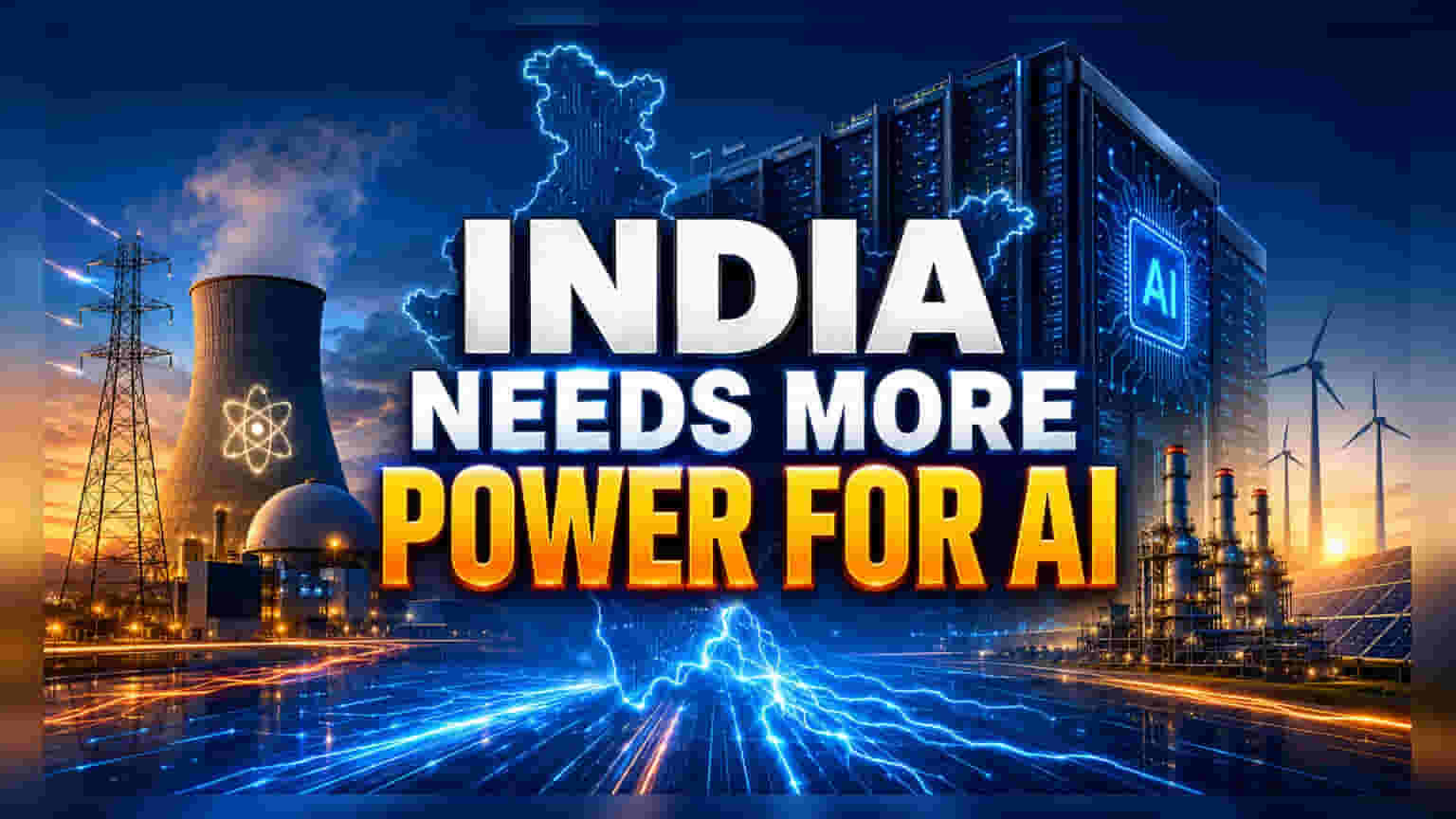
Bloom Energy CEO K.R. Sridhar warns that India must urgently expand its power generation capacity to support the rapidly growing AI sector. He argues that relying only on intermittent renewable energy is insufficient for the 24/7 power needs of data centers, suggesting a shift toward a diversified mix including nuclear and natural gas.
What Happened
K.R. Sridhar, the CEO of Bloom Energy, has publicly stated that India needs to accelerate its electricity generation infrastructure to avoid falling behind in the global artificial intelligence race. In a recent discussion, he highlighted that the massive energy needs of AI data centers cannot be met by renewable sources like solar and wind alone due to their intermittent nature. He advocated for a diverse energy strategy that includes nuclear, natural gas, and other reliable base-load power sources to ensure data centers stay operational 24/7.
The AI-Power Conflict
Artificial intelligence infrastructure requires a constant, high-volume flow of electricity. Sridhar pointed out that forcing existing grid infrastructure to accommodate these high, fluctuating loads could drive up costs for other users and compromise grid reliability. The current challenge for India is that while it is making significant strides in solar and wind capacity, these sources do not provide the constant 'base-load' power required for industrial-scale computing. Without dedicated on-site power or a highly robust grid, India may face bottlenecks in expanding its digital infrastructure.
Impact on Indian Data Center Market
India’s data center industry is currently seeing large investments from major players like AdaniConneX, Reliance Industries, NTT, and Brookfield. These companies are building massive capacity to serve the growing demand for digital services and AI. For investors, the critical question is how these facilities will be powered. If data centers rely purely on public grid electricity, they may face availability or cost challenges during periods of high demand. Consequently, there is an increasing focus on 'captive' or on-site power generation—using sources like fuel cells, gas, or even modular nuclear solutions—to ensure uninterrupted operations.
Why Base-Load Power Matters
In the Indian context, base-load power refers to the minimum amount of electric power needed to be supplied to the electrical grid at any given time. While solar and wind are critical for long-term sustainability, they are not always available. AI data centers operate continuously, necessitating power sources that are 'always on.' This is why industry experts, including those from the energy infrastructure space, are increasingly calling for natural gas and nuclear power to complement green energy efforts. Reliance on a single source of power generation may pose operational risks for high-density computing facilities.
What Investors Should Track
Investors in the Indian power and data center space should track several key trends. First, watch for government policy updates regarding power supply for data centers, including potential incentives for captive power plants. Second, monitor the power procurement strategies of large data center operators—specifically whether they are shifting toward integrated energy solutions or building on-site generation. Finally, pay attention to the energy mix adopted by major industrial expansions, as this will determine the long-term cost of electricity for energy-intensive sectors like technology and AI.