

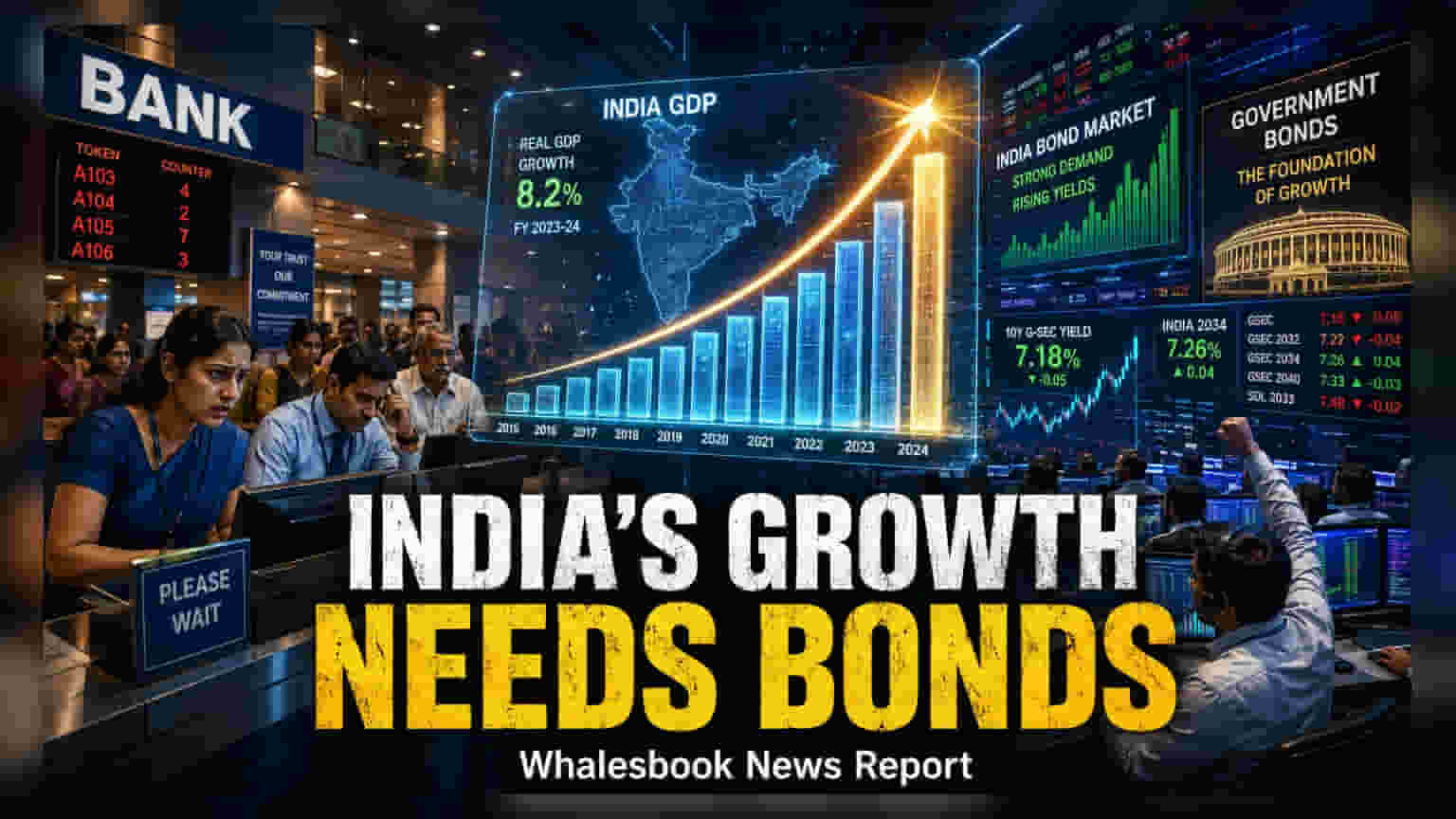
India’s banking system alone cannot fund the nation’s journey toward a $30 trillion economy by 2047, according to a report by Crisil. To fill the financing gap, the country must significantly expand its corporate bond and municipal debt markets. The report highlights that greater participation from insurance and pension funds is essential to support the next phase of economic growth.
As India eyes becoming a $30 trillion economy by 2047, its traditional banking system faces a significant challenge in meeting the massive capital requirements needed for such growth. A recent report by rating agency Crisil indicates that reliance on bank lending must decrease, with the debt capital market needing to step in as a primary engine for long-term financing.
Scaling India’s Debt Financing Needs
The projections are significant, with India’s non-sovereign debt expected to jump from roughly 84% of GDP today to nearly 150% by 2047. Corporate India alone is expected to need between Rs 130 trillion and Rs 140 trillion in debt funding between fiscal years 2027 and 2031. This would be 1.7 times the amount raised in the previous five-year block, highlighting a sharp rise in demand for capital.
Currently, the landscape is heavily tilted toward bank credit, which accounts for about 62% of GDP, while the debt capital market makes up only 22%. Government securities continue to dominate the debt market, holding a 74% share. For companies, this means finding alternative ways to raise money—such as through corporate bonds and securitization—will be vital to ensure they do not hit a funding ceiling.
Structural Gaps in the Corporate Bond Market
Despite steady growth in outstanding corporate bonds, which have risen at about 11% annually over the last decade to reach Rs 59 trillion, the market remains narrow and concentrated. Most corporate bond issuances are dominated by financial institutions and government-backed entities, which have accounted for over 80% of total issuances since FY23. Additionally, there is a clear bias toward higher safety, with over 80% of bonds holding AAA or AA ratings.
This concentration leaves little room for lower-rated but high-potential issuers to access affordable funding. Furthermore, participation from retail and foreign investors remains low, with their combined holdings in corporate bonds at less than 10%. Another hurdle is the secondary market, where average daily trading turnover has stayed below 0.25% of outstanding bonds for a decade. Without an active secondary market, investors often find it difficult to trade their holdings, which discourages broader participation.
Expanding the Investor Base
For the bond market to reach the depth required to fund 'Viksit Bharat' infrastructure and urban development, the current pool of investors must diversify. Currently, insurance and pension funds—which hold the largest pools of long-term savings—maintain less than 3% exposure to debt rated below AAA or issued by non-government entities.
Crisil suggests that moving forward will require several policy and structural changes. These include creating a dedicated framework for covered bonds, providing government support for securitization to help pool assets into tradable products, and making it easier for institutions to invest in A- and BBB-rated bonds. As Indian households shift more of their savings from bank deposits into managed investment products, the transition toward a more liquid and inclusive debt market will be a critical monitorable for the economy.