

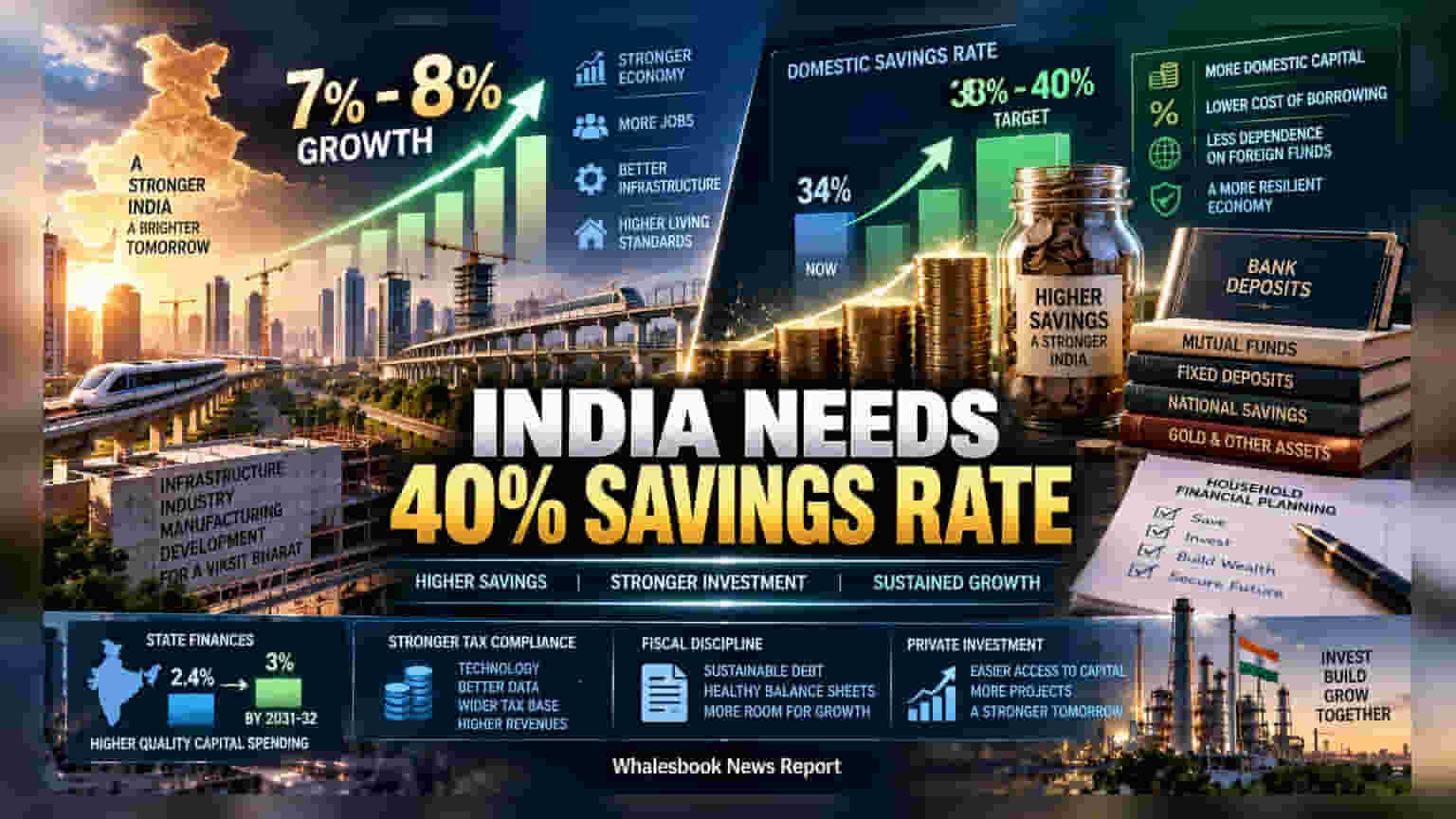
Former Finance Commission chief N.K. Singh states that India must increase its savings rate from 34% to 40% of GDP to maintain 7-8% economic growth. This shift aims to reduce reliance on foreign funding and lower the cost of capital, which could help Indian companies finance expansion projects more efficiently.
N.K. Singh, former chairman of the Finance Commission, has outlined a critical goal for India’s long-term economic stability. To sustain a healthy growth rate of 7%-8%, India needs to lift its gross domestic savings rate—the money households and businesses keep aside—from the current level of roughly 34% to between 38% and 40% of GDP. This shift is viewed as essential to fund the massive investments required for infrastructure and industrial expansion without becoming overly dependent on foreign capital or heavy government borrowing.
For investors, the importance of this target lies in the cost of money. When domestic savings are lower than the investment required, the economy must rely on expensive foreign funding or public borrowing, which can drive up interest rates. If domestic savings increase, it creates a larger pool of affordable capital within India. This can lower the cost of borrowing for companies, making it easier for them to fund new projects, buy machinery, and expand their businesses without putting excessive pressure on their balance sheets.
The strategy also focuses on how public and private money is managed. Officials are pushing for better discipline in state finances, specifically looking to increase state capital spending from about 2.4% to 3% of gross state domestic product by 2031-32. The success of this move will depend on whether states can improve the quality of their projects and ensure they are well-prepared, which would attract more domestic and international financing.
Another key focus area is tax collection, where the government aims to avoid simply raising tax rates. Instead, the strategy relies on using technology, including artificial intelligence and better data analysis, to identify compliance gaps. By widening the effective tax base through better technology, the government hopes to improve its financial health, which in turn reduces the need for the state to compete with private companies for available capital.
This roadmap is structural rather than an immediate trigger for markets. Investors should watch for the government's progress on fiscal discipline and whether households and businesses actually increase their financial savings. A higher savings pool, combined with better execution of infrastructure projects, would provide a more stable foundation for long-term industrial growth in India.