

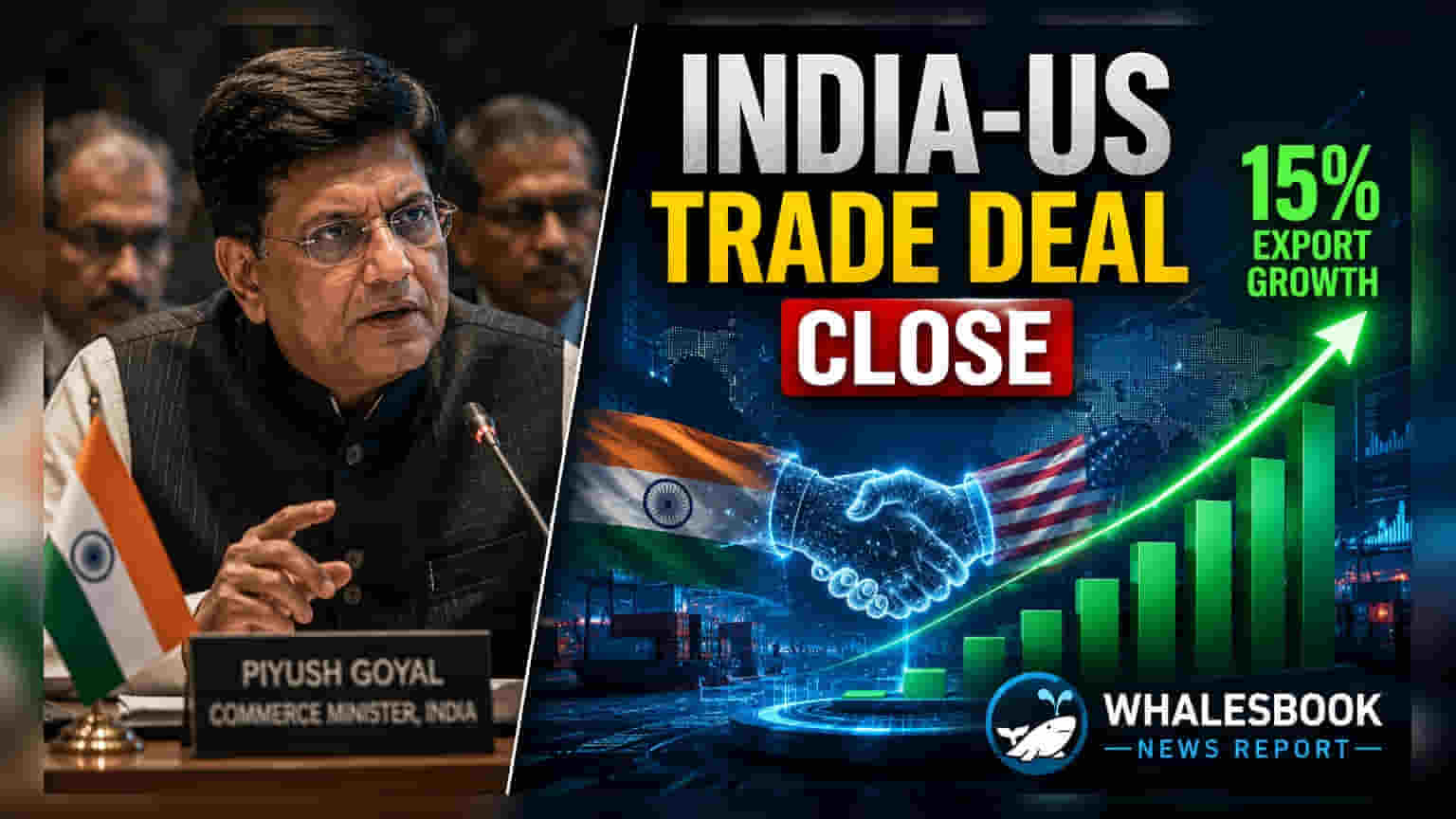
India is finalizing trade negotiations with the US, with most major issues resolved. Simultaneously, the India-UK Free Trade Agreement is confirmed to begin on July 15, 2026. Commerce Minister Piyush Goyal also projected a 15% growth in merchandise exports for the April-June quarter, signaling potential benefits for export-oriented sectors as market access improves.
What Happened
India is in the final stages of establishing a significant trade agreement with the United States, with Commerce Minister Piyush Goyal noting that most key disagreements have been resolved. Alongside the US discussions, the government has confirmed that the Free Trade Agreement (FTA) with the United Kingdom will officially take effect on July 15, 2026. These developments are part of a broader push to lower trade barriers for Indian goods. Additionally, the legal review for an agreement with the European Union is near completion and is expected to be ready for implementation by the end of the year.
Export Outlook and Market Access
Despite ongoing global economic challenges, the government has projected a 15% year-on-year growth for India's merchandise exports during the April-June quarter. This growth forecast suggests resilience in the manufacturing and export sectors. The primary goal of these agreements is to secure preferential market access—essentially allowing Indian products to be sold in these countries with lower duties—which can make them more competitive against goods from other nations. With the US administration working on mechanisms to support this competitive edge, the agreements are intended to foster long-term demand for Indian products.
Strategic Shift With Japan
Beyond Western trade pacts, the government is focusing on deepening the strategic partnership with Japan. The approach is moving beyond just capital investment. The government intends to focus on expanding trade volume, creating joint technology partnerships, and improving the mobility of India’s skilled workforce. Japan remains a central partner in the country’s long-term economic expansion strategy.
What This Means For Businesses
For Indian companies, particularly those in sectors like textiles, pharmaceuticals, automotive components, and engineering, these trade deals could offer opportunities to increase their global market share. Lower tariffs and reduced non-tariff barriers can lead to higher profit margins or increased volume, provided companies can meet the stringent quality and supply chain requirements of these markets. However, the success of these agreements depends on the operational execution—meaning companies must have the capacity to handle increased demand and navigate the regulatory standards of their new export destinations.
What Investors Should Track
While trade deals create new opportunities, investors should focus on the actual implementation of these agreements rather than just the announcement. Key monitorables include the final tariff structures, any remaining legislative hurdles in the US or EU, and the impact on domestic cost structures if raw materials are sourced differently. Additionally, the sustainability of the projected 15% export growth will depend on global demand trends and whether India’s supply chains can maintain consistent output levels. Monitoring quarterly management commentary from export-heavy companies will provide better insights into whether these trade benefits are translating into realized revenue growth.