

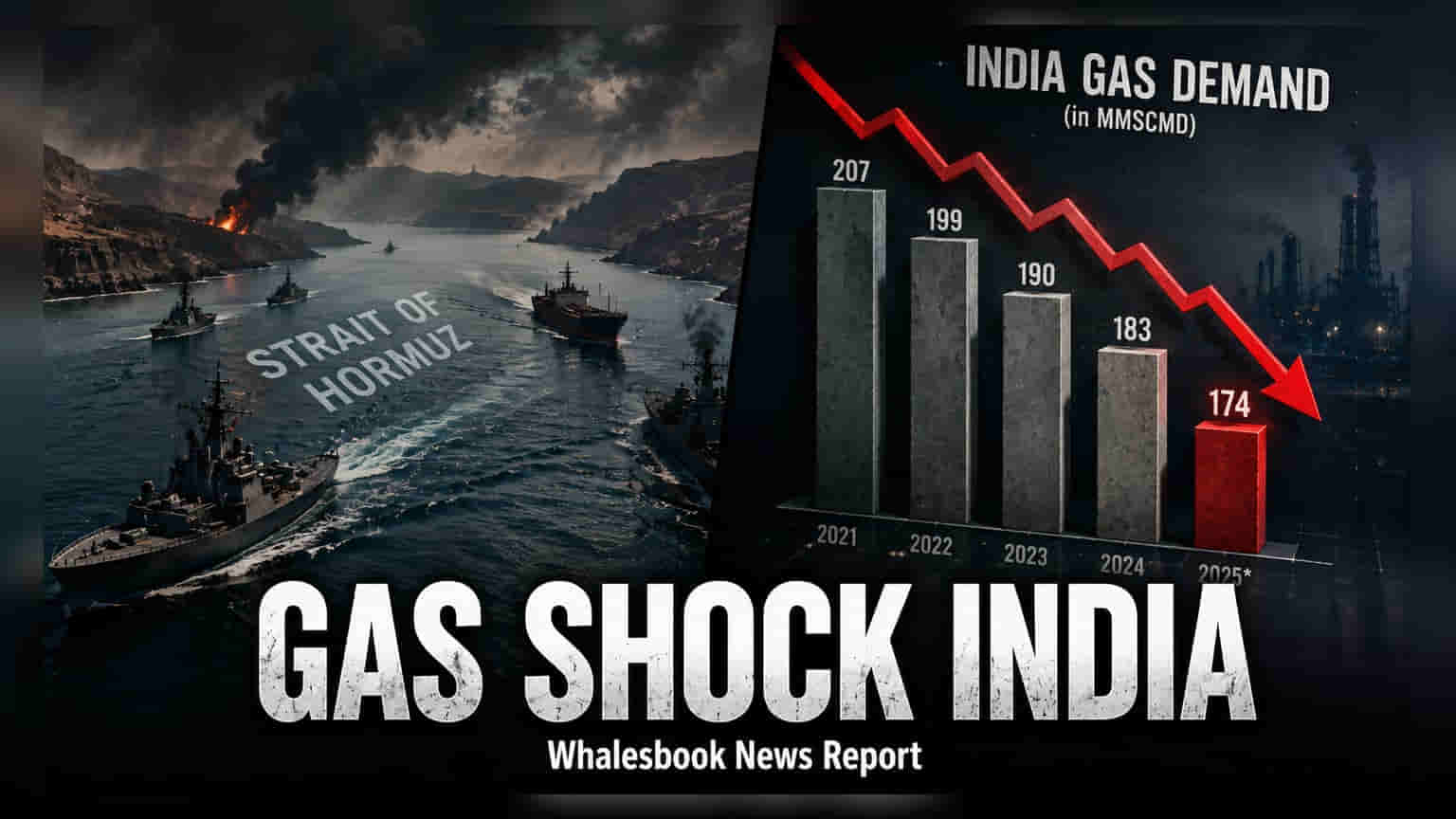
India's natural gas demand is projected to drop 8% this year as supply chain disruptions from the West Asia conflict impact imports. While industrial sectors like fertilizers and petrochemicals face significant declines, residential demand for CNG and PNG remains resilient. The shift away from Middle Eastern suppliers is forcing a reliance on costlier imports from North America and Africa.
India’s natural gas demand is set to contract by approximately 8% in 2026, according to recent projections from the International Energy Agency. This downturn is largely linked to the ongoing conflict in West Asia, which has caused the closure of the Strait of Hormuz. As a vital trade route, its disruption has blocked nearly half of the expected Liquefied Natural Gas (LNG) shipments that India typically receives from the Middle East and Gulf region.
Industrial Demand Struggles Amid Supply Shifts
The fertilizer sector is facing the most significant pressure, with production expected to fall by 7%, or over 0.4 billion cubic meters. This decline is particularly notable given the sector's importance to national agricultural output. Similarly, the petrochemical industry is struggling, recording a sharp 21% reduction in output compared to the previous year. These energy-intensive industries are highly sensitive to price fluctuations, and the higher costs associated with sourcing gas from alternative regions have forced many operators to lower their production rates.
Reliance on Non-Traditional Suppliers
Because domestic gas production in India has remained weak—marking 22 consecutive months of decline since July 2024—the country remains heavily dependent on imports. To manage the current supply crisis, Indian importers have aggressively pivoted toward new markets. Imports from African nations have nearly tripled compared to 2025 levels, while supplies sourced from North America have surged by 70%. Although these shipments have partially filled the void left by a 40% reduction in imports from the West Asia region, the shift has introduced volatility in procurement costs.
Residential Resilience and Future Monitorables
Despite the broader industrial slowdown, demand from the residential and commercial sectors has shown a different trend. Consumption of Compressed Natural Gas (CNG) for transport and Piped Natural Gas (PNG) for households has grown by roughly 12%. This divergence suggests that while large-scale industries are curbing usage due to price and supply constraints, domestic and transport demand remains relatively stable.
Investors and market participants may track how domestic gas production performs in the coming quarters, as any continued contraction will keep the country vulnerable to global supply shocks. Additionally, the ability of fertilizer and petrochemical manufacturers to pass on higher fuel costs to consumers or manage margins through operational efficiency will be a key factor in their financial performance throughout the rest of the year.