 Whalesbook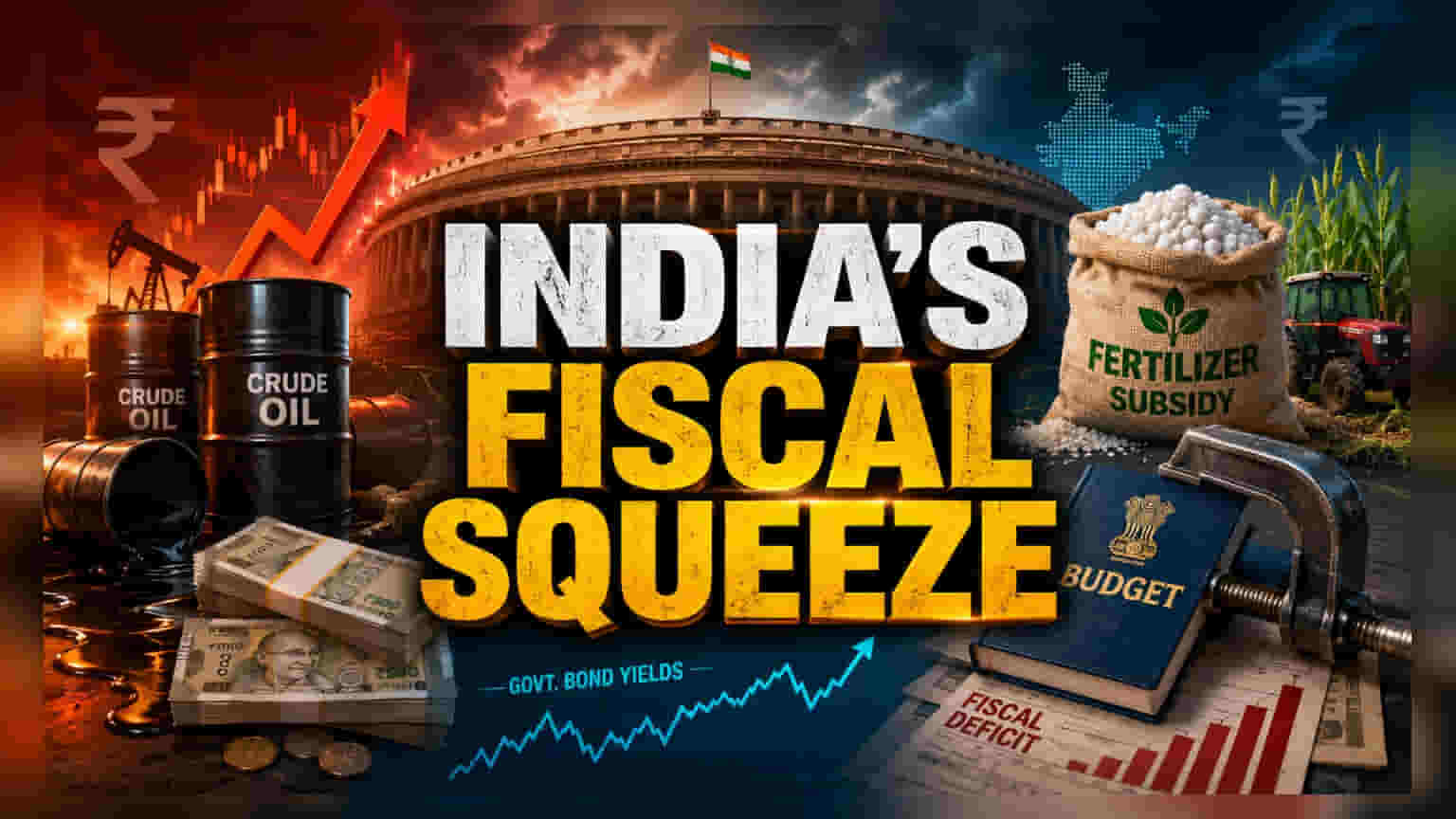


The Fiscal Squeeze
While the government successfully met its 4.4% fiscal deficit target for the recently concluded 2025-26 fiscal year, the opening month of the current financial year has exposed immediate vulnerabilities. The fiscal deficit surged to ₹3.6 trillion in April 2026, roughly double the levels observed during the same period last year. This rapid expansion, consuming over 20% of the annual target in just thirty days, highlights the sensitivity of India’s public finances to the volatility of global energy markets. With crude oil prices heavily impacted by the ongoing West Asia crisis, the cost of imported inputs has created a significant budgetary drag that threatens to derail the government’s 4.3% deficit target for FY27.
The Subsidy Predicament
Central to this fiscal pressure is the fertilizer subsidy bill. Initially budgeted at ₹1.71 trillion for the year, government officials now concede that this allocation may prove insufficient. Projections from the Department of Fertilisers indicate the subsidy burden could climb toward ₹3 trillion if energy markets remain elevated. The cabinet has already greenlit an increased subsidy outlay of over ₹41,000 crore for the Kharif season to shield farmers from global price spikes, prioritizing input affordability to forestall a potential food supply crisis. This strategy represents a classic trade-off: maintaining social and agricultural stability at the cost of immediate fiscal flexibility.
Balancing Acts and Buffers
The government’s fiscal maneuverability was recently bolstered by a record-breaking ₹2.87 lakh crore surplus transfer from the Reserve Bank of India for FY26. While this windfall has provided a vital cushion, it has also sparked internal debate regarding the sustainability of relying on central bank dividends to plug revenue gaps. Finance Ministry officials are now scrutinizing non-capital expenditure—specifically water resources and direct support to states—to offset the subsidy inflation. Critically, the administration has opted to ring-fence capital expenditure and defense outlays, signaling a commitment to infrastructure-led growth despite the tightening environment. Borrowing plans remain a point of contention; policymakers are wary that aggressive debt issuance could spike bond yields, thereby increasing the cost of capital across the broader economy.
The Forensic Bear Case
From a risk-averse institutional lens, the current fiscal strategy rests on a precarious foundation. The primary structural weakness is an over-reliance on one-off revenue boosts, such as central bank dividend transfers, which may not recur at similar scales. Furthermore, if the West Asia crisis prolongs, the pressure on the rupee and import bills could compress margins for domestic energy-dependent industries. Politically, the government faces a narrow path. Any reduction in welfare-related spending or friction in revenue-sharing with opposition-ruled states risks significant social backlash. Moreover, if the government fails to rein in non-essential spending, the potential for a fiscal slippage—the first in the post-pandemic era—could unsettle foreign investors and increase volatility in the bond market, particularly as the 10-year yield remains sensitive to macro-economic updates.