 Whalesbook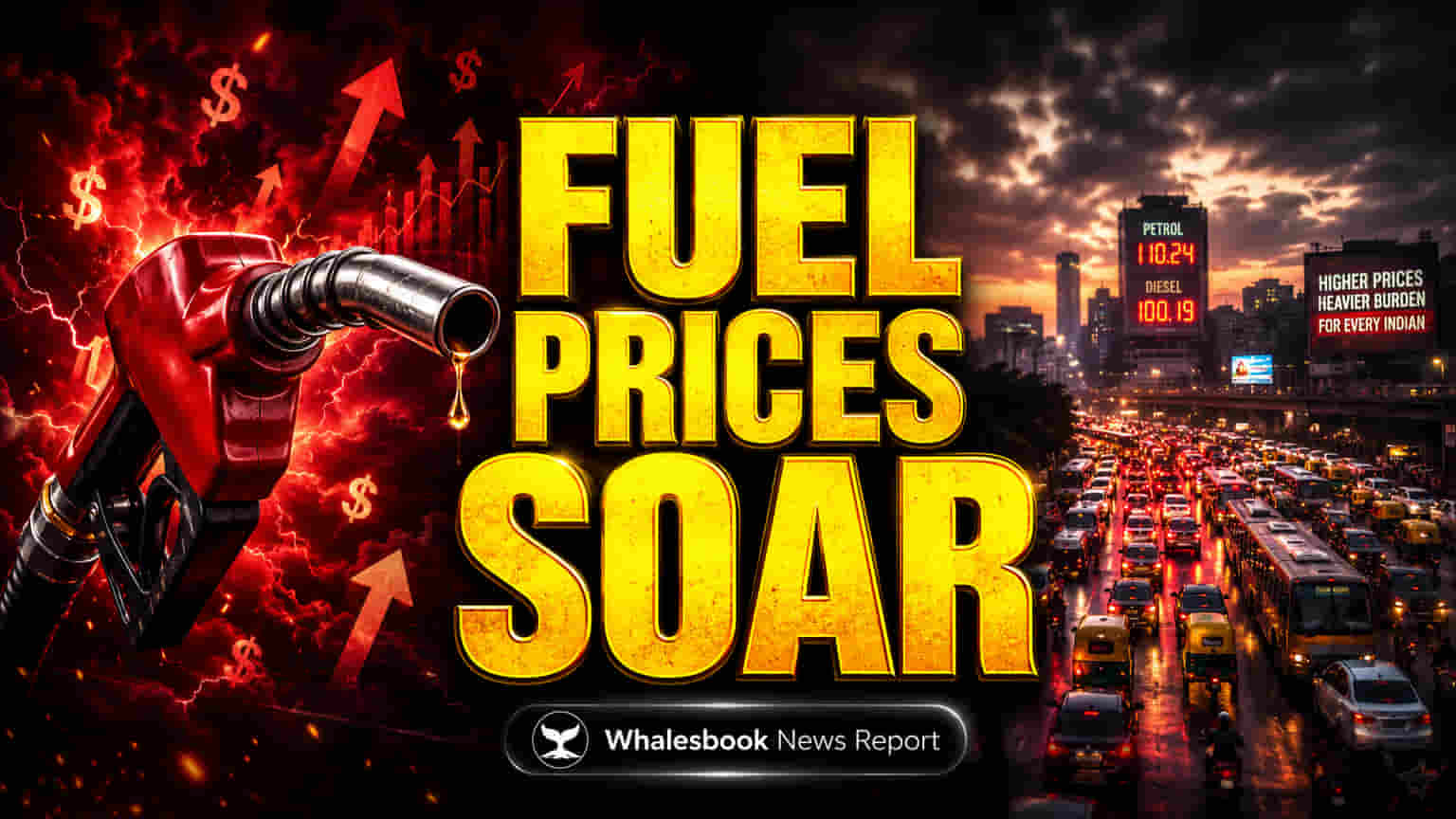


Recurring fuel price adjustments are creating broader economic challenges, signaling increased inflation and impacting consumer spending power. While individual increases may seem small, they add up significantly when combined with previous hikes and the current economic climate.
Fuel Costs Climb for Consumers
Consumers across India are once again bearing the brunt of escalating fuel expenses. Petrol prices have climbed, with Delhi seeing a rise to Rs 98.64 per litre and Mumbai to Rs 107.59. Diesel costs are also on the upswing, reaching Rs 91.58 in the capital and Rs 94.08 in Mumbai. Kolkata and Chennai experienced similar upward trends, with petrol prices reaching Rs 109.70 and Rs 104.49 respectively. These adjustments represent the second price revision in under a week, building on a prior substantial increase.
Factors Driving Fuel Costs
These repeated price hikes are linked to several factors. International crude oil prices have shown a steady upward trajectory in early May 2026, with Brent crude hovering around $100-$112 per barrel due to ongoing geopolitical tensions in West Asia and supply disruptions, particularly concerning the Strait of Hormuz. This global volatility is worsened by a depreciating rupee, which has weakened against the US dollar, trading near Rs 95.77-96.19, making dollar-denominated oil imports more expensive for India. Domestic taxation policies also play a role, as excise duties and VAT often constitute around 50-55% of the retail price. The government recently introduced a Special Additional Excise Duty (SAED) of ₹3 per litre on petrol exports, a move aimed at capturing revenue from elevated global prices without impacting domestic pump prices.
Inflationary Spiral: Economic Strain Looms
The persistent rise in fuel prices threatens the Reserve Bank of India's (RBI) inflation targets. Wholesale inflation has surged to a 3.5-year high of 8.3% in April 2026, primarily driven by fuel and energy costs, while consumer price inflation is showing an upward trend. RBI Governor Sanjay Malhotra warned that persistent geopolitical tensions could force the government to pass price increases to consumers. He added that the central bank would intervene if supply shocks become widespread, potentially leading to tighter monetary policy. This persistent inflation is expected to impact consumer spending, with urban consumers already planning to tighten budgets, postpone discretionary purchases, and consider electric vehicles. Furthermore, India's economy, heavily reliant on imports, is particularly sensitive to oil price shocks, with projections suggesting a potential deceleration in GDP growth due to increased input costs and reduced consumer purchasing power.
Outlook: Continued Volatility Expected
Given the ongoing geopolitical uncertainties in West Asia, the Strait of Hormuz disruptions, and global oil market dynamics, further volatility in crude prices is anticipated. Analysts suggest Brent crude could remain elevated, potentially hovering between $100 and $125 per barrel depending on diplomatic progress and the duration of supply disruptions. For India, this implies continued pressure on inflation and consumer budgets. The RBI will likely maintain a data-dependent approach, closely monitoring the evolving growth-inflation outlook and the second-round effects of these price increases on the broader economy. The government must balance revenue generation from fuel taxes with managing inflationary pressures, which could necessitate further policy adjustments in the coming months.