

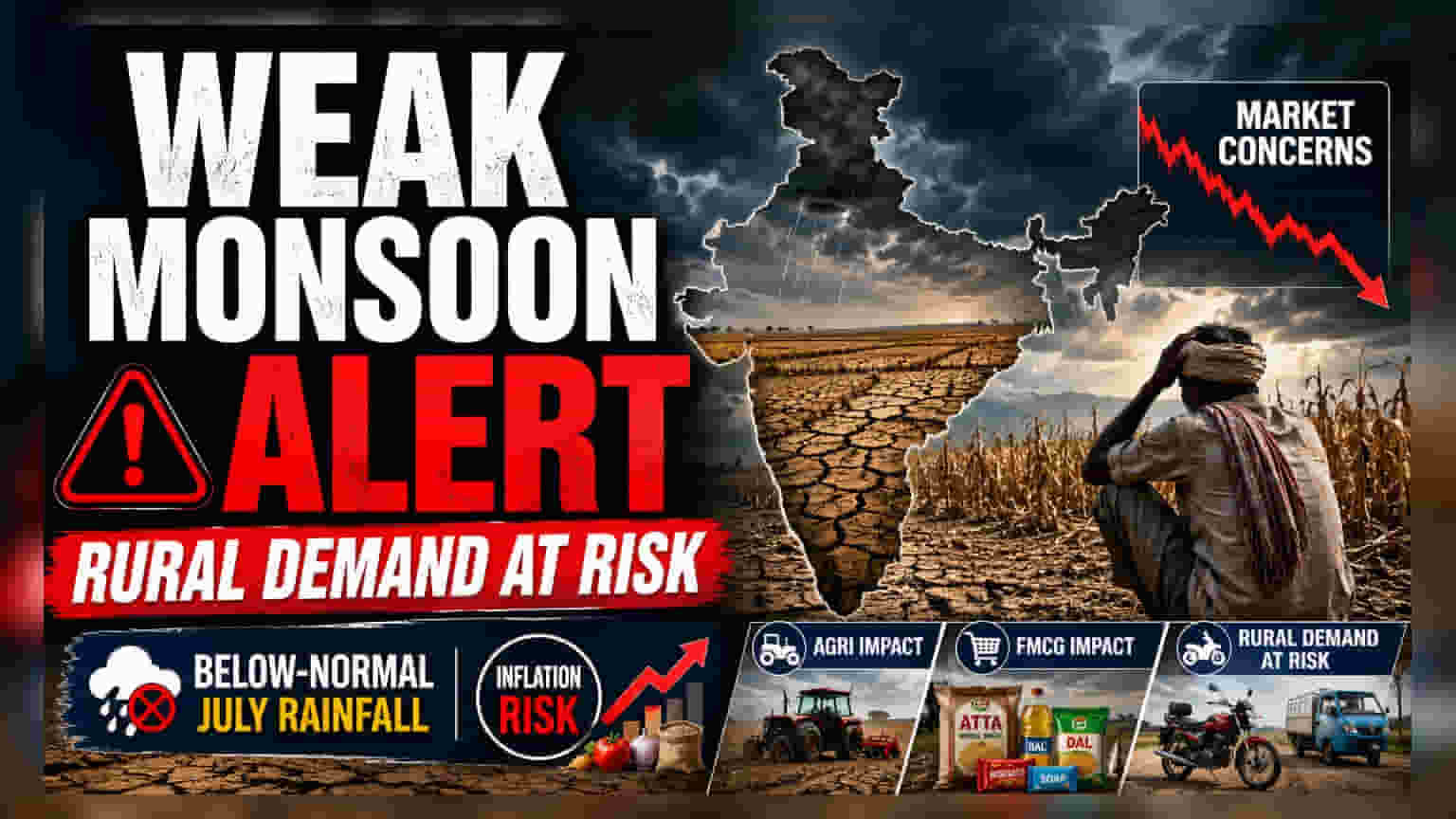
The India Meteorological Department (IMD) predicts below-normal rainfall for July 2026, following the driest June since 2014. For investors, this outlook raises concerns about rural consumer demand, food inflation, and agricultural output. Market focus will shift to sowing progress and reservoir levels to gauge the potential economic impact.
What Happened
The India Meteorological Department (IMD) has issued a cautious outlook for July 2026, forecasting below-normal rainfall across most of India. The projection estimates rainfall to be less than 94% of the long-period average (LPA). This comes after a challenging June, which was the fifth-driest since 1901 and the weakest performance in 12 years. The IMD attributed this trend to a combination of weather patterns, including the emergence of El Niño conditions and the absence of moisture-bearing low-pressure systems over the Bay of Bengal, which typically drive monsoon rainfall in India.
Why It Matters for Rural Demand
For the Indian economy, the monsoon is a primary driver of rural income. A significant portion of India's agricultural activity relies on rain-fed irrigation. When rainfall is insufficient, agricultural yields may decline, directly reducing the disposable income of the farming community.
Investors often look at rural consumption trends as a proxy for the health of various industries. Companies in sectors like Fast Moving Consumer Goods (FMCG), tractors, two-wheelers, and entry-level automobiles often have significant exposure to rural markets. If farm incomes are under pressure due to poor crop cycles, these companies may see slower volume growth in rural regions, which could impact their overall revenue performance in the coming quarters.
Inflation and Monetary Policy
The monsoon’s performance has a direct bearing on food inflation. Monsoon deficiency often leads to shortages in key crops, such as pulses, cereals, and vegetables, which can push food prices higher. Since food items carry a significant weight in the Consumer Price Index (CPI) basket, a poor monsoon can lead to higher headline inflation. For the equity market, this creates an additional monitorable, as persistent food inflation can influence the Reserve Bank of India’s (RBI) interest rate decisions. Higher interest rates typically raise borrowing costs for businesses and consumers, potentially slowing down economic activity.
Impact on Agri-Input and Energy Sectors
The agricultural inputs sector, including fertilizer and pesticide manufacturers, watches monsoon progress closely. Timely and adequate rainfall encourages farmers to invest in high-yield seeds and fertilizers. A dry spell can delay sowing activities, leading to lower-than-anticipated demand for these products.
Additionally, the monsoon levels are critical for water reservoirs. Lower water levels can impact hydroelectric power generation, which might force power companies to rely more on thermal power (coal), potentially increasing operational costs depending on fuel prices and power procurement agreements.
What Investors Should Track Next
Investors will likely shift their focus to real-time data to assess the impact of these weather conditions. Key indicators include:
- Sowing Data: Weekly updates from the Ministry of Agriculture on the total area sown for Kharif crops will reveal if farmers are delaying planting or switching to crops with lower water requirements.
- Reservoir Levels: Periodic reports on water storage levels in major dams will provide clues on water availability for irrigation and power generation.
- Food Inflation Numbers: Upcoming CPI inflation data will be closely observed to see if the dry June has already begun impacting vegetable and pulse prices.
- Management Commentary: In the upcoming earnings season, commentary from companies with high rural exposure regarding demand trends and inventory levels will provide the most direct insight into how the ground reality is affecting business performance.