

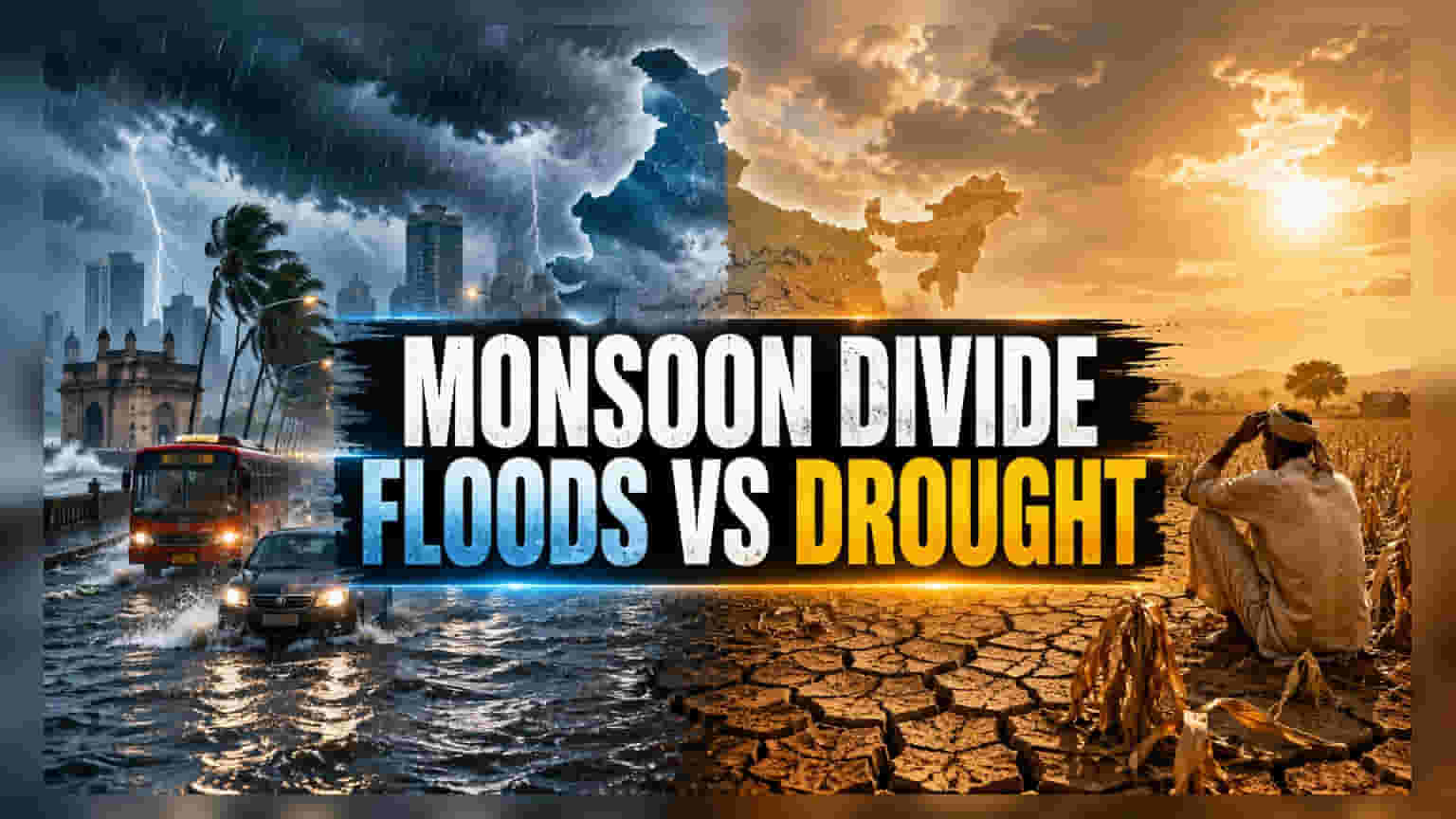
India is witnessing a sharp weather contrast as Mumbai battles severe flooding while 315 districts face a 43% rainfall deficit. This uneven monsoon distribution poses risks to agricultural output, rural incomes, and food inflation, creating potential headwinds for rural-linked consumer and farm-input sectors.
What Happened
India is experiencing a stark divide in monsoon rainfall. While intense downpours have triggered flood alerts in Mumbai and parts of the Konkan region, large swathes of the country are facing dry conditions. Data indicates that 315 districts are struggling with a rainfall deficit, with precipitation levels running approximately 43% below the normal range. The government has initiated contingency plans for these areas, specifically prioritizing 111 districts where farmland irrigation is limited to less than 25%.
Why It Matters for the Rural Economy
The Indian monsoon is the backbone of the rural economy, influencing the livelihoods of nearly half the population. When rainfall is uneven or deficient, it creates a chain reaction. Farmers may delay sowing crops, or yields may drop due to water stress. This reduction in farm output can lower rural incomes, which in turn impacts consumer spending power. For investors, this is relevant because rural markets contribute significantly to the revenue of many FMCG (fast-moving consumer goods), two-wheeler, and tractor manufacturers.
The Inflation and Supply Risk
Beyond the direct impact on farming, an uneven monsoon is a primary driver of food inflation. Essential food items such as pulses, vegetables, and edible oils are highly sensitive to weather changes. Even if the government maintains comfortable buffer stocks of staples like rice and wheat, erratic rain distribution can lead to localized price volatility. If food prices rise, it often limits the disposable income available for non-essential spending, potentially putting pressure on volume growth for consumer-facing companies.
Sectoral Impact and Monitoring
The current weather situation highlights potential risks for specific industries. Companies involved in the sale of agricultural inputs, such as fertilizers and pesticides, may face demand challenges if sowing activity remains weak in the deficit-hit districts. Similarly, manufacturers of tractors and entry-level motorcycles often see a correlation between monsoon health and sales performance in rural regions. While this does not mean all companies in these sectors will perform poorly, the risk of a slowdown in volume growth increases if the rainfall deficit persists through the season.
What Investors Should Track Next
Investors may keep a close watch on several data points in the coming weeks. First, regular updates from the India Meteorological Department regarding rainfall distribution will be critical to see if the deficit in the 315 districts narrows. Second, monthly food inflation data will indicate whether these weather conditions are starting to impact household budgets. Finally, management commentaries from companies with high rural exposure in upcoming quarterly result updates will provide insight into whether these weather challenges are starting to reflect in their sales volume and profit margins.