

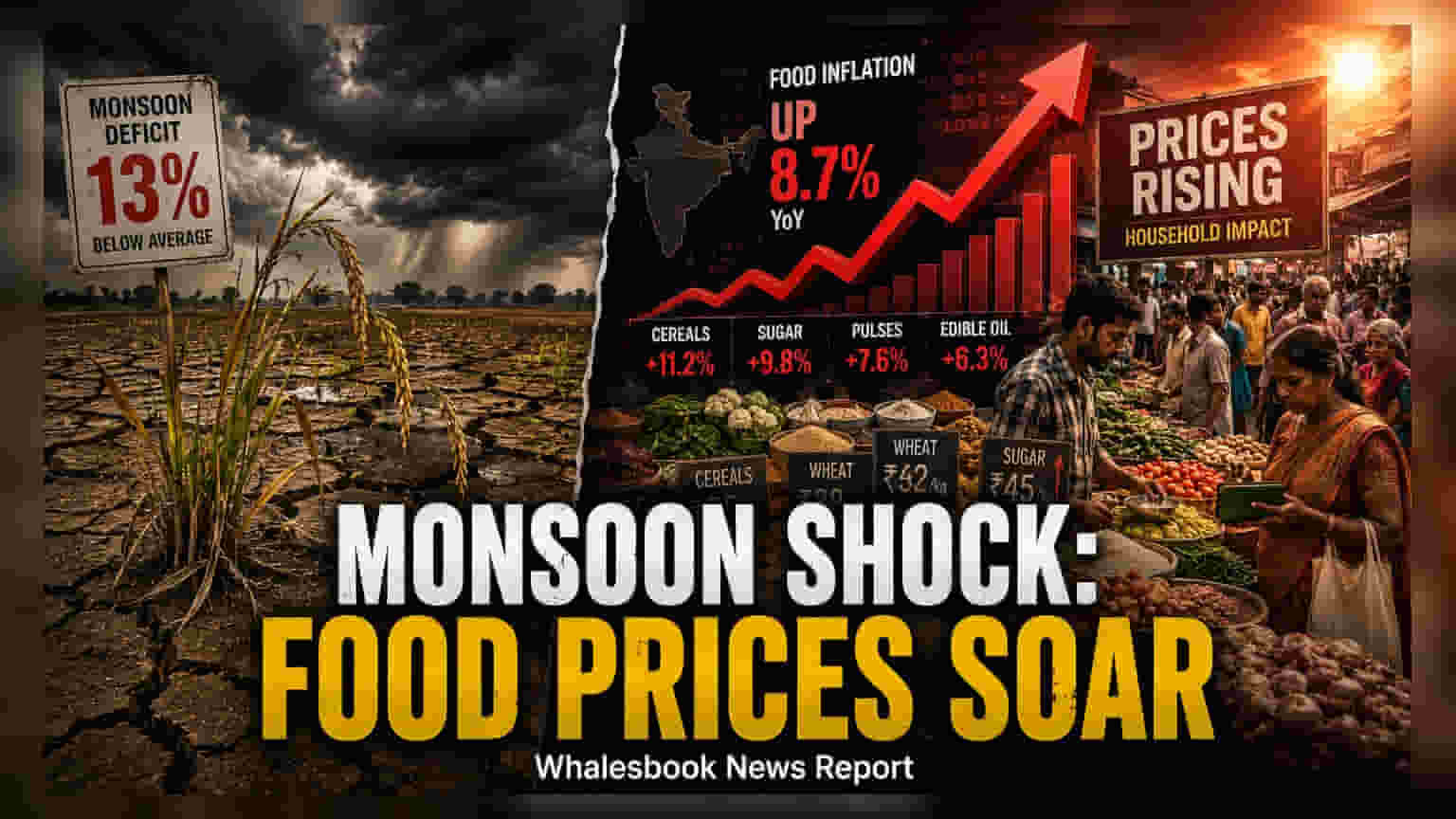
India’s monsoon rainfall remains 13% below normal, pushing up prices for staples like sugar and cereals. While rural demand for two-wheelers and tractors has stayed strong, analysts warn that slowing wage growth and potential risks to the upcoming Rabi crop could pressure the economy in the coming months.
The Indian monsoon season is currently trailing 13% below the long-period average as of August 17, 2026. This shortfall, driven by persistent El Niño conditions, is creating uneven rainfall distribution across the country. While the central regions have seen better coverage, the South and East/Northeast are facing significant deficits of 21% and 27%, respectively. This uneven pattern is becoming a primary driver of rising food inflation, specifically affecting the prices of cereals and sugar.
The agricultural sector is feeling the strain of these weather conditions, with the critical kharif sowing season falling short of historical averages. Total sowing acreage is currently 2% lower compared to the previous year. Rice, a major staple, has seen a 3.7% decline in planting, while other crops such as pulses and oilseeds also show smaller areas under cultivation. This creates a supply-side risk that may keep food inflation elevated.
Despite these agricultural headwinds, rural consumption has displayed unexpected resilience. Data from July shows that sales of two-wheelers and tractors have recorded double-digit growth. This suggests that households, particularly in areas less affected by the rainfall deficit, have maintained spending levels. For companies with significant rural exposure, such as fast-moving consumer goods (FMCG) and rural-focused vehicle manufacturers, this initial resilience has provided a buffer against broader economic uncertainty.
However, there are signs that this resilience may face tests in the second half of the year. Nominal rural wage growth has begun to decelerate for both farm and non-farm workers. When combined with the rising cost of inputs like fertilizer, which have been impacted by global supply chain pressures, farmer incomes could see further pressure. If rural incomes do not keep pace with inflation, the current strength in consumer demand may struggle to continue.
The outlook for the upcoming Rabi (winter) crop remains uncertain. Successful winter harvests depend heavily on soil moisture and water availability in reservoirs. Current all-India reservoir levels are at 60% of their full capacity, which is below the normal levels for this time of year. Specifically, depleted storage in the North and South poses a potential risk for wheat and pulse crops later in the season.
Investors will likely track reservoir level updates and rural wage growth data in the coming weeks. The ability of the agriculture sector to recover in late monsoon will determine the pressure on food prices and the overall stability of rural consumption patterns as the year progresses.