

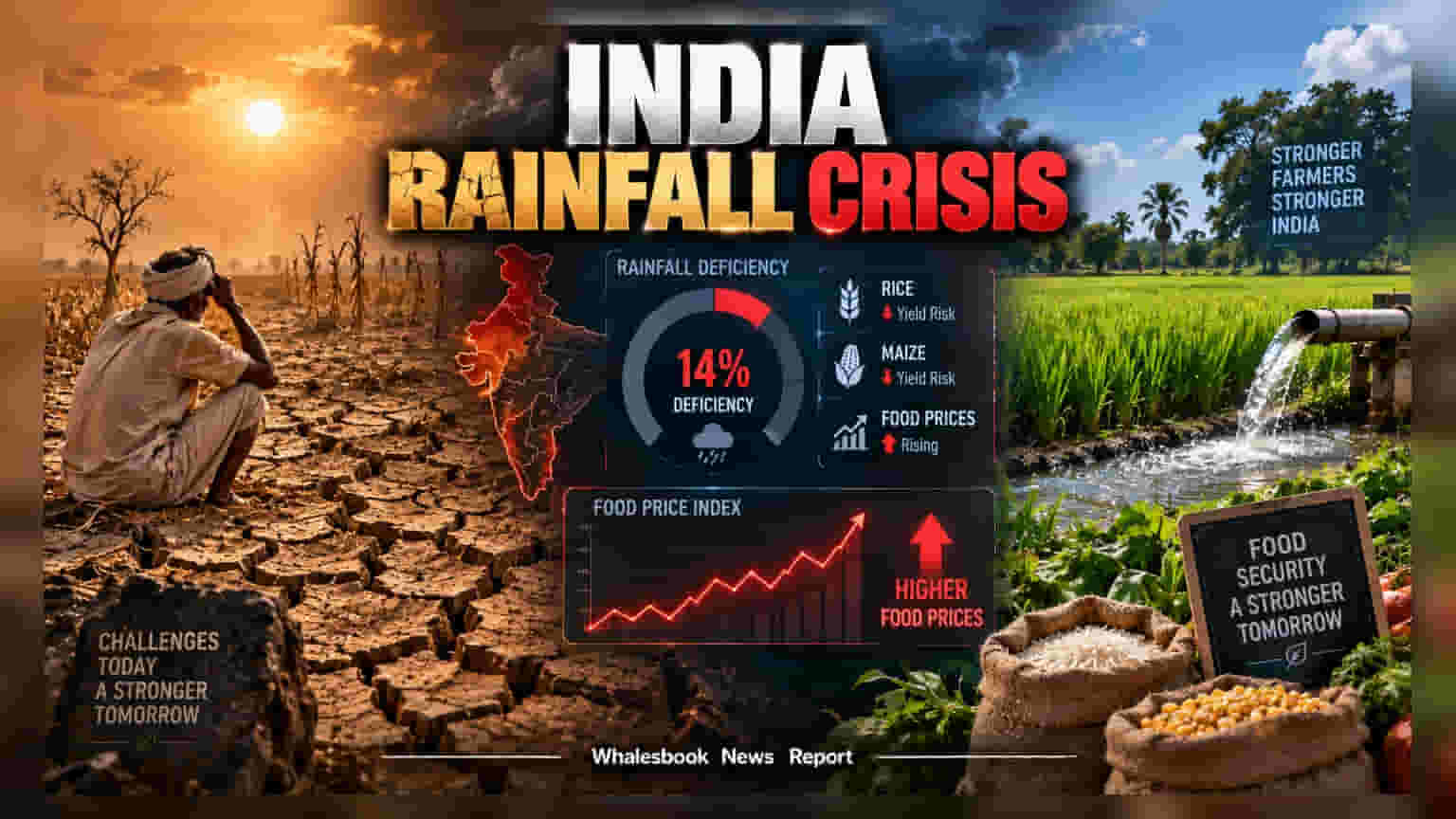
India’s monsoon rainfall deficit has reached 14%, shifting investor focus from planting acreage to potential crop yields. While sowing remains resilient at 98% of normal levels, concerns regarding farm productivity are rising. Investors are now monitoring how these weather anomalies might impact rural discretionary spending and influence food inflation trends.
As of September 8, 2026, India's southwest monsoon season has recorded a 14% rainfall deficiency. This shortfall, driven by strengthening El Niño conditions, has shifted the conversation from the quantity of land planted to the actual quality of the harvest. While farmers have managed to complete sowing for about 98% of the normal area, the lack of sufficient moisture now threatens crop productivity and overall yield for key staples like rice and maize.
Impact on Rural Demand
The primary concern for investors lies in the health of the rural economy. If lower rainfall leads to a drop in crop yields, farm incomes could shrink. Historically, when rural income is under pressure, discretionary spending tends to decline. Investors in sectors such as FMCG (fast-moving consumer goods), two-wheelers, and tractors often watch these trends closely, as these businesses rely on strong demand from rural households. If farmers earn less during the Kharif season, the demand for these products may face pressure in the coming quarters.
Structural Buffers in the Economy
It is important to note that the rural economy has evolved. Over recent decades, reliance on crop income has decreased. Activities like livestock rearing, fisheries, and forestry now contribute over 40% to agricultural output. This diversification acts as a buffer. Because of this, a weather-related shock to crops may not translate into an immediate collapse in rural consumption, as it might have in the past. Economists note that while this provides some protection, a sustained rainfall deficiency could still lead to broader economic strain if it extends into the upcoming winter cropping season.
Inflation and Monetary Policy
Beyond consumer demand, the rainfall deficit presents a risk to inflation. If crop yields drop significantly, food supplies could tighten, potentially driving up food prices. This scenario complicates the inflation outlook for the Reserve Bank of India (RBI). Sustained food inflation often restricts the central bank's ability to lower interest rates, which remains a key monitorable for market sentiment. Additionally, agriculture-linked sectors such as fertilizers may see variations in demand based on how farmers manage their inputs during this period of uncertainty.
What Investors Are Monitoring
Moving forward, the focus will be on the India Meteorological Department's (IMD) updates for September, as forecasts suggest below-normal precipitation. Investors are expected to track high-frequency data, including monthly inflation reports, updates on food prices, and commentary from companies in the FMCG and rural-dependent automotive sectors. These insights will help gauge whether rural demand remains resilient or if the monsoon deficiency is beginning to impact corporate earnings.