

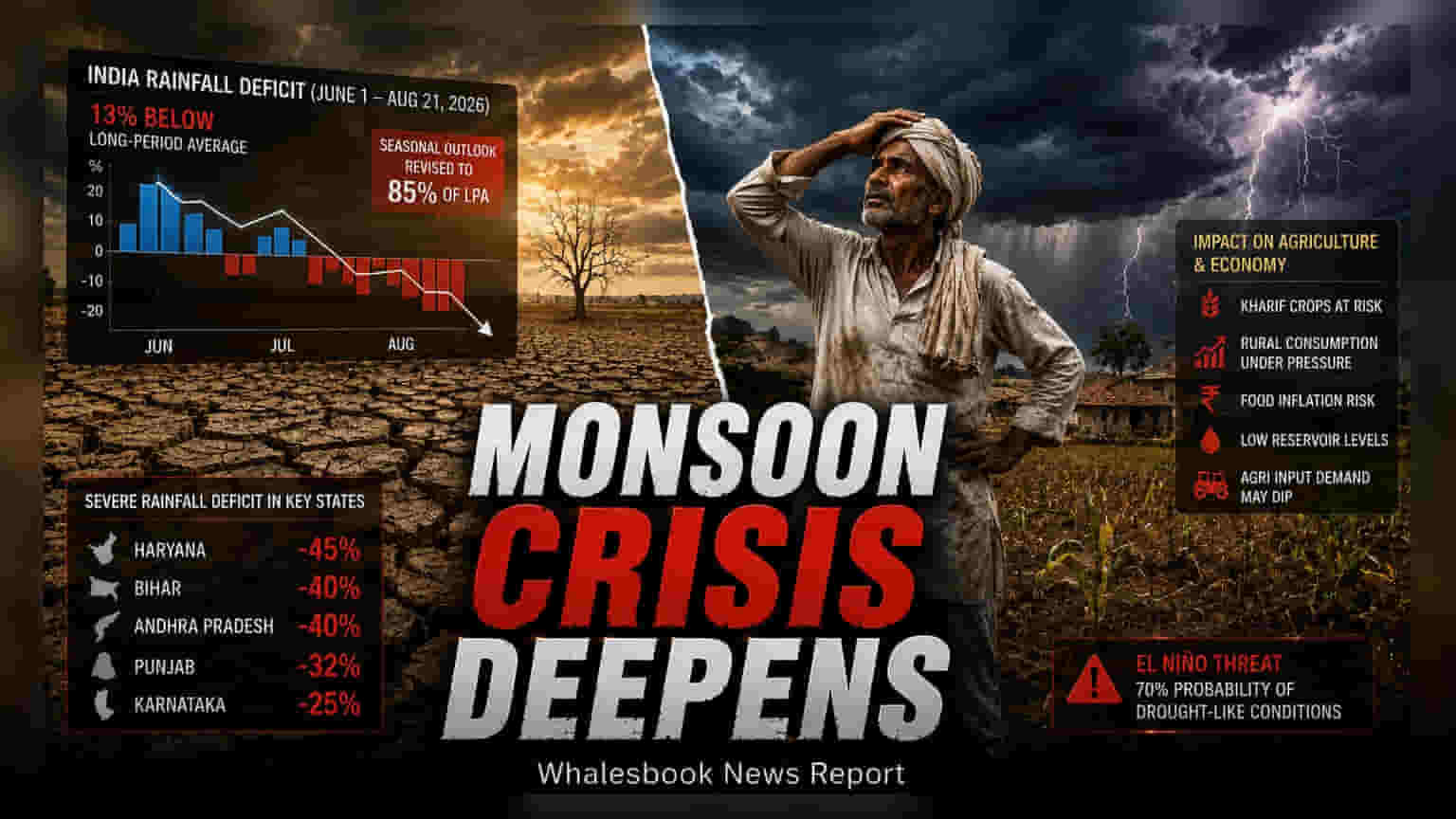
India’s monsoon rainfall is currently 13% below the long-period average, with weather agencies flagging El Niño as the primary cause. This shortfall raises concerns regarding kharif crop output, potential food inflation, and a possible slowdown in rural consumer spending, prompting investors to track the outlook for September.
India is facing a significant rainfall deficit as of late August 2026, with cumulative monsoon showers tracking 13% below the long-period average. While localized low-pressure systems have provided some relief to parts of central and eastern India, the broader national picture remains concerning. Weather agencies, including Skymet, have revised their seasonal expectations downward to 85% of the long-period average, citing a 70% probability of drought-like conditions linked to a strengthening El Niño.
Regional Disparities and Sector Risks
The distribution of rainfall has been highly uneven, creating stress in specific agricultural pockets. Several key states are reporting severe shortfalls, including Haryana at -45%, Bihar at -40%, and Andhra Pradesh at -40%. Punjab and Karnataka are also trailing with deficits of 32% and 25% respectively. For the Indian economy, where a significant portion of the workforce remains dependent on agriculture, these numbers are closely watched.
Investors are particularly focused on the impact of this deficit on rural consumption. Sectors that derive a substantial portion of their revenue from rural markets—such as fast-moving consumer goods (FMCG), tractors, and two-wheelers—are sensitive to farm income fluctuations. A poor kharif harvest due to moisture stress can reduce disposable income in rural areas, potentially leading to a moderation in volume growth for these companies. Additionally, the demand for agricultural inputs, such as fertilizers and seeds, may face pressure if planting windows continue to be disrupted by erratic weather.
Macro Implications for Inflation and Policy
Beyond corporate earnings, the monsoon shortfall presents a macro challenge regarding food inflation. Persistent deficits often lead to volatility in the prices of pulses, cereals, and vegetables. With food items carrying a significant weight in the Consumer Price Index (CPI), any sustained increase in commodity prices could complicate the central bank's inflation management strategy. If supply-side constraints emerge due to lower crop output, the Reserve Bank of India may have to maintain a more cautious stance on interest rates to prevent inflation from broadening.
Water resource management is another critical area to track. Reservoir levels in many regions are currently below historical norms, which could pose challenges for irrigation in the upcoming rabi (winter) crop season and affect hydro-power generation. While industrial demand and robust infrastructure spending have provided a buffer for the broader economy, the rural segment remains a key variable for overall growth stability.
Investors will now monitor the rainfall patterns throughout September, which is often a critical month for late-season crops. Management commentaries in upcoming quarterly earnings reports, particularly from rural-centric companies, will be essential for gauging the real-time impact of these weather conditions on ground-level demand and operating margins.