

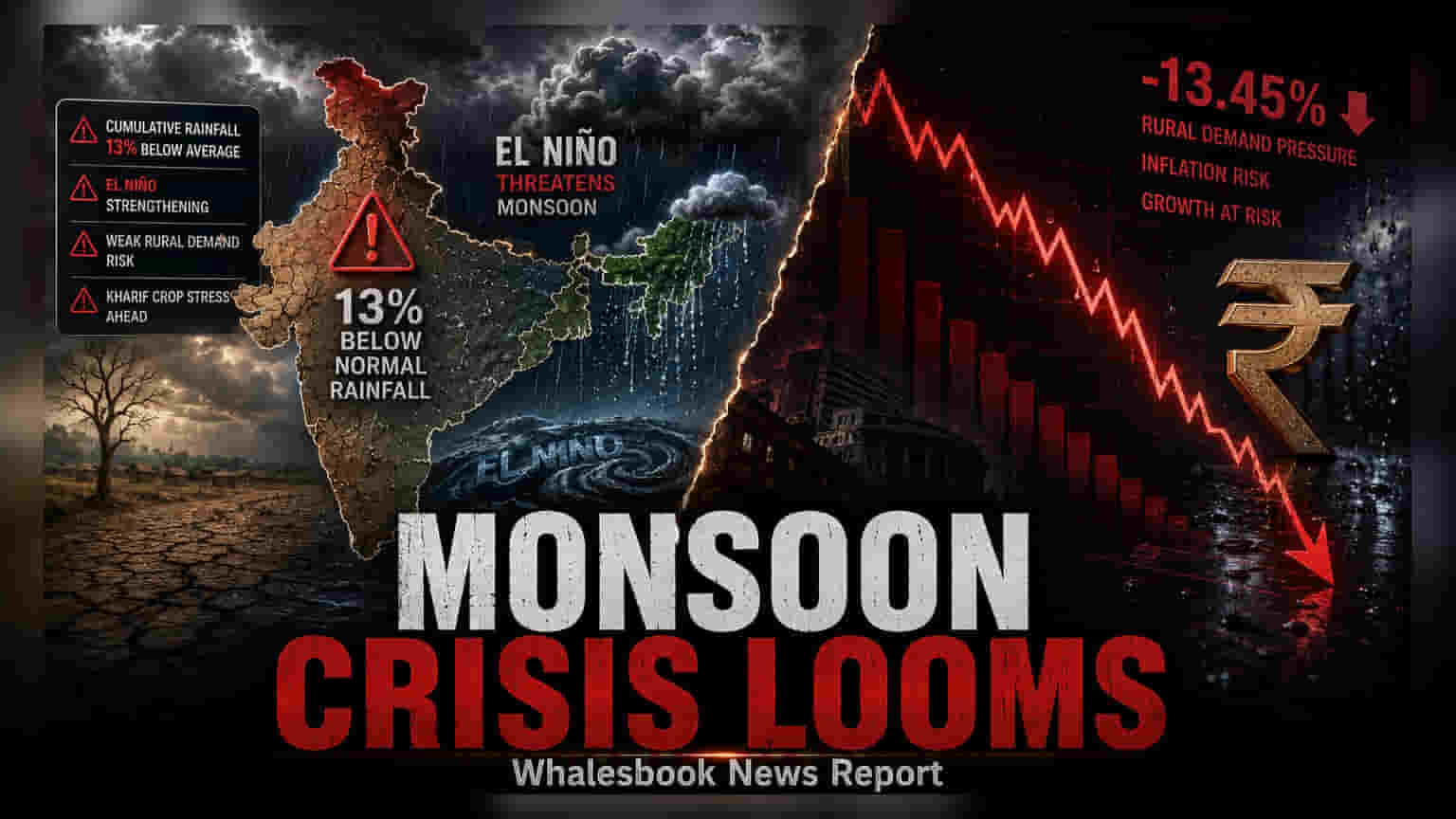
India’s cumulative monsoon rainfall has dropped to 13% below the long-period average, with forecasts suggesting limited relief ahead. As El Niño conditions intensify through September, the prospect of a weaker finish to the season is causing concern for agricultural yields and rural demand. Markets are keeping a close watch on the potential impact on FMCG, fertilizer, and farm equipment sectors as the season enters its final phase.
The southwest monsoon, a critical driver of India’s rural economy, is showing signs of a strained performance as the season approaches its end. Data as of August 17, 2026, indicates that cumulative rainfall across the country is 13% below the long-period average. While a depression in the Bay of Bengal is providing localized, heavy rainfall to parts of East and North-East India, meteorologists warn that this will likely not be enough to reverse the widening national deficit.
The India Meteorological Department (IMD) has noted that while regions like West Bengal, Jharkhand, and Odisha are receiving temporary relief, the overall trend points toward a drier period ahead. The situation is further complicated by the strengthening of El Niño conditions. This climatic pattern is expected to suppress rainfall activity throughout September, potentially leading to a below-normal finish for the entire monsoon season.
Impact on Rural-Dependent Sectors
The uneven distribution of rain and the growing cumulative deficit are significant for several sectors that rely heavily on the rural economy. In India, a healthy monsoon is often the precursor to robust rural purchasing power, which directly impacts corporate earnings in specific industries. Companies in the fertilizer and agro-chemical sectors, such as Coromandel International and Chambal Fertilisers, typically see demand fluctuations based on the sowing and crop-health cycle. If rainfall remains deficient in key agricultural belts, it may affect the volume of fertilizer application and farmers' spending capacity.
Similarly, the farm equipment sector, including tractor manufacturers like Mahindra & Mahindra, often tracks monsoon progress as a key indicator of demand. When rural income is pressurized by weak harvests or delayed planting, discretionary spending on machinery can slow down. The FMCG (Fast-Moving Consumer Goods) sector is also a notable monitorable. Companies like HUL and Dabur, which have significant exposure to rural markets, may face challenges in maintaining volume growth if consumer sentiment in these regions weakens due to reduced farm income.
Economic and Inflationary Risks
Beyond corporate demand, the monsoon’s performance has macroeconomic implications. A sustained rainfall deficit can stress kharif crop yields, particularly for water-intensive crops. This creates a risk of supply-side shortages, which may push up food inflation. For the broader market, inflation trends are vital because they influence the Reserve Bank of India’s policy decisions. If food prices spike due to crop stress, it complicates the central bank's ability to maintain stable interest rates.
Investors are currently looking for clarity on two main fronts: the actual impact on crop harvest volumes in the coming weeks and any government interventions aimed at stabilizing rural income or food supplies. The key monitorable for the next few weeks will be the intensity of rainfall in September, which will finalize the season's impact on soil moisture and water reservoir levels ahead of the rabi sowing season.