 Whalesbook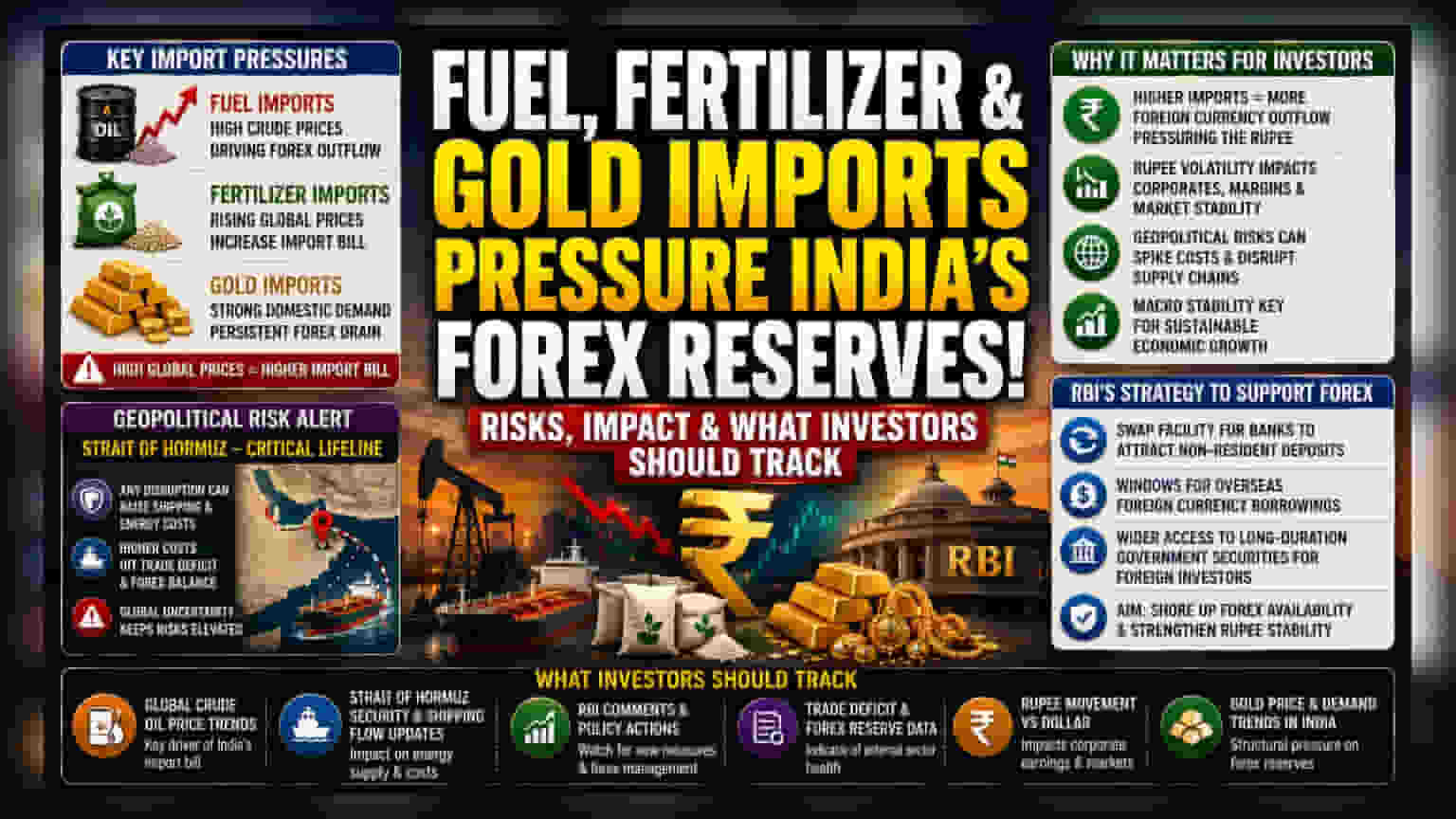


What Happened
The Indian government has highlighted fuel, fertilizer, and gold imports as significant contributors to pressure on the nation’s foreign exchange reserves. With global prices for these commodities remaining high, the outflow of foreign currency to pay for these essential imports has become a key area of focus for policymakers. Geopolitical uncertainty, particularly regarding shipping routes through the Strait of Hormuz, is adding to the risk of a higher import bill. This vital waterway is essential for the global movement of energy, and any disruption or cost increase in this region directly impacts India's import economics.
Why This Matters For Investors
For investors, the stability of the Indian Rupee is closely linked to the country’s balance of trade. When India spends heavily on imports like crude oil, it requires more foreign currency. If these outflows are too high or frequent, it can put pressure on the rupee’s value against the dollar. Furthermore, industries that rely heavily on imported raw materials may face cost challenges if currency volatility increases. While the government monitors these outflows, the persistent nature of this import dependency means that macro-economic conditions will remain a key factor for market stability.
The RBI’s Strategy
To counter the impact of global volatility on the rupee, the Reserve Bank of India (RBI) has implemented several support measures. These include providing a swap facility for banks to attract fresh non-resident deposits and creating windows for overseas foreign currency borrowings. Additionally, the central bank has allowed foreign investors wider access to specific long-duration government securities to encourage inflows. These moves are designed to shore up foreign exchange availability, though the final impact will depend on broader global economic trends and how crude oil prices behave.
The Gold Import Challenge
Gold remains a unique component of this equation. Unlike fuel, which is a necessity for energy and transportation, gold demand is largely driven by consumer preferences in India. Government officials have acknowledged that policy interventions have limits because India is one of the world's largest consumer markets for the precious metal. While the government can encourage consumers to postpone purchases, there is no direct way to fully restrict these imports, making it a persistent structural pressure on forex reserves.
What Investors Should Track
Investors may monitor a few key developments in the coming weeks and months. First, trends in global crude oil prices will be critical, as they directly influence the size of India's import bill. Second, updates on the security and flow of shipments through the Strait of Hormuz will provide insight into potential energy supply risks. Finally, keeping an eye on the Reserve Bank of India’s commentary and any new data on the trade deficit will help in understanding how the government is managing currency reserves against these external pressures.