 Whalesbook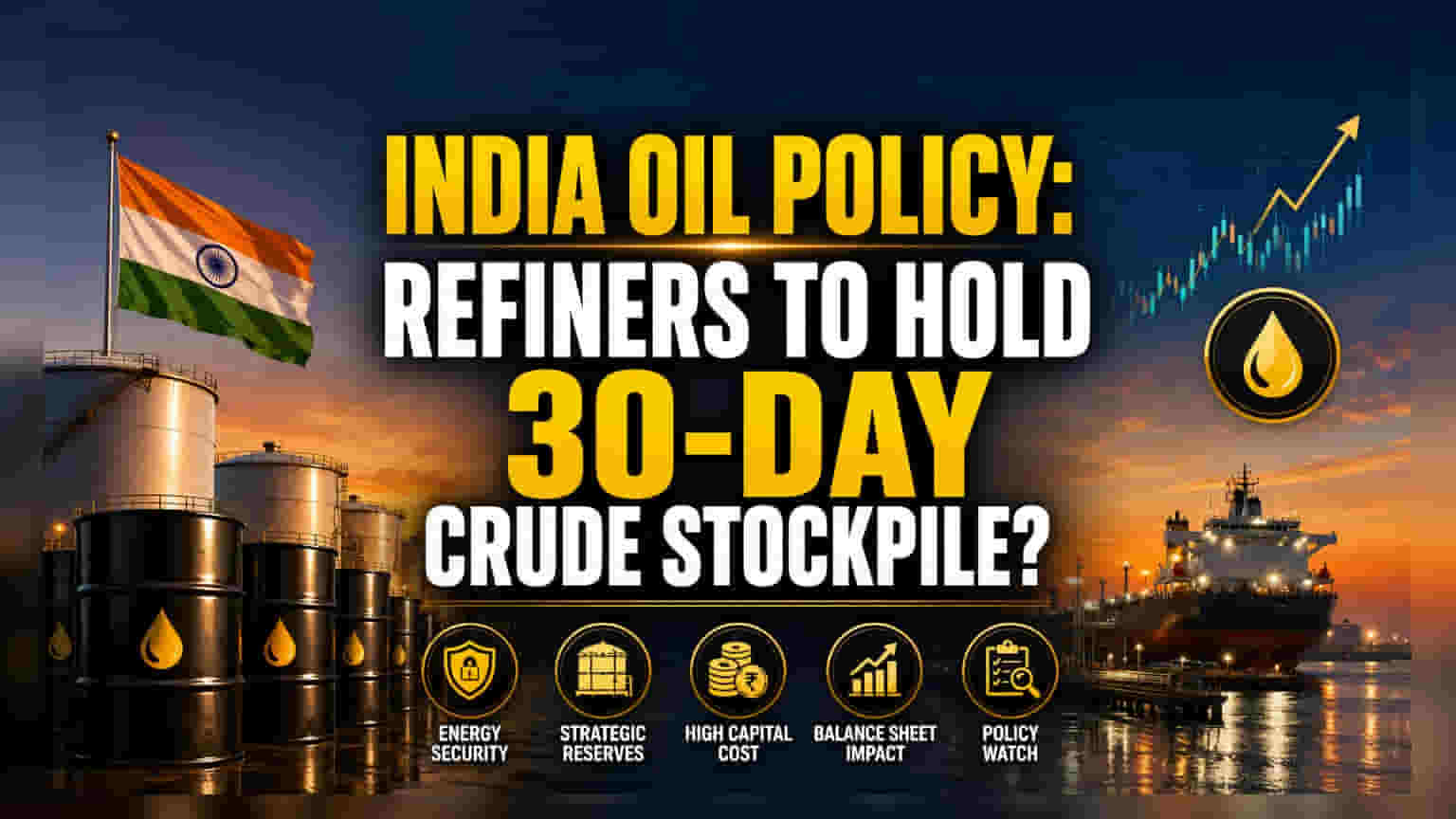


India is considering a plan to require domestic oil refineries to double their crude oil stockpiles to improve energy security. If implemented, this policy could force major refiners to spend thousands of crores on building storage tanks and purchasing millions of barrels of crude. Investors are closely watching how this potential mandate might impact the cash flow, debt levels, and profitability of top oil companies, as it shifts the cost of maintaining national energy reserves from the government to the private and public sector companies.
What Happened
India is exploring a new energy policy that could require domestic oil refiners to significantly increase their crude oil inventories. Currently, most refiners keep enough crude oil to last for about 15 days of normal operations. The proposed policy aims to increase these reserves to cover roughly 30 days of demand. This initiative is similar to the stockpiling strategies used in countries like China, where refiners are compelled to maintain large strategic reserves to protect the nation against supply disruptions, such as geopolitical tensions or conflicts in key oil-producing regions.
The Financial Impact for Refiners
For major Indian refiners, this mandate would mean a significant increase in capital spending and working capital requirements. Early estimates suggest that reaching a 30-day reserve level would require the industry to collectively hold about 150 million barrels of crude oil. Purchasing this volume of oil at current market rates could cost approximately ₹60,000 crore. In addition to the cost of the oil itself, companies would need to invest thousands of crores to construct new, large-scale storage tanks. Building this infrastructure is a long-term process that could take several years to complete.
How Investors May Read This
For shareholders of major oil companies, the primary concern is how this spending will affect the balance sheet. When a company is forced to buy and store large amounts of inventory, that cash is effectively locked up. This can lead to higher debt levels if companies borrow money to pay for the oil or the storage construction. It may also pressure free cash flow, which is the money left over after essential spending. Investors will likely look for clarity on whether the government will offer any financial incentives, tax breaks, or subsidies to help refiners manage these costs. Without such support, the burden of national energy security would fall directly on the refiners, potentially affecting their ability to distribute dividends or fund other growth projects.
The Bigger Business Context
Currently, India manages its energy security through the Indian Strategic Petroleum Reserve (ISPRL), which is a government-run initiative. As of the end of 2025, India’s strategic stocks stood at about 21 million barrels, which is relatively low compared to international standards. Major economies like China, the United States, and Japan hold significantly larger reserves to ensure they can survive sudden supply shocks. The government’s move to involve private and public sector refiners is a shift in strategy, aiming to decentralize these reserves and place the responsibility on the companies that actually process and sell the fuel.
Potential Risks and Concerns
While the goal is to improve energy security, the plan faces practical challenges. The cost of building storage facilities near ports—which would be necessary for efficient import and trading—is high. Furthermore, holding large amounts of inventory comes with the risk of price volatility. If the price of crude oil drops significantly after a company has built up its stockpile, the value of that inventory could fall, leading to accounting losses. Refiners may also resist the plan because it restricts their operational flexibility and forces them to maintain high inventory levels even when market conditions might favor lower stocks.
What Investors Should Track
Investors should wait for official announcements regarding the final policy structure. The most important details to track include the timeline for implementation, whether the government will provide financial assistance or subsidies to offset the costs, and how the storage requirements will be split among the different oil marketing companies. Analysts will likely monitor how much debt these companies may need to raise and whether the mandate leads to a reduction in other capital projects. Until more specific details are released, the market will likely remain cautious about the potential margin pressure this could place on refiners.