

India’s ambitious goal to reach $1 trillion in combined goods and services exports by 2026-27 may be delayed due to global trade uncertainties. While the country achieved a record $863 billion in exports last fiscal year, geopolitical tensions and rising protectionism are creating fresh hurdles. Policymakers are now stressing the need to diversify both products and production hubs to maintain momentum.
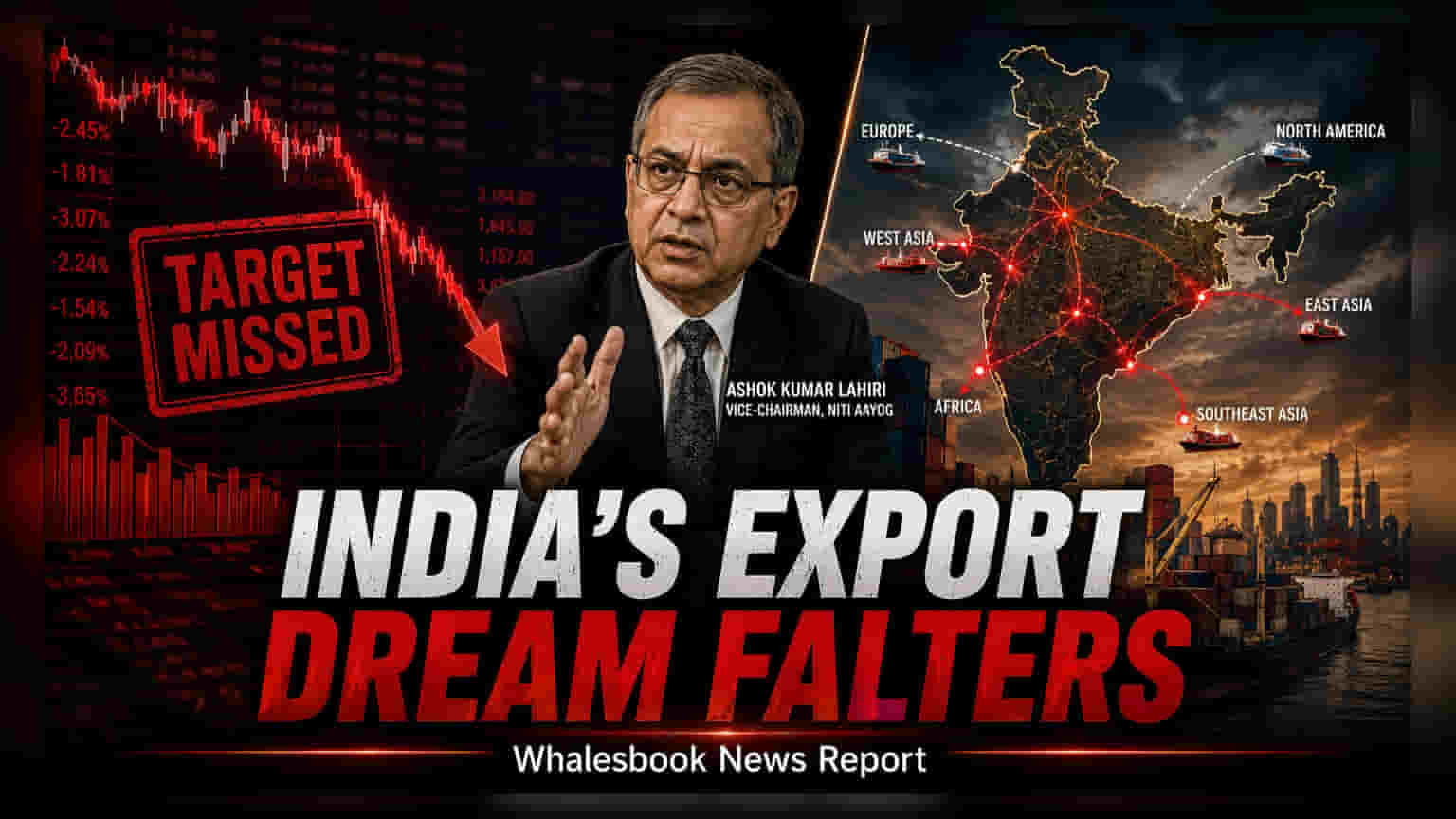
India is re-evaluating its timeline for reaching the $1 trillion export milestone, with NITI Aayog Vice-Chairman Ashok Kumar Lahiri indicating that the target for 2026-27 might shift to 2027-28. This update follows a record-breaking performance in the previous fiscal year, where the country achieved $863 billion in total exports, split between $442 billion in merchandise and $421 billion in services.
While the government has reported approximately 15% export growth in the first four months of the current fiscal year, global headwinds are making the final leg of this journey more difficult. The primary concerns include heightened geopolitical volatility—such as conflicts in the Middle East—and rising protectionist trade policies from major economies. These factors are leading to supply chain disruptions and tariff uncertainties that affect Indian exporters, particularly those in sectors like engineering, pharmaceuticals, and electronics.
Need for Structural Diversification
Beyond external pressures, domestic structural limitations are also in focus. Data shows that approximately 70% of India’s total exports originate from just five states: Maharashtra, Gujarat, Tamil Nadu, Karnataka, and Uttar Pradesh. Policymakers are concerned that this high concentration creates a bottleneck, making the overall export ecosystem vulnerable to localized disruptions or policy changes.
To move closer to the $1 trillion mark, there is a push for broader diversification. This involves not only expanding the range of goods being exported but also decentralizing production so that more states contribute to the national tally. The goal is to integrate Indian manufacturers more deeply into global supply chains, which would also help in upgrading technological standards and product quality.
Economic Resilience and Investor Focus
Despite the challenging global climate, the Indian economy has maintained resilience. Government officials continue to view the current volatility as an opportunity to push forward with structural reforms, emphasizing that reforms must persist to keep the manufacturing sector competitive.
For investors, the key focus remains on how export-heavy companies navigate these risks. With global demand in key markets like the US and Europe showing signs of fragility, companies that are successfully diversifying their client base and reducing dependence on single geographies are generally viewed as better positioned to manage the current pressure. Monitoring export finance availability, logistics costs, and the government’s efforts to improve industry competitiveness will be essential to understanding whether the nation can accelerate its path toward the $1 trillion target in the coming years.