

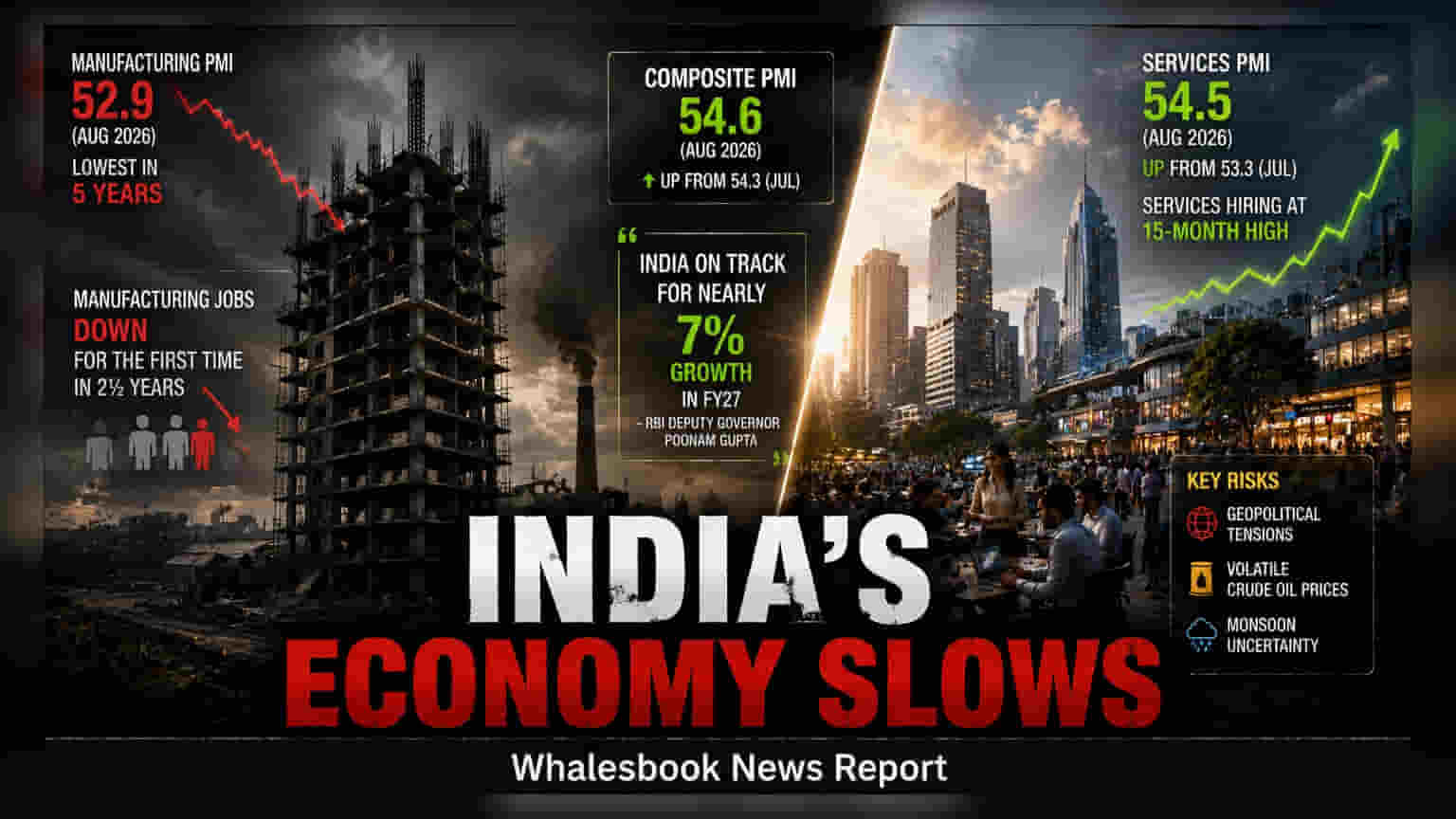
India's private sector saw mixed performance in August 2026, with the manufacturing sector hitting a five-year low in growth while services gained momentum. Despite the manufacturing slowdown, the overall economy remains on track for potential 7% growth this fiscal year as projected by the RBI.
India’s economic activity in August 2026 presented a tale of two sectors as the country’s private sector growth showed divergent trends. The latest HSBC Flash India Composite Purchasing Managers' Index (PMI) data shows the economy reached 54.6 in August, a slight increase from 54.3 in July. However, this headline figure masks a significant slowdown in the industrial sector, where growth has lost momentum.
The manufacturing sector, often considered a key driver of industrial output, faced its weakest expansion in five years. The manufacturing PMI dropped to 52.9 in August from 53.5 in the previous month. This decline is notable not just for output, but for the job market as well, with staffing levels in manufacturing decreasing for the first time in two and a half years. This slowdown suggests that factories are seeing a cooling in new orders and general manufacturing activity.
Conversely, the services sector acted as a stabilizer for the economy. The services PMI climbed to 54.5 in August, up from 53.3 in July. This recovery in services helped pull the composite index higher. Notably, hiring activity in the services sector reached a 15-month high, providing a counterweight to the job losses seen in manufacturing.
Despite these sector-specific struggles, the broader economic outlook remains optimistic. Reserve Bank of India (RBI) Deputy Governor Poonam Gupta recently stated that India is on track to achieve growth of nearly 7% in the current fiscal year. This forecast, if realized, would surpass the central bank's official projection of 6.7%.
However, the data also points to potential challenges for businesses and consumers. While firms reported some relief in cost pressures, they have continued to increase their selling prices, effectively passing higher costs on to customers. This trend suggests that inflation remains a key monitorable. Furthermore, economists have flagged risks that could complicate this growth path, including geopolitical tensions in the Middle East and the volatility of global crude oil prices, which directly impacts India’s import bill. Additionally, the performance of the monsoon season remains a critical factor, as an uneven rainfall pattern can impact rural demand and agricultural output.
For investors, the key focus remains on whether the strength in the services sector can continue to offset the manufacturing deceleration. The upcoming quarterly earnings and further updates on industrial production will be important to track to gauge how companies are managing the twin pressures of slowing demand in some segments and rising input costs.