

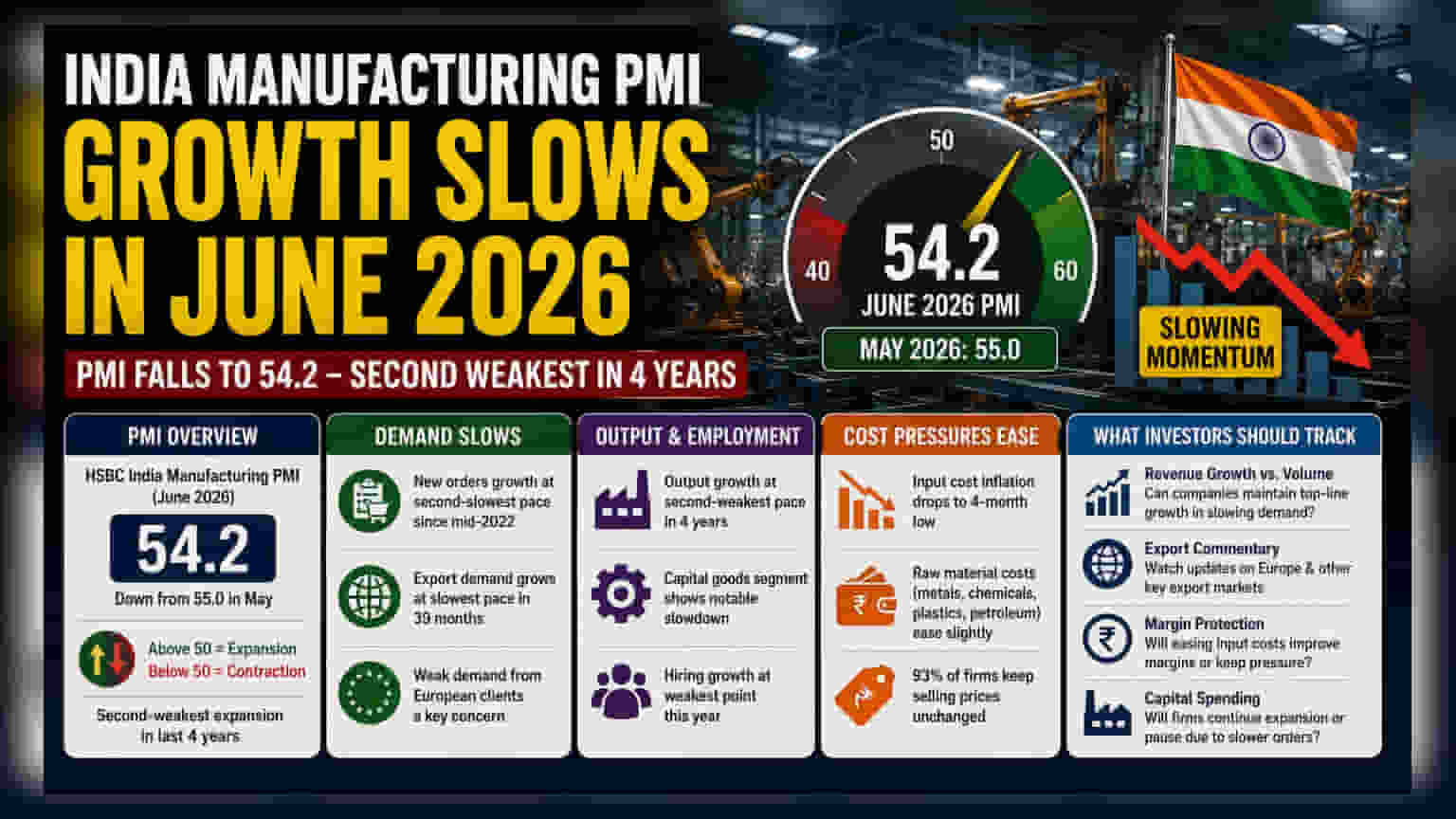
India’s manufacturing sector saw its growth slow to 54.2 in June, the second-weakest pace in four years. While the industry is still expanding, cooling demand and sluggish exports are weighing on production and hiring. Investors should track how these trends impact revenue growth and profit margins in the upcoming quarterly results for manufacturing companies.
What Happened
India's manufacturing sector experienced a slowdown in growth during June 2026. The HSBC India Manufacturing Purchasing Managers' Index (PMI) dropped to 54.2, down from 55.0 in May.
For investors, it is important to understand that a PMI reading above 50 indicates expansion, while a reading below 50 indicates contraction. Therefore, the sector is still growing, but the momentum has slowed significantly. This 54.2 reading marks the second-weakest expansion in the last four years, highlighting a clear cooling trend in the factory sector.
The Demand and Export Challenge
The primary reason for this slowdown is a dip in demand for manufactured goods. New orders, which act as a leading indicator for future production, grew at their second-slowest rate since mid-2022.
Export demand appears to be a specific pain point. International sales grew at their slowest pace in 39 months, with many companies pointing to weak demand from European clients. For investors, this is a relevant data point for manufacturing companies that have a high exposure to European export markets, as softer international demand could weigh on their revenue growth.
Output and Employment Trends
The softening demand has naturally impacted production levels. Output growth in June was at its second-weakest pace in four years. This trend was particularly noted in the capital goods segment.
In response to this cautious environment, hiring growth also moderated to its weakest point this year. Many companies reported that they are keeping their headcount unchanged, as their existing capacity is sufficient to handle the current level of new orders.
Cost Pressures and Margin Outlook
While demand and output growth have slowed, there is a silver lining regarding costs. Input cost inflation dropped to a four-month low. This suggests that the pressure on raw material prices—such as metals, chemicals, plastics, and petroleum products—has eased slightly.
However, companies are showing caution in passing these costs on to customers. The data shows that 93% of companies held their selling prices steady in June. While easing input costs can theoretically help protect profit margins, the ability to maintain these margins will now depend on whether companies can manage their volume growth effectively in a slowing demand environment.
What Investors Should Track
Investors may want to watch several factors in the coming months:
- Revenue Growth vs. Volume: With demand cooling, it will be important to see if companies can maintain top-line growth or if volume pressure begins to bite.
- Export Commentary: Look for details in upcoming quarterly results regarding demand from Europe and other major export destinations.
- Margin Protection: Monitor whether the easing in input costs is actually reflecting in better operating margins, or if the lack of price hikes keeps profitability under pressure.
- Capital Spending: Since new order growth is slowing, investors may track whether companies continue with planned capital expansion or if they decide to pause, given the adequate capacity cited by many firms.