

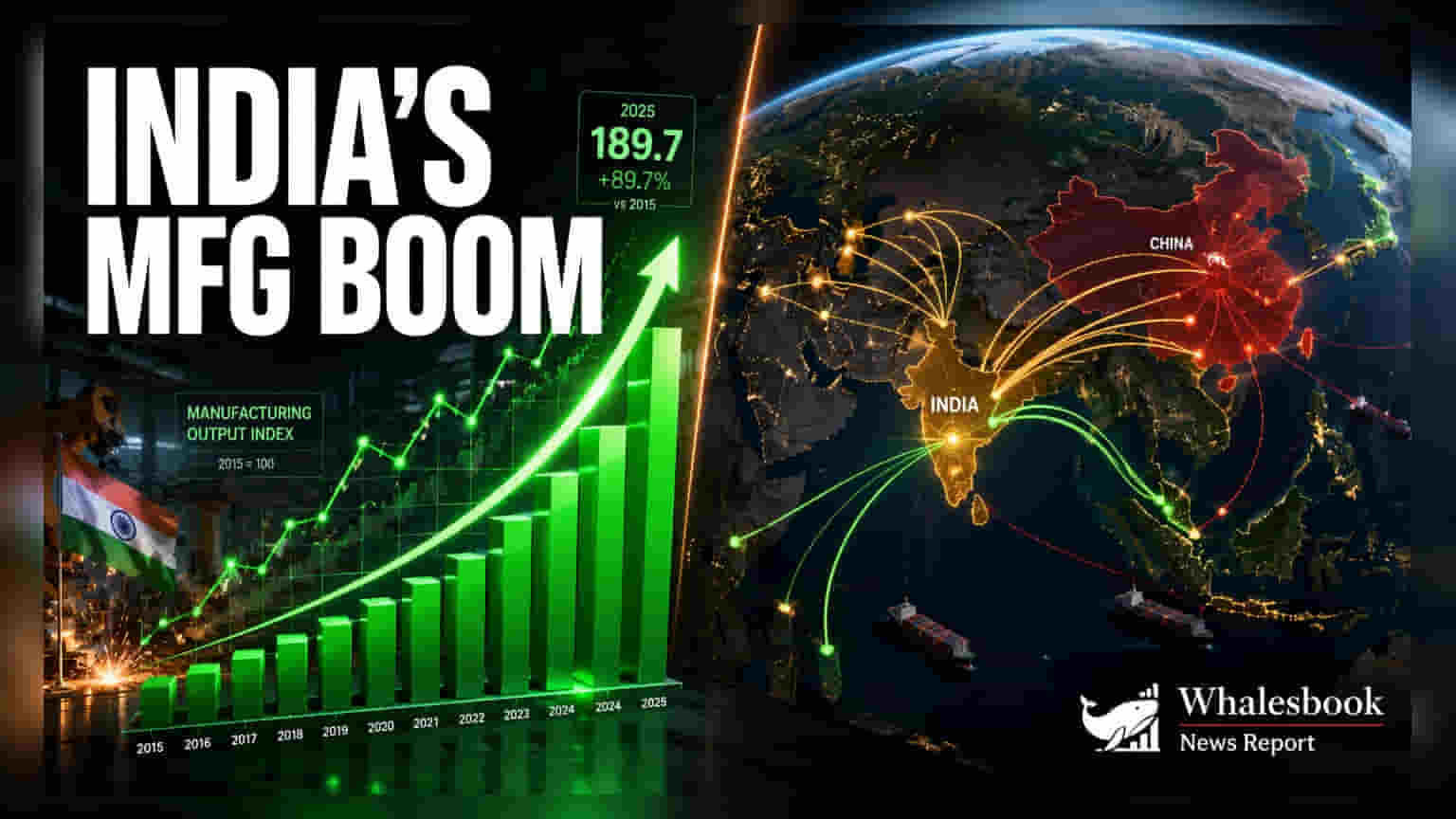
India's manufacturing growth rate averaged 4.15% between 2022 and 2025, surpassing the global average by nearly two percentage points. This shift reflects a move by global companies to diversify supply chains away from China. Increased infrastructure spending and government incentive schemes are key factors behind this performance.
India has emerged as a significant manufacturing hub, with its industrial growth now outpacing international averages. A recent study by the Associated Chambers of Commerce and Industry of India (ASSOCHAM) highlights that the country's manufacturing growth reached 4.15% during the 2022-2025 period. This is a notable step up from the 3.44% growth rate observed in the pre-pandemic years of 2016-2019.
Factors Driving the Manufacturing Shift
The improved performance is linked to the global 'China+1' strategy, where multinational corporations are spreading their production facilities to multiple countries to build supply chain resilience. India has become a preferred destination for this diversification. The growth is supported by several domestic factors, including rising local consumption, better logistics networks, and major government-led projects. Initiatives like the Production Linked Incentive (PLI) schemes and the PM Gati Shakti national master plan have been instrumental in reducing operational bottlenecks and improving the speed of project execution.
Global Comparisons and Regional Dynamics
The ASSOCHAM study analyzed the ten largest manufacturing economies, which account for about 65% of global output. While China remains the largest manufacturer, its growth has slowed. Before the pandemic, China's growth was 2.4 percentage points above the global average, but in the 2022-2025 period, it dropped to 2.26 percentage points below the global norm. India, meanwhile, now sits alongside developed economies like the United States, Germany, and the United Kingdom in exceeding the global benchmark. Mexico continues to be a top performer in this space, while Russia has also shown growth above the international average.
Challenges and Future Monitorables
While the data shows positive momentum, the long-term success of this manufacturing expansion will depend on how effectively India can continue to upgrade its logistics and supply chain networks. Analysts often point out that the cost of logistics in India remains higher than in many competing manufacturing hubs, which can impact the final price of exported goods. Furthermore, the sustainability of this growth depends on the country's ability to integrate deeper into global value chains through trade agreements and by adopting advanced 'Industry 4.0' technologies. Investors should track how effectively these government-backed infrastructure projects reach completion and whether they lead to a sustained increase in production capacity across sectors like electronics, chemicals, and automotive components.