

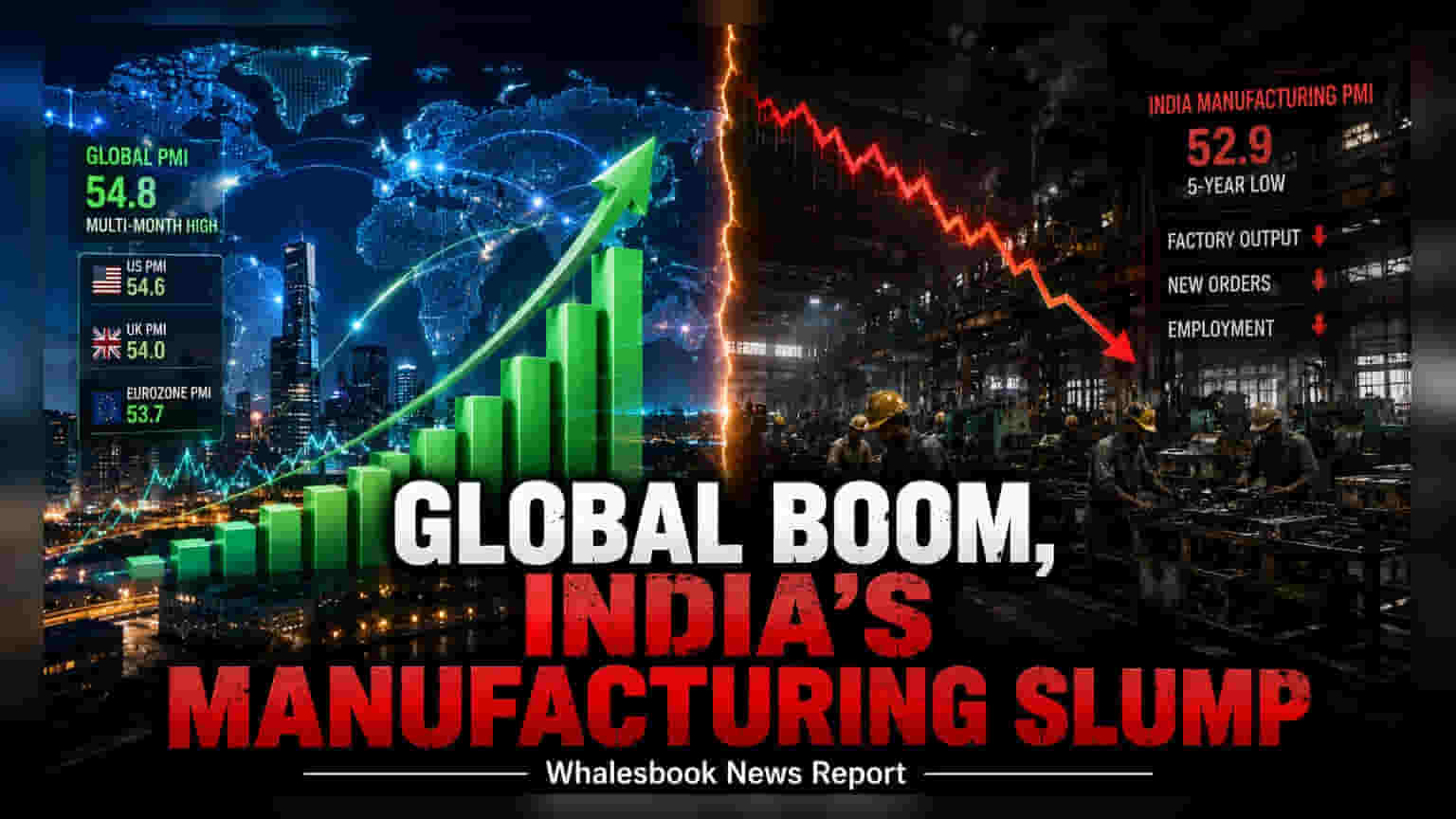
India's manufacturing sector growth fell to a five-year low in August 2026, even as the broader economy saw service sector resilience. Companies increased product prices to protect margins despite cooling demand, signaling potential risks for inflation and future profitability.
India’s manufacturing sector experienced its weakest growth in five years during August 2026, diverging from the broader global recovery trend. While major economies like the United States, the United Kingdom, and the Eurozone reported multi-month highs in business activity, India’s factory output and new order growth continued to cool for the third consecutive month.
Weakness in Factory Output and Employment
The latest data shows the manufacturing Purchasing Managers' Index (PMI) falling to 52.9 from 53.5 in July. More significantly, the sector saw a contraction in hiring, with manufacturing employment declining for the first time in two-and-a-half years. This shift suggests that companies are becoming cautious about capacity expansion and hiring due to the slowdown in new business inflows.
The Margin Protection Trade-off
Despite the cooling demand and a slowdown in new orders, Indian manufacturing firms chose to increase their selling prices at the fastest pace since April 2026. This strategy appears aimed at protecting profit margins, even as input cost inflation has shown signs of easing. From an investor perspective, this move is critical to monitor. While it helps in the short term to maintain margins, it carries the risk of dampening demand further if consumers or industrial buyers reduce spending in response to higher prices.
Divergence from Services
The economic picture remains mixed because the services sector continues to act as a buffer. The Flash Services PMI rose to 54.5, indicating that domestic demand for services remains robust. This divergence between a struggling manufacturing base and a resilient services sector creates a complex environment for earnings growth across different industries. Investors should watch whether the services sector can maintain this momentum or if the manufacturing slowdown eventually begins to weigh on the broader economy.
Investor Monitorables
The key area to track in the coming months will be whether companies can sustain these higher prices without losing market share. If demand does not pick up, firms may be forced to either lower prices, which would squeeze margins, or face inventory accumulation. Additionally, the labor market trend will be an important indicator of management sentiment; a prolonged decline in hiring could suggest that corporate India is bracing for a period of lower growth.