

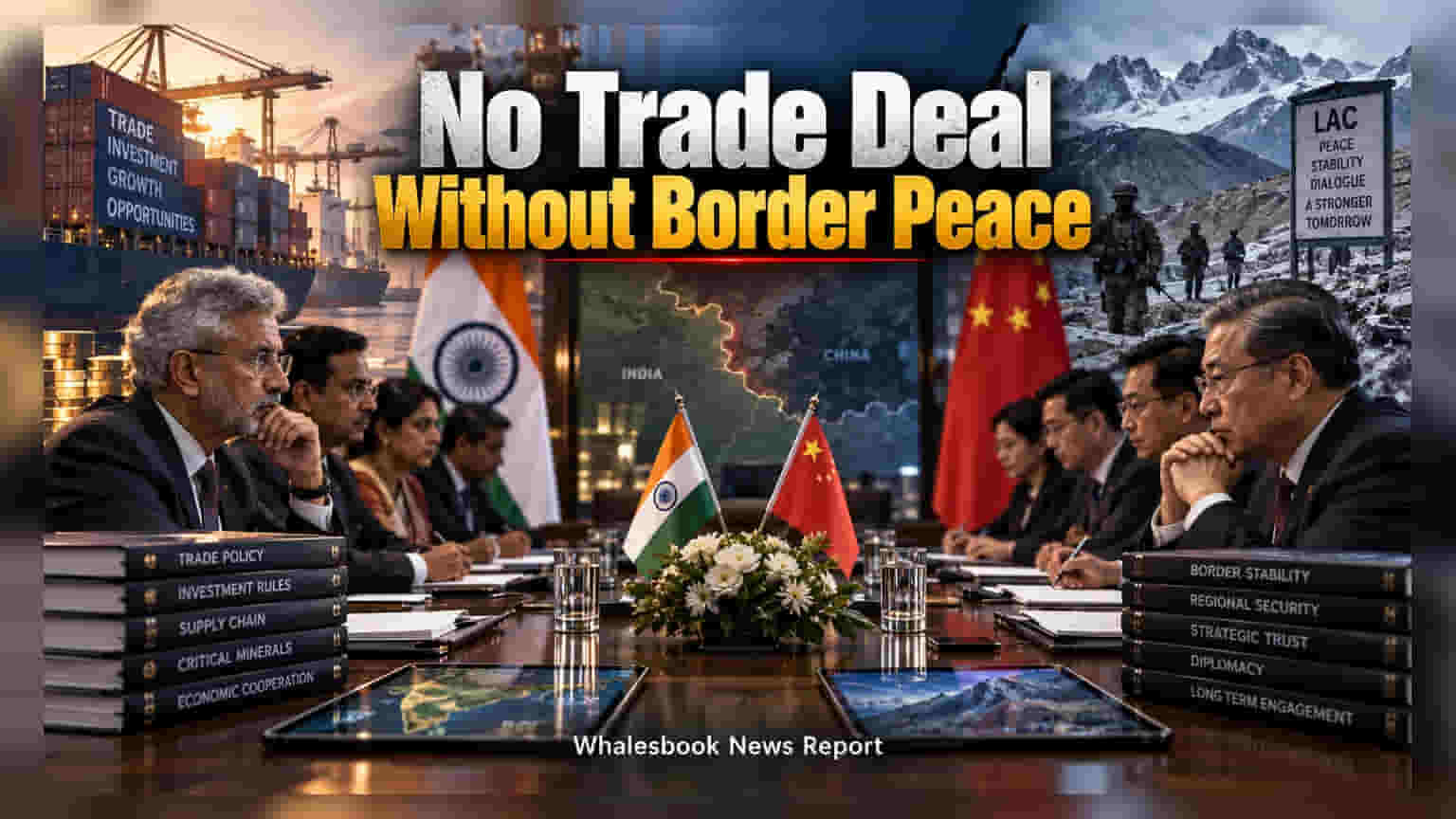
India has confirmed that economic concessions for China remain on hold until border tensions are resolved. This ensures that current restrictions on investment and trade will continue, directly impacting companies reliant on Chinese supply chains.
India has clearly stated that it will not offer trade concessions or ease foreign investment rules for China until the situation at the Line of Actual Control becomes stable. This policy remains unchanged despite ongoing diplomatic efforts. For investors and businesses, this means the current trade and investment environment will continue for the foreseeable future.
In the fiscal year 2026, the bilateral trade between the two nations reached $151 billion. A significant portion of this—$131.6 billion—consisted of Chinese goods flowing into India. This trade deficit has been a point of discussion for the government, which has expressed concerns over restrictive export policies from Beijing regarding critical materials, such as rare earth minerals and advanced technology components.
The investment climate remains governed by regulations that mandate government security clearance for any foreign direct investment originating from countries that share a land border with India. This policy, which requires strict vetting for capital inflows, is expected to continue without significant changes. The government has signaled that peace in the border regions is the fundamental requirement for any broader economic cooperation.
For Indian investors, this development is significant because of how it affects domestic industries. Many Indian companies in sectors like pharmaceuticals, solar energy, and electronics remain dependent on Chinese raw materials or components. The lack of change in trade policy means that companies must manage supply chain risks and potential cost pressures without the expectation of eased trade barriers in the near term.
The government continues to promote self-reliance in manufacturing through various production-linked incentive schemes. These programs aim to reduce dependence on imported components over the long term. Investors may monitor how companies in import-heavy sectors manage raw material costs and whether they can successfully diversify their supply sources to mitigate risks. The next important update for the market will be any potential changes in sector-specific import regulations or further progress in domestic manufacturing capacity.