

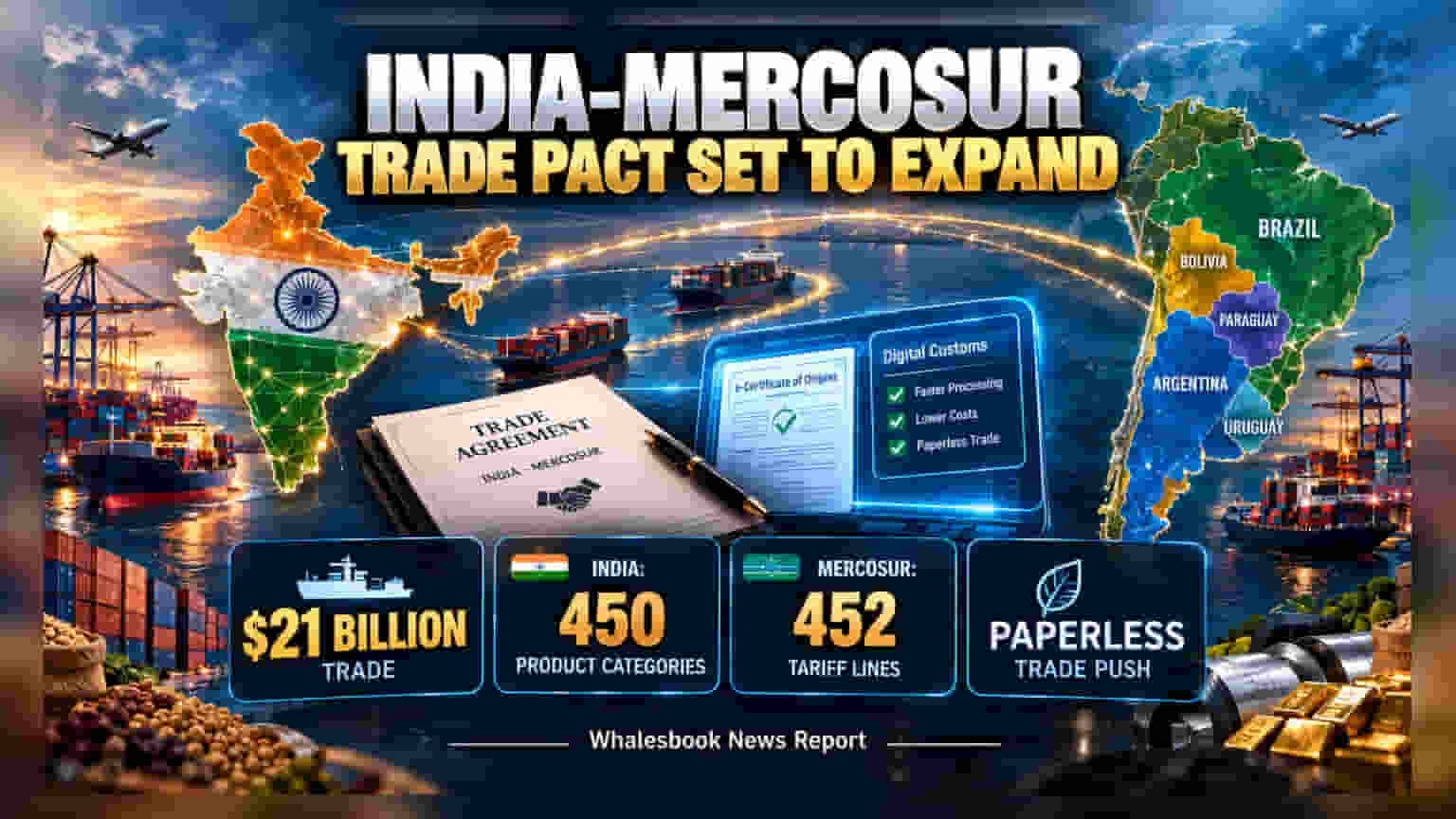
India and the MERCOSUR trade bloc have launched negotiations to expand their existing preferential trade agreement, which supports $21 billion in annual commerce. Both sides have also introduced digital protocols to reduce customs paperwork. While this marks a strategic shift toward market diversification, the specific product sectors set to benefit remain under discussion.
India and the MERCOSUR bloc—comprising Brazil, Argentina, Bolivia, Uruguay, and Paraguay—have officially launched negotiations to broaden their preferential trade agreement. The move, announced on September 14, 2026, by India’s Commerce and Industry Minister Piyush Goyal and Uruguay’s Foreign Affairs Minister Mario Lubetkin, aims to deepen economic ties and boost trade between the two regions.
The existing trade agreement, which has been in place since June 2009, currently offers tariff concessions on 450 product categories for India and 452 lines for MERCOSUR. The two sides are now defining the terms of reference, which will establish the scope and structure of the expanded deal. While no specific sectors have been identified for new tariff reductions yet, the negotiation process is designed to improve market access for goods that are currently constrained.
In addition to the broader negotiations, India and MERCOSUR have signed a protocol to implement electronic Certificates of Origin. These documents are essential for establishing whether goods qualify for preferential tariff treatment. By shifting to a digital, paperless system, the move is expected to lower transaction costs, decrease processing times, and modernize customs procedures. This administrative step follows discussions held within the Joint Administrative Committee that governs the trade pact.
For investors and businesses, the strategic importance of this expansion lies in India's push to diversify its export destinations, especially amid volatile global trade conditions. With bilateral trade reaching $21 billion in 2025, a successful expansion could offer new opportunities for Indian exporters looking to enter or grow their presence in South American markets.
However, the ultimate economic impact for domestic industries will depend on the final agreement terms. Investors should note that trade with South American nations involves inherent challenges, including significant geographical distance and high logistics costs, which can impact profit margins. Furthermore, as with most trade pacts, the negotiation process may face sensitivity regarding domestic industry protection in specific sectors. Market participants will likely track the forthcoming details on the Terms of Reference to understand which product categories and industries are prioritized for tariff benefits.