

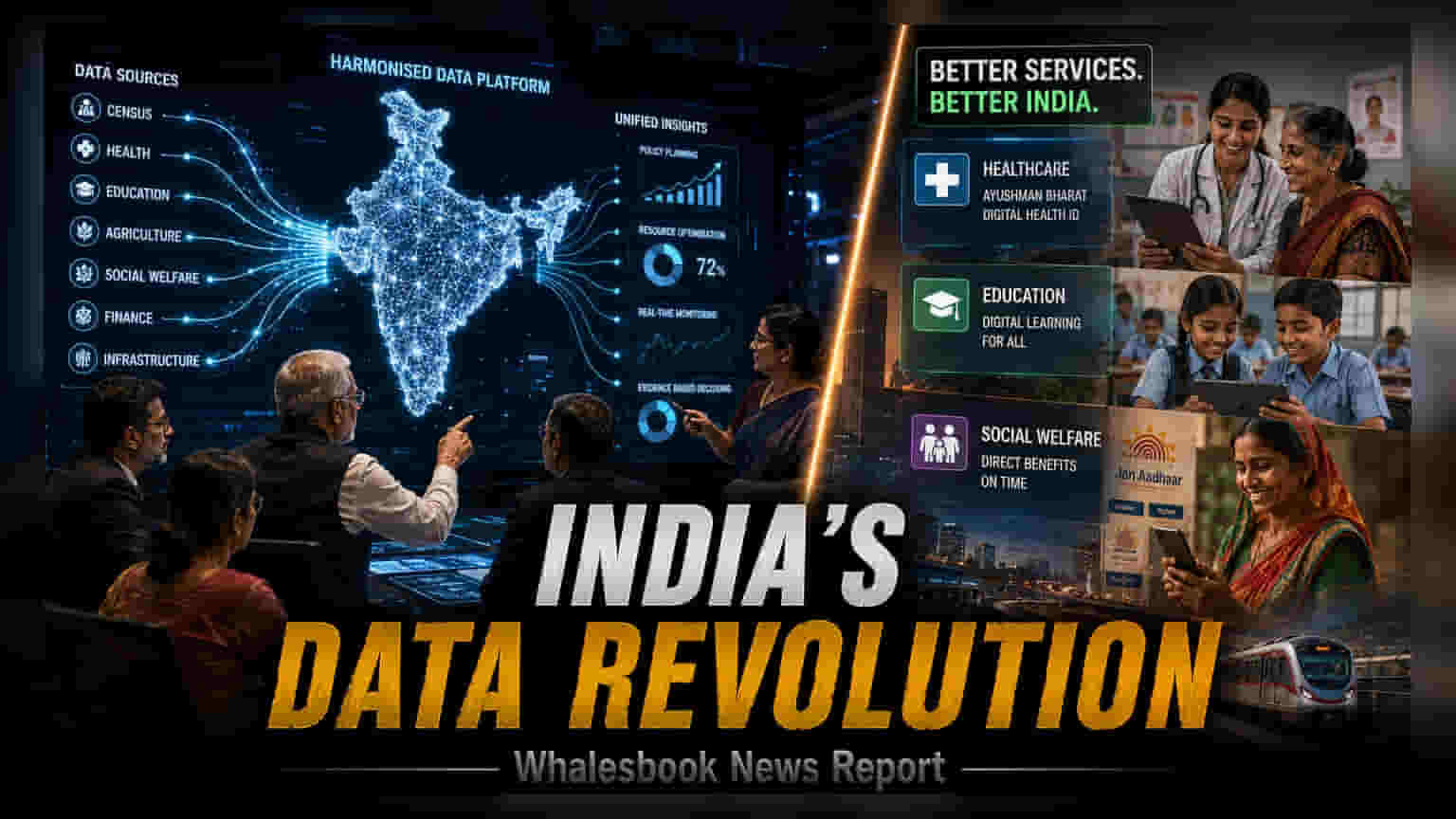
The Government of India is standardizing administrative data across departments to remove information silos. This initiative, led by the Ministry of Statistics and Programme Implementation, aims to use AI to improve policy-making and public service delivery by ensuring data is consistent and accessible.
The Government of India is undertaking a significant effort to harmonize administrative data across various departments. This initiative, spearheaded by the Ministry of Statistics and Programme Implementation (MoSPI), is designed to break down "data silos"—situations where information is locked within specific departments and cannot be easily shared or analyzed. The goal is to move from fragmented data to a unified system that can support better policy decisions and more efficient public services. As this is a government policy initiative and not a corporate event, it has no direct impact on individual company stocks, but it holds long-term importance for the broader economy and fiscal efficiency.
Standardizing Information for Efficiency
Currently, government data often suffers from inconsistencies. Different departments might use varying definitions for basic terms, or collect data in ways that prevent it from being combined. By creating common classifications and metadata standards, the government aims to ensure that data collected once can be used effectively across multiple domains. This is a critical step for adopting advanced technologies like Artificial Intelligence in governance, which requires large, clean, and consistent datasets to function reliably. To guide this, the government released 'Data Harmonisation: A Practitioner's Handbook' in June 2026.
Economic and Policy Impact
For the broader economy, this harmonization is expected to improve the effectiveness of government spending. By integrating existing platforms like the Agri Stack and the Ayushman Bharat Digital Mission, officials can gain a clearer picture of public needs. This helps in reducing leakages in social schemes and ensuring that public funds are directed where they are needed most. The initiative also aligns with the government's push for data-driven governance, aiming to make administrative processes faster and more transparent. Increased efficiency in public service delivery often creates a more stable operating environment for businesses by reducing bureaucratic friction.
Challenges to Monitor
While the potential for efficiency is high, the implementation faces real-world challenges. Protecting citizen data privacy is a primary concern as vast, disparate datasets are integrated and centralized. Additionally, moving different departments toward a single, standardized framework is an institutional challenge that takes time. The success of this policy will depend on how effectively these standards are adopted across all levels of the bureaucracy and how robust the cybersecurity measures are to protect the centralized data.
The next important update to watch for will be the tangible integration of large-scale state registries, such as Karnataka's Kutumba or Rajasthan's Jan Aadhaar, into this harmonized framework, and whether this leads to measurable improvements in the delivery of services to citizens.