

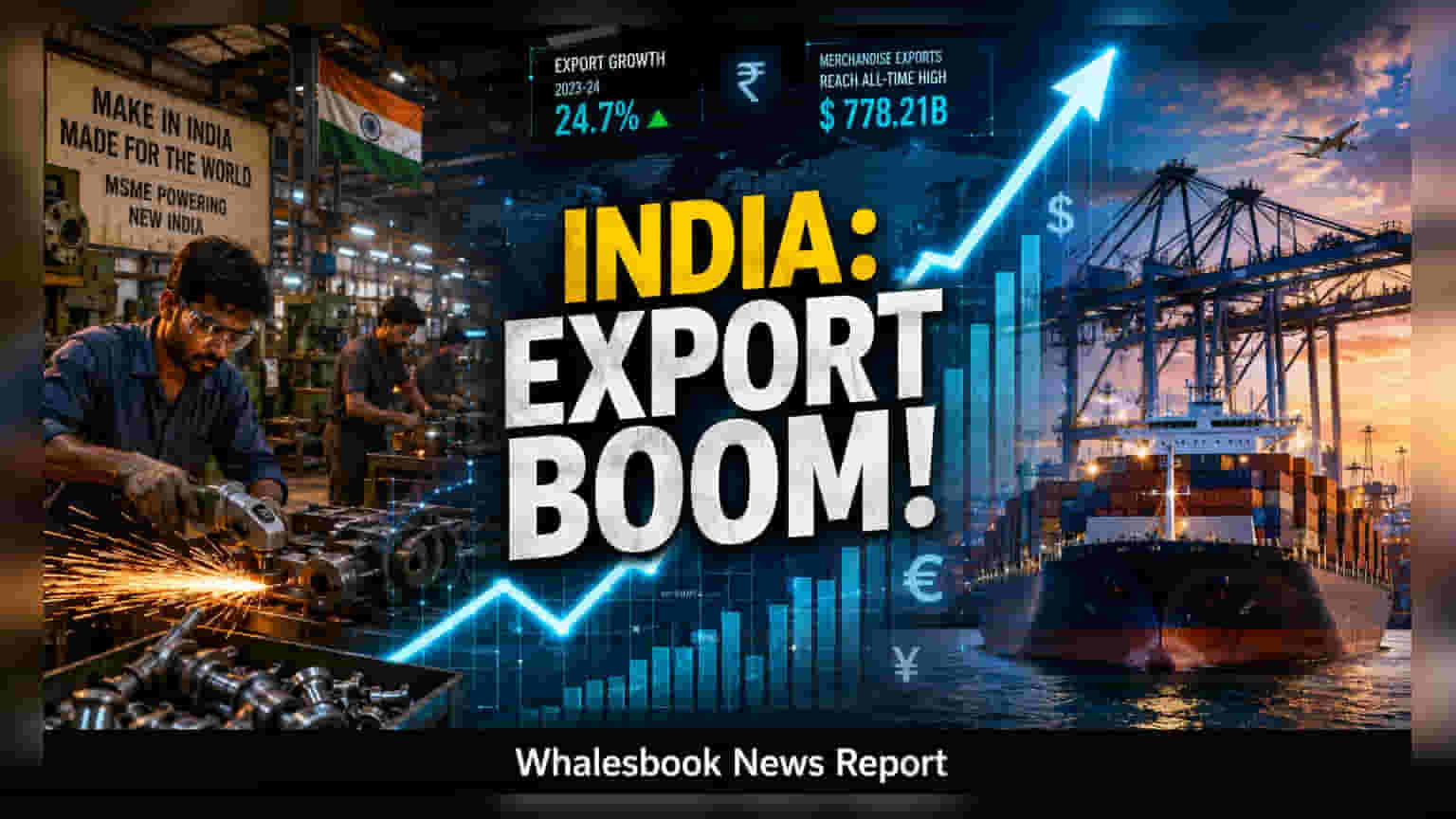
The Indian government has operationalized an inventory-based framework for e-commerce exports to simplify global sales for MSMEs. By acting as the 'Exporter-on-Record', platforms can now manage customs and logistics for local sellers. However, concerns regarding inventory separation and potential market distortion remain key monitorables.
The Government of India has officially launched the 'Inventory-based Cross-border E-Commerce Export Framework,' a significant update under the Foreign Trade Policy 2023. Notified by the Directorate General of Foreign Trade (DGFT) on August 5, 2026, this move aims to make it easier for Indian Micro, Small, and Medium-sized Enterprises (MSMEs) to sell their products in international markets.
Under this new policy, foreign-funded e-commerce platforms can register as an 'Exporter-on-Record' (EOR) via the Aayaat Niryaat Form (ANF) 9A. These platforms are now permitted to purchase goods directly from Indian 'Sellers-on-Record' (SORs) to hold in inventory specifically for export purposes. The core benefit for smaller businesses is that the e-commerce platform becomes responsible for all complex export procedures, including customs clearance, product testing, labeling, and managing reverse logistics. This is designed to remove the burden of documentation and compliance costs from individual MSMEs.
To prevent misuse, the framework includes strict safeguards. The government has mandated that inventory held under this scheme must be strictly segregated and digitally tracked. These goods are prohibited from being diverted into the domestic market. Platforms must also ensure timely payments to the Indian sellers regardless of when the overseas buyer makes the payment. Annual compliance certifications and the maintenance of clear digital records are required to ensure transparency and prevent speculative inventory build-up.
While the government intends to boost export competitiveness, the policy has sparked debate among industry analysts and trade bodies. Organizations like the Global Trade Research Institute (GTRI) have questioned whether this model introduces significant changes compared to existing export-house structures, while also highlighting the risk that it might fuel demands for similar inventory-based models in domestic retail. Furthermore, domestic trader associations, such as the Confederation of All India Traders (CAIT), have previously raised concerns regarding the potential for large e-commerce platforms to gain an unfair advantage or distort market dynamics if enforcement of these new rules is not rigorous.
The success of this initiative will largely depend on the effective implementation of the separation between export-only inventory and domestic retail stock. Investors and stakeholders will be watching how e-commerce platforms adapt their supply chains to meet these regulatory requirements and whether the simplified export process leads to a measurable increase in MSME participation in global trade. The next important update for the industry will be the first round of platform registrations and the subsequent impact on export volumes for small-scale manufacturers.