

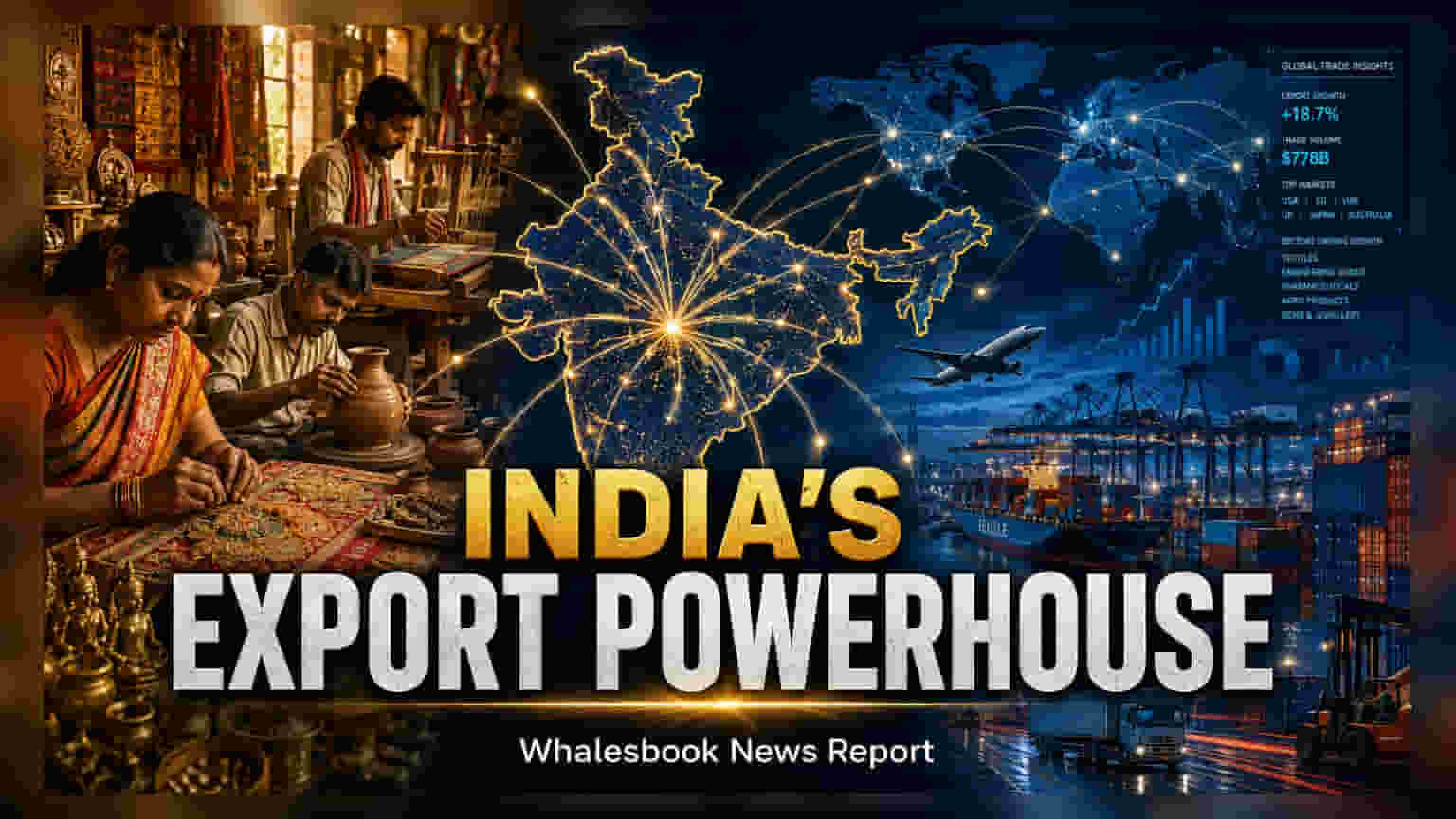
The Indian government has operationalized an inventory-based e-commerce export framework, allowing foreign-funded platforms to store export-only goods. This policy shift simplifies global access for small manufacturers and artisans through an 'Exporter-on-Record' system. Investors should monitor how logistics and e-commerce companies manage the strict regulatory separation between export inventory and restricted domestic retail stock.
The Government of India officially operationalized the inventory-based cross-border e-commerce export framework on August 5, 2026. Through a notification from the Directorate General of Foreign Trade (DGFT), the government has established the rules for how foreign-funded e-commerce platforms can hold inventory specifically for international shipments. This initiative stems from the Foreign Trade Policy (FTP) 2023 and follows a crucial amendment to the Foreign Direct Investment (FDI) policy implemented in July 2026.
Enabling Exports for Smaller Players
For many Indian Micro, Small, and Medium Enterprises (MSMEs) and artisans, the traditional export process has often been complex due to logistical requirements, quality certification, and international compliance. The new framework aims to solve this by allowing platforms to hold inventory in advance. This means goods can be stored ready for sale, significantly reducing the time it takes for a product to reach an international customer. A central part of this change is the introduction of the 'Exporter-on-Record' (EOR) system. These EOR entities will take responsibility for crucial tasks, including export compliance, labeling, quality certification, and reverse logistics. This effectively creates a plug-and-play export model for smaller Indian manufacturers who previously lacked the infrastructure to manage international shipping individually.
Regulatory Guardrails and Investor Risks
While the policy creates an opening for growth in export volumes, it also introduces specific regulatory responsibilities. The government has maintained strict rules to ensure that this export-focused inventory does not enter the domestic retail market. Under current Indian laws, foreign-funded e-commerce entities are restricted from operating inventory-based models for domestic consumers. Therefore, companies leveraging this new framework must maintain a transparent digital repository that links procurement, GST invoices, and export documentation to prove that the goods are strictly for international buyers.
For investors, the primary monitorable is compliance risk. Companies involved in this space must ensure that their operational systems are robust enough to prevent any 'leakage' of export-only stock into the local market, which could trigger significant regulatory scrutiny or penalties. Furthermore, while the EOR model simplifies the process, managing international dispute resolution and reverse logistics for thousands of small sellers remains an operational challenge that could affect margins if not managed efficiently.
The framework caps administrative charges for EORs at 10% of gross export rebates and refunds, which adds a layer of predictability to the costs involved. The next major update for the market will be the speed at which e-commerce and logistics players register as EORs and the volume of goods actually moved through these new export hubs in the coming quarters.