

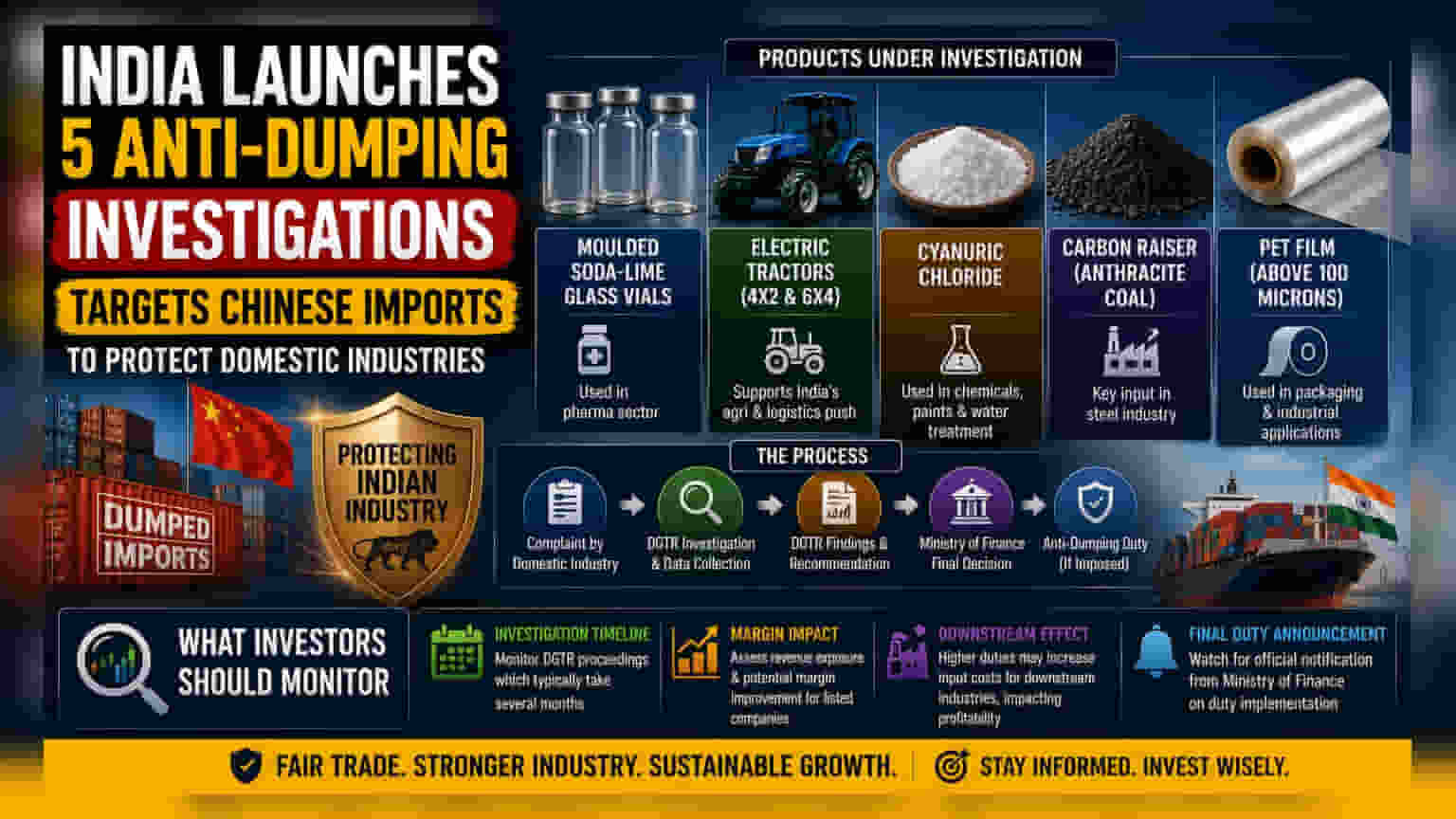
The Directorate General of Trade Remedies (DGTR) has initiated investigations into five products, including glass vials and electric tractors, following complaints from domestic manufacturers about low-cost imports. This move is the first step in determining if protective import duties are needed. Investors should track this process, as potential levies could eventually alter competition and input costs in these sectors.
What Happened
India has officially launched five distinct anti-dumping investigations into the import of critical goods, largely targeting products coming from China. The Directorate General of Trade Remedies (DGTR), the government body that manages trade protection, initiated these probes after receiving complaints from local manufacturers. These companies argue that a surge of cheap imports is causing "material injury" to their business, effectively making it difficult for domestic firms to compete.
The products currently under the microscope include moulded soda-lime glass vials, electric tractors (specifically 4x2 and 6x4 axle models), cyanuric chloride, carbon raiser made from anthracite coal, and PET film above 100 microns.
The Products And Industry Impact
These investigations affect several segments of the manufacturing industry. For example, moulded soda-lime glass vials are essential for the pharmaceutical sector. Similarly, PET film is a widely used material in industrial applications.
Among the companies associated with these petitions are Garware Hi-Tech Films, which is a publicly listed entity in India. For listed companies, these investigations are important because they are an attempt to protect market share against cheaper international alternatives. If the DGTR confirms that these goods are being "dumped"—meaning sold in India at prices lower than their cost of production or their price in the home market—it may eventually lead the government to impose anti-dumping duties to level the playing field.
The Process And Investor Context
Investors should understand that this is only the beginning of a lengthy administrative process. The launch of an investigation does not mean duties are being imposed immediately. The DGTR will now collect data, analyse pricing, and evaluate the impact on domestic producers. This process typically takes several months.
Only after the DGTR completes its analysis will it make a recommendation to the Ministry of Finance. The Finance Ministry then holds the final authority to impose or reject any protective duties. This can be a double-edged sword for the market: while these duties can protect domestic manufacturers and improve their pricing power, they can also increase input costs for other Indian industries that rely on these imported raw materials.
What Investors Should Monitor
For shareholders, the key is to look beyond the headline. Investors should monitor:
- Investigation Timeline: Updates on the DGTR proceedings, which usually take months to conclude.
- Margin Impact: Whether these specific segments represent a large portion of revenue for the listed companies involved.
- Downstream Effect: If duties are eventually imposed, businesses that use these imported items as raw materials could face higher production costs, which may squeeze their profit margins.
- Final Duty Announcement: Any official notification from the Ministry of Finance regarding the implementation of duties, which is the final step in this process.