

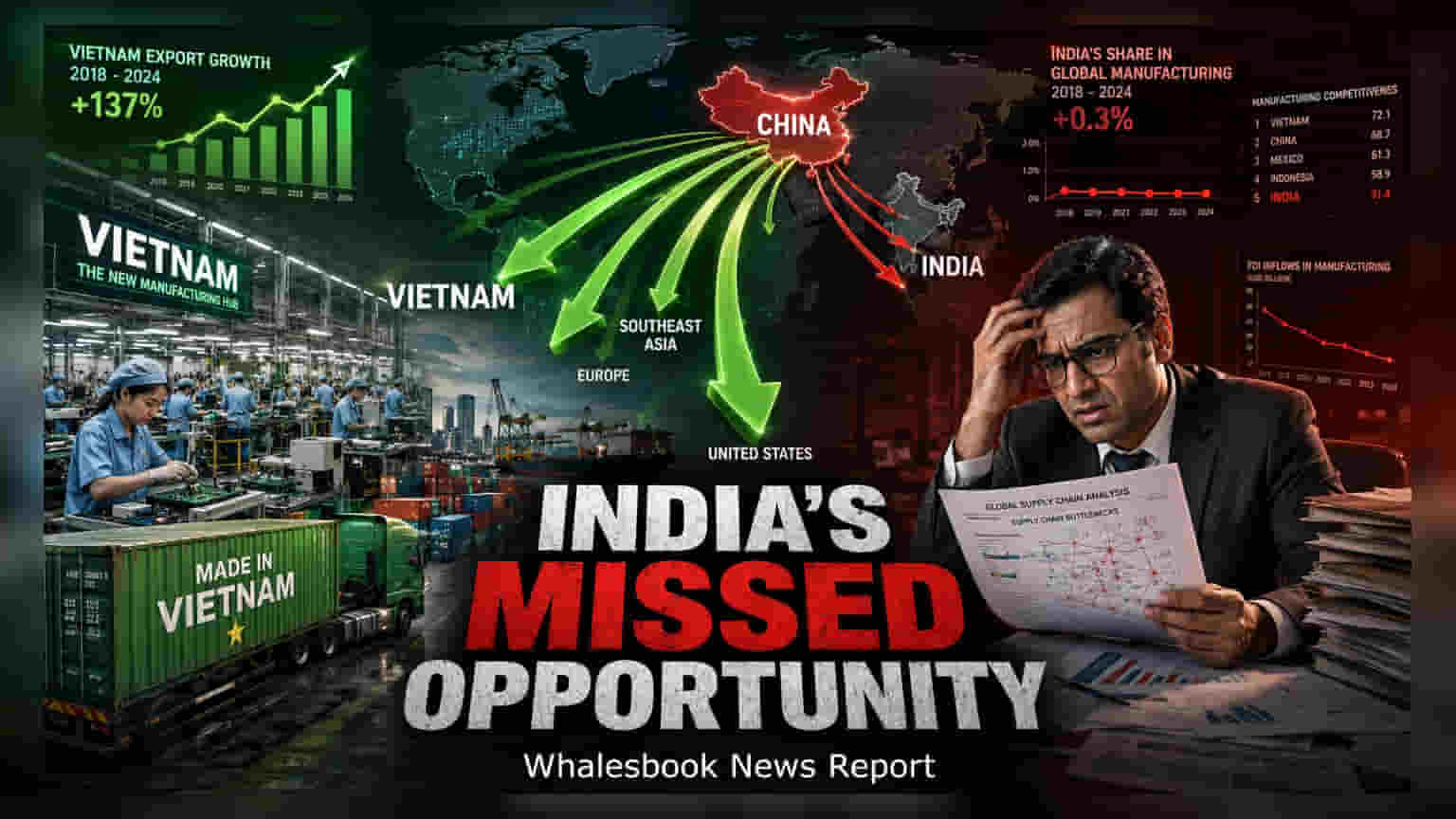
Economist Pravin Krishna warns that India has failed to fully capture the 'China+1' investment shift, trailing rivals like Vietnam and Mexico. While infrastructure has improved, persistent regulatory frictions and concerns over policy predictability continue to deter foreign capital.
India has not been able to fully capitalize on the global 'China+1' strategy, a shift where companies look to move or diversify their manufacturing bases away from China to mitigate risks. According to economist Pravin Krishna, a professor of international economics at Johns Hopkins University, India's performance in attracting this redirected foreign investment has been underwhelming when compared to countries like Vietnam and Mexico.
The Impact of Regulatory Hurdles
While India has made notable strides in improving its physical and digital infrastructure, Krishna points out that such advancements alone are not enough to lure large-scale manufacturing. He identifies persistent regulatory, operational, and taxation frictions as major barriers that continue to deter foreign investors. Companies looking to relocate production are rational actors seeking the most efficient and business-friendly environments, and currently, other nations are presenting more attractive options in terms of ease of doing business and administrative clarity.
Can India Still Catch Up?
Despite the slower-than-expected start, Krishna suggests that the window of opportunity for India is not entirely closed. The global shift of supply chains remains a relevant and active process, and the opportunity for India to secure a larger share of this investment still exists. However, he warns that further delays in addressing these operational frictions will result in missed economic growth. Investors often express hesitation regarding the potential for arbitrary regulatory changes or unpredictable taxation policies, which can undermine long-term capital commitments.
Global Trade Context
Krishna also addressed concerns regarding the challenging global trade environment. Some analysts have argued that a difficult global economy limits India's export and manufacturing potential. Krishna disagrees, noting that the global market remains large enough for India to carve out a significant footprint. He pointed to China's ability to maintain its manufacturing dominance even while facing trade barriers as evidence that global demand is not the primary constraint. Instead, the focus should remain on domestic reforms to enhance India's competitiveness and appeal as a preferred destination for global companies. The future success of this strategy will likely depend on India's ability to streamline its regulatory environment to become a more predictable and efficient hub for global manufacturers.