 Whalesbook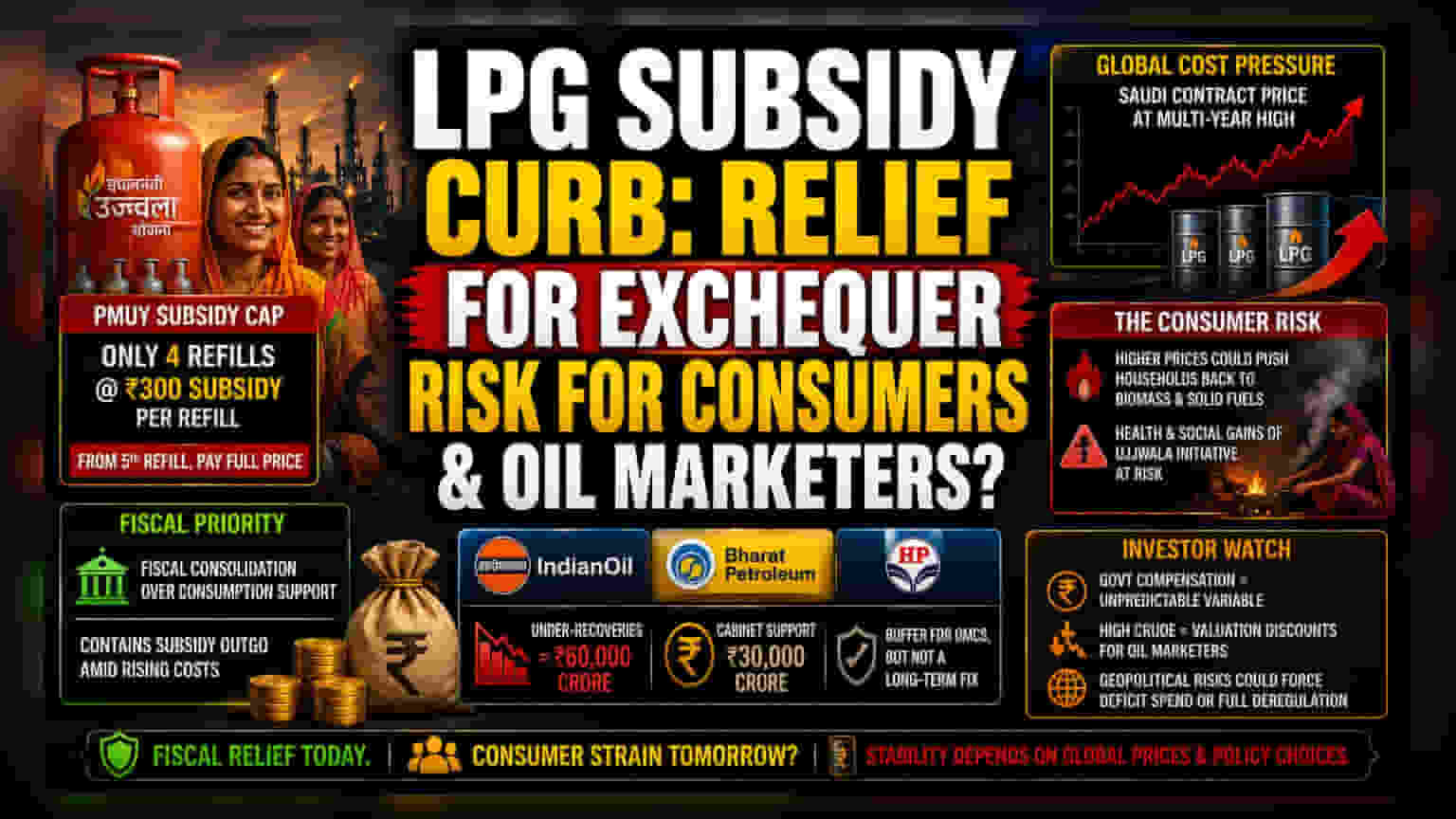


The Fiscal Balancing Act
The decision to limit subsidized LPG refills for PMUY households reflects a clear prioritization of fiscal consolidation over consumption support as state-run oil marketing companies grapple with widening under-recoveries. By capping the additional Rs 300 subsidy at four cylinders, the government is effectively containing its direct transfer obligations at a time when the Saudi Contract Price has pushed landed costs well beyond retail thresholds. This strategy serves as an implicit mechanism to throttle the total subsidy payout, shifting the burden of price volatility back toward the consumer base.
Market Implications for Oil Marketing Companies
For the domestic oil sector, this move acts as a buffer against the massive under-recovery cycle that plagued balance sheets in previous fiscal periods. With domestic LPG under-recoveries ballooning toward Rs 60,000 crore, the reliance on ad-hoc government compensation has created a structural weakness for firms like Indian Oil Corporation, Bharat Petroleum, and Hindustan Petroleum. While the Rs 30,000 crore cabinet injection provides short-term liquidity, the reduction in subsidized volumes suggests a transition toward market-linked pricing. Investors should monitor whether these companies can maintain margins if global crude and product cracks remain elevated without further government intervention.
The Forensic Risk Perspective
From an institutional standpoint, the primary risk lies in demand destruction among the most vulnerable demographic segments. If the effective price for PMUY beneficiaries moves toward market parity, there is a high probability of backsliding into traditional biomass and solid fuel usage, effectively negating the long-term health and social objectives of the original Ujjwala initiative. Furthermore, relying on intermittent government compensation remains a dangerous variable for shareholders. Historical data shows that these oil marketing firms often struggle with significant valuation discounts during periods of high crude prices because their profitability is tied to political decisions rather than operational efficiency. Any further escalation in West Asian geopolitical instability could force the government to choose between higher deficit spending or full price deregulation, the latter of which would present a significant inflationary shock to the broader Indian economy.