 Whalesbook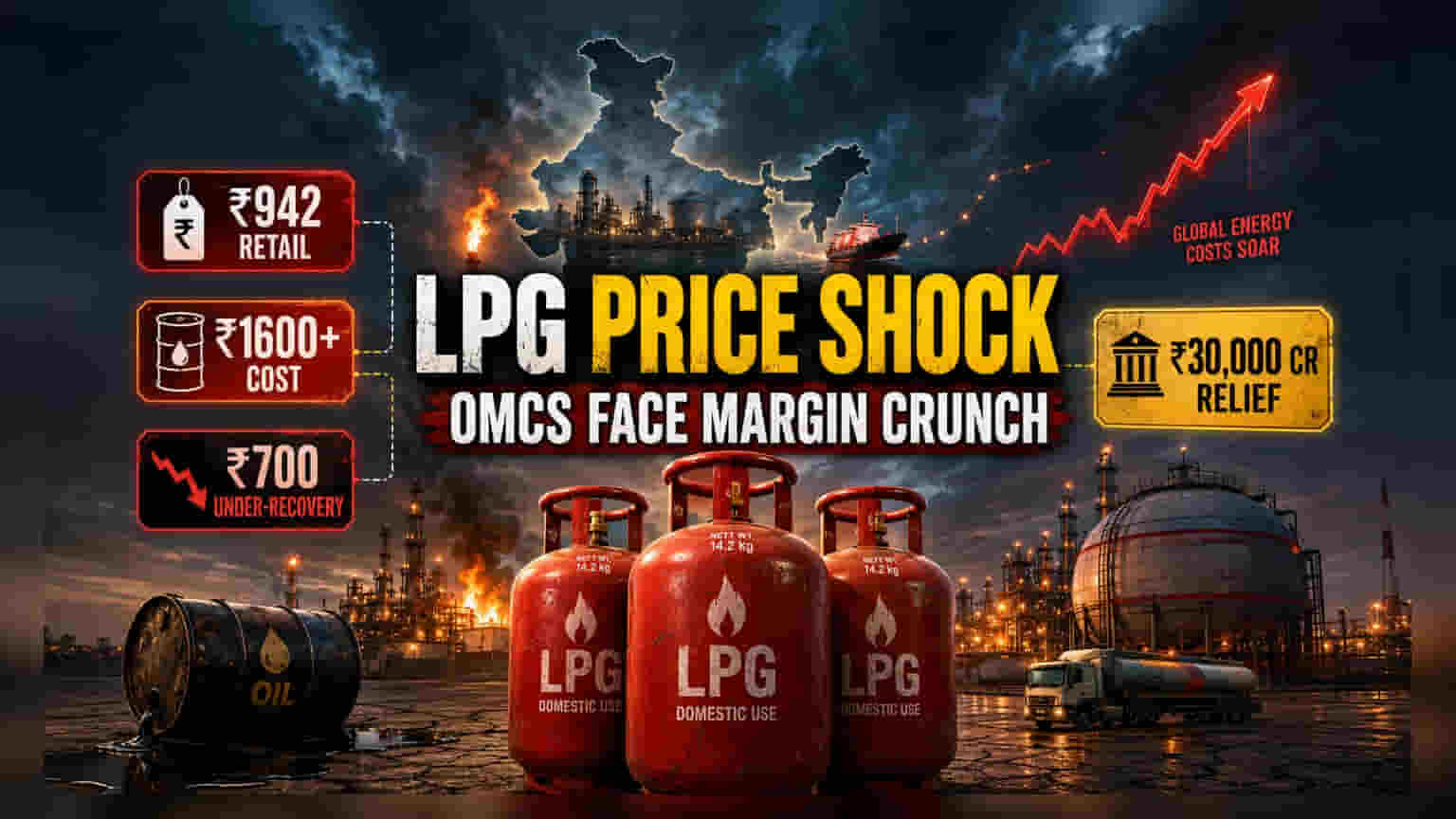


The Valuation Gap
While the headline adjustment to ₹942 per cylinder captures immediate consumer attention, the reality for the Indian energy sector is far more severe. The Saudi Contract Price for LPG has climbed nearly 46% since February, creating a chasm between the government-mandated retail price and the actual cost of supply, which has surged past ₹1,600. This disparity forces state-run oil marketing companies to absorb the difference, manifesting as an under-recovery of approximately ₹700 per unit. Although the Union Cabinet has earmarked ₹30,000 crore to mitigate these losses, investors are observing the widening gap between retail price adjustments and the unyielding climb of global commodity costs.
The Analytical Deep Dive
Market analysts have pointed to the 2026 fiscal year as a critical stress test for India’s energy import dependency. Despite a notable increase in domestic production capacity—reaching 52,000 metric tonnes—the reliance on West Asian imports remains high. The volatility in the Strait of Hormuz has introduced a persistent risk premium into the pricing structure. When evaluating Indian oil marketing entities against their regional peers, the primary differentiator remains their vulnerability to political directives regarding consumer pricing. Unlike private global counterparts that can pass fluctuations to the consumer in real-time, Indian state-led firms effectively operate as a fiscal shock absorber for the national economy.
The Forensic Bear Case
Structural weaknesses in this model are becoming increasingly evident. The projected ₹60,000 crore in total under-recoveries by the end of the fiscal year underscores a dangerous reliance on discretionary government intervention. Reliance on the Union Cabinet for compensation does not equate to bottom-line profitability; it merely reflects deferred fiscal pain. If geopolitical tensions continue to inflate the Saudi Contract Price beyond current forecasts, the current ₹30,000 crore relief package will prove insufficient. Furthermore, the inflationary pressure of these energy costs risks ripple effects across domestic manufacturing sectors, potentially hampering broader industrial growth as operating margins compress under the weight of higher utility and transportation expenses.
The Future Outlook
Projections for the coming quarters suggest that energy companies will remain heavily dependent on state-provided subsidies to stabilize their balance sheets. Market sentiment remains cautious, with analysts monitoring the government’s willingness to permit further retail price hikes against the backdrop of potential future geopolitical instability. Expect continued volatility in the stock performance of state-controlled oil marketing firms as the market adjusts to the ongoing tension between social welfare obligations and the cold reality of global commodity pricing.