

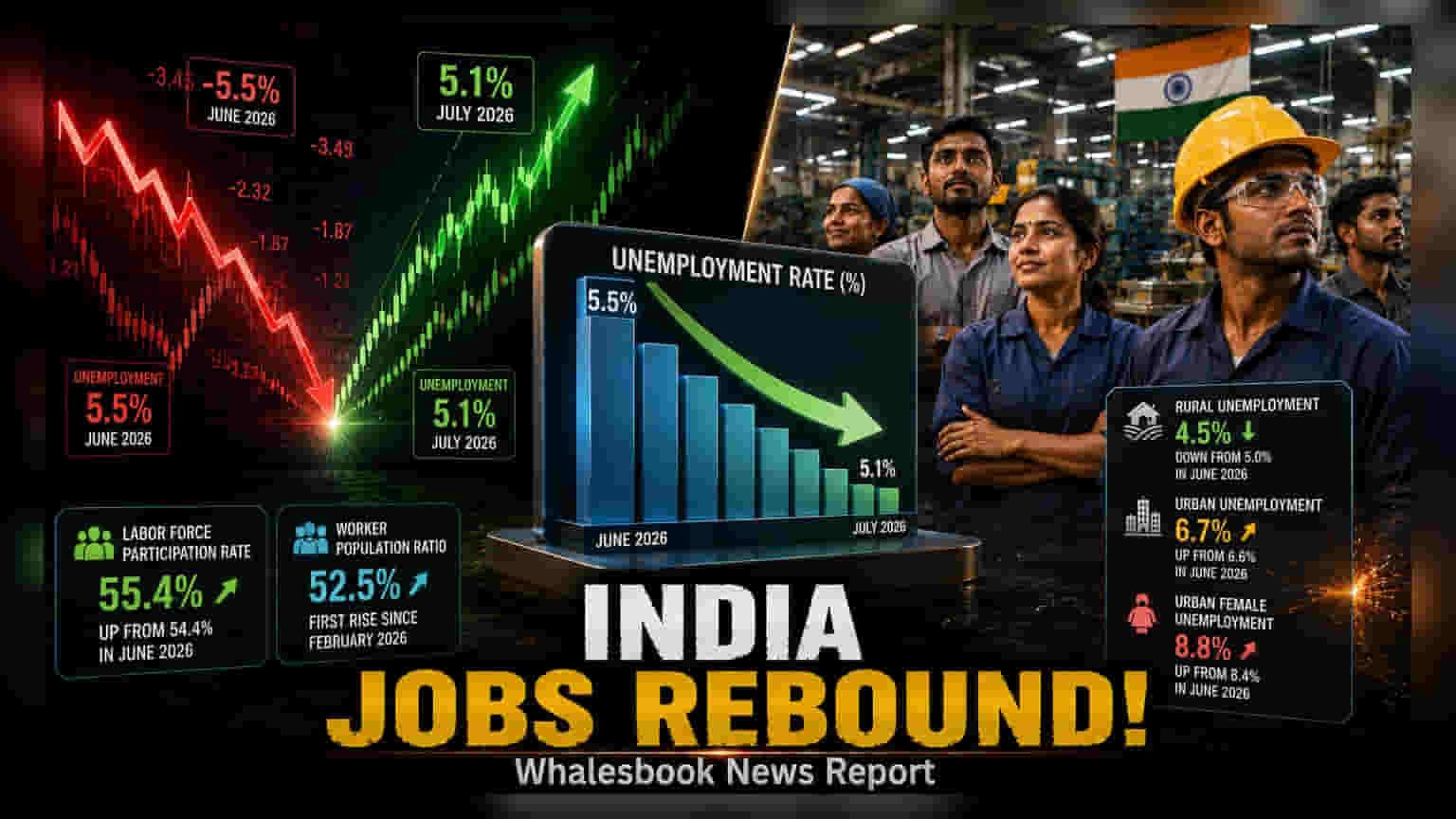
India’s unemployment rate dipped to 5.1% in July 2026 from 5.5% in June, fueled by a rise in the labor force participation rate. Rural employment led the recovery, helping to offset persistent challenges in urban areas. This labor market data is a critical signal for consumer spending trends and broader economic health.
India's job market showed a clear recovery in July 2026, with the unemployment rate falling to 5.1% from 5.5% in June. This shift follows data released by the Ministry of Statistics and Programme Implementation (MoSPI) via the Periodic Labour Force Survey (PLFS), which highlights a strengthening labor market after a period of slower momentum in the previous quarter.
A key driver of this improvement is the rise in the Labor Force Participation Rate (LFPR), which hit 55.4% in July, up from 54.4% in June. The LFPR measures the percentage of the working-age population that is either employed or actively looking for a job. When this rate climbs, it generally indicates that more people feel confident about finding work. Additionally, the Worker Population Ratio (WPR) rose to 52.5%, marking the first increase since February 2026.
Rural areas were the primary engine behind this trend, with the rural unemployment rate dropping to 4.5% from 5.0% the previous month. This recovery suggests that agricultural and rural economic activities have likely picked up, providing more opportunities for the rural workforce.
However, the picture remains mixed in urban centers. Urban unemployment held relatively steady at 6.7% in July, slightly up from 6.6% in June, indicating that job creation in cities has not yet matched the pace seen in the countryside. A specific area of concern for observers is urban female unemployment, which rose to 8.8% in July from 8.4% in June. This data point shows that despite the overall positive trend, specific segments of the population still face significant hurdles in accessing steady employment.
For the Indian economy, these labor statistics are important because they directly influence consumer sentiment. A rise in the number of people working typically translates into more disposable income, which supports demand for goods and services in sectors like retail, automobiles, and fast-moving consumer goods.
From a policy perspective, the Reserve Bank of India (RBI) tracks these trends as part of its assessment of the economic landscape. While inflation remains the central focus for interest rate decisions, persistent strength or weakness in the job market can shift the central bank's perspective on the overall balance between economic growth and price stability. Investors and analysts will continue to track whether this improvement in rural labor participation is sustainable in the coming months, or if it is a temporary boost caused by seasonal factors.