

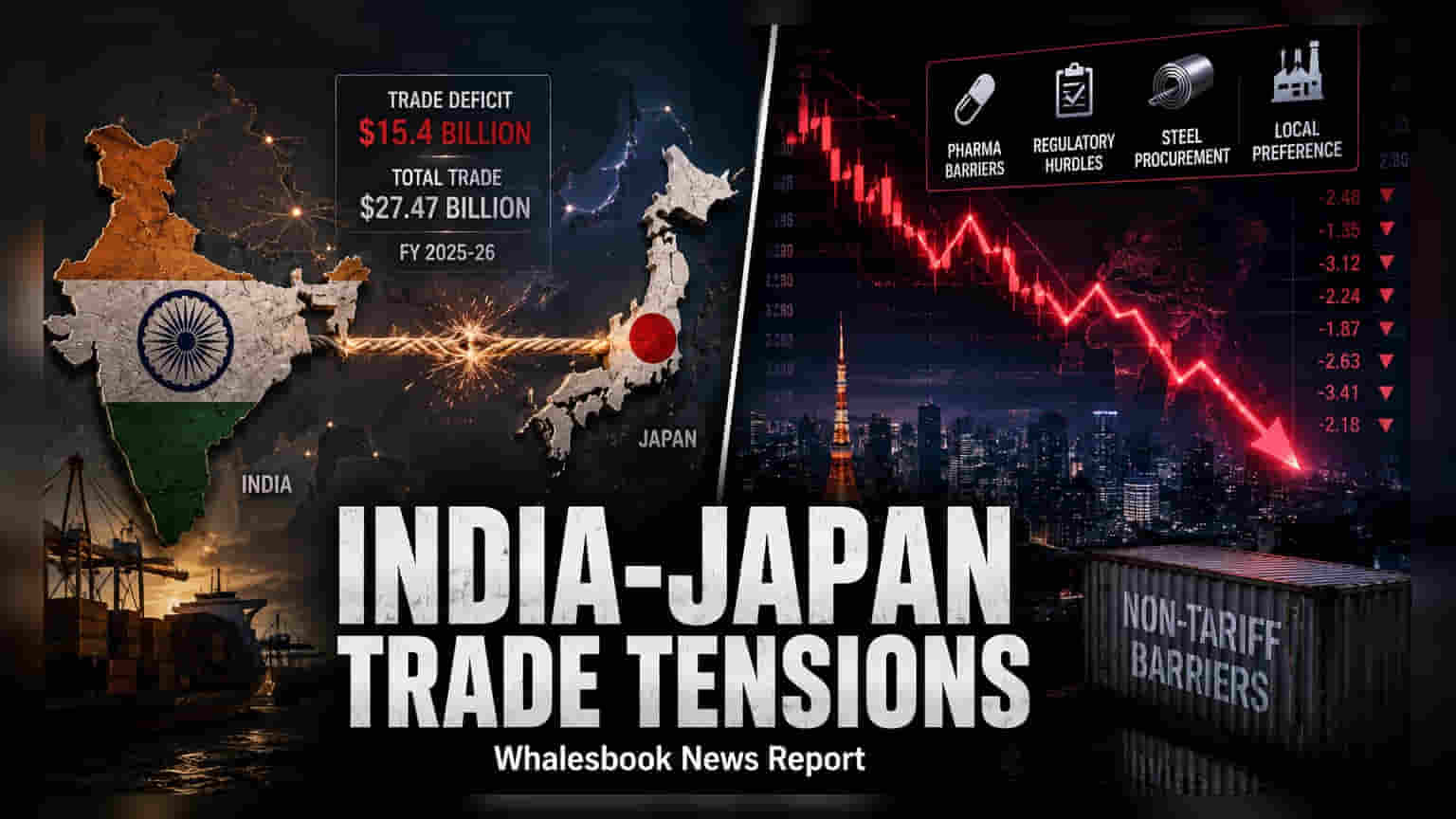
India’s trade deficit with Japan rose to $15.4 billion in FY 2025-26, even as total bilateral trade reached $27.47 billion. Industry leaders have flagged strict non-tariff barriers, particularly in the pharmaceutical sector, which make it difficult for Indian goods to enter the Japanese market. With a trade delegation currently in Tokyo, the government is pushing for regulatory changes and exploring new joint investment avenues in Africa.
The bilateral trade relationship between India and Japan is facing renewed scrutiny as the trade deficit expanded to $15.4 billion in the 2025-26 fiscal year. While total bilateral trade showed growth of 9.18% to reach $27.47 billion, the gap remains a significant concern for Indian industry representatives. The issue has taken center stage during a high-level trade delegation visit to Tokyo this week, led by Commerce and Industry Minister Piyush Goyal.
FICCI President Anant Goenka has highlighted that the primary challenge lies in the complex regulatory and certification frameworks within Japan. These non-tariff barriers—rules that are not taxes but function as hurdles by demanding strict documentation, local testing, or difficult certification processes—effectively limit the ability of Indian products to compete. The pharmaceutical sector has been particularly affected, with many Indian companies struggling to navigate local registration processes, which prevents them from accessing a large market.
Beyond technical regulatory challenges, industry leaders have noted a strong preference among Japanese consumers and businesses for locally manufactured products. This cultural and business bias often creates an invisible barrier for foreign exporters. To bridge the deficit, the Indian delegation is urging Japanese manufacturers, particularly in the steel sector, to increase their procurement of raw materials and finished goods from Indian suppliers. The ongoing discussions aim to harmonize standards to create a smoother flow of goods between the two nations.
As the trade talks continue, there is a strategic shift in how Indian industry bodies view future expansion. With the difficulties faced in penetrating the traditional Japanese market, FICCI and other industry leaders are exploring an "India-Japan for Africa" partnership. This initiative seeks to leverage the strengths of both nations to invest in African markets, where infrastructure and resource demand are high. This pivot is seen as a way for Indian firms to bypass some of the regulatory saturation in developed markets while utilizing Japanese financial and technological support to compete more effectively in emerging regions.
For investors and market observers, the outcome of this current trade delegation will be the most important factor to watch. Key developments to track include any concrete changes to pharmaceutical registration norms, progress on procurement deals for Indian steel, and the formalization of joint infrastructure or investment projects in Africa. The ability of the two nations to reduce administrative friction and create a more balanced trade environment will determine whether Indian exporters can improve their footprint in the Japanese economy.