

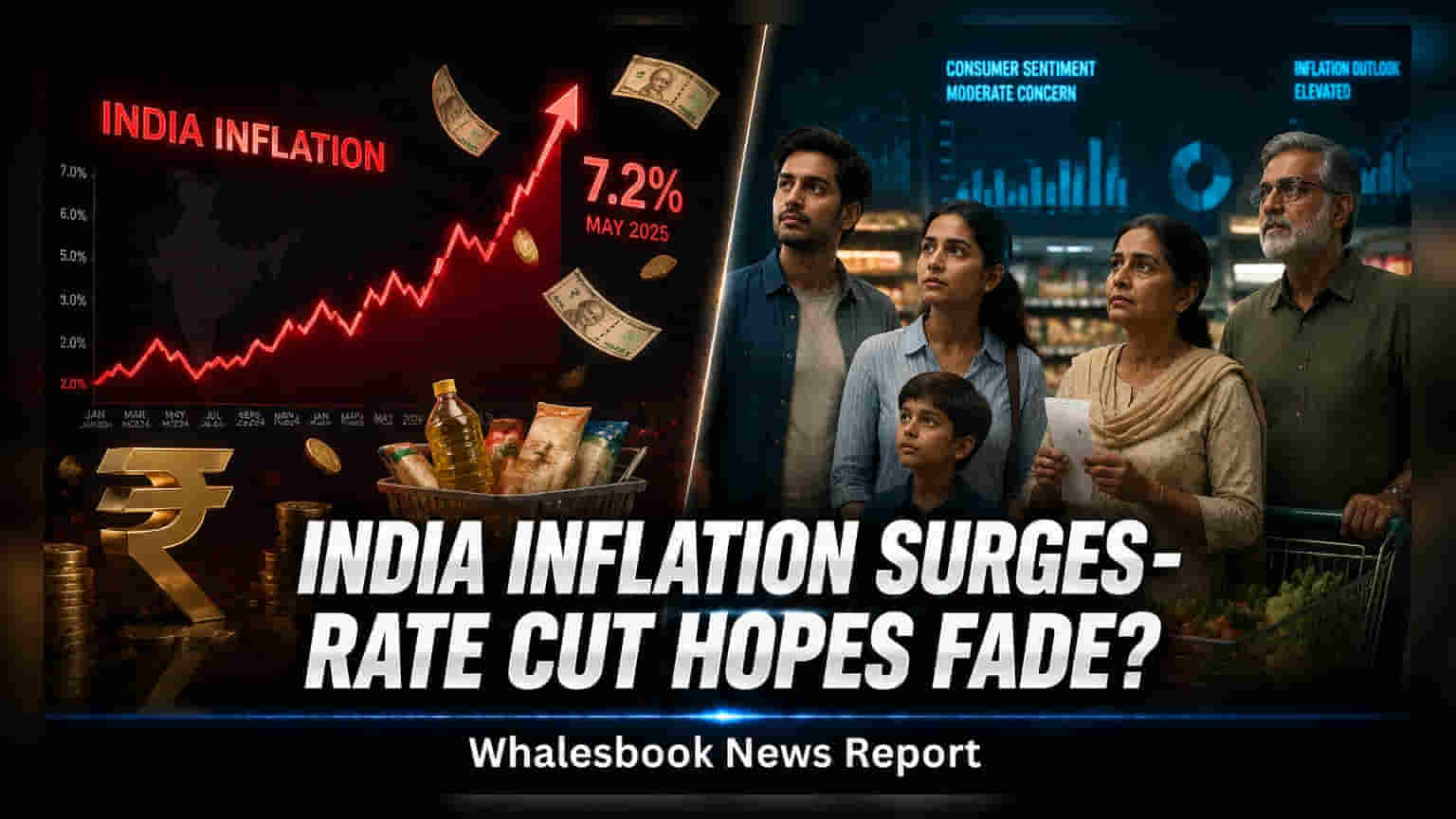
India's retail inflation rose to 4.38% in June 2026, crossing the RBI's 4% target. While food and fuel prices drove the increase, soft core inflation suggests weak consumer demand. This data may encourage the RBI to maintain a supportive interest rate policy to boost growth.
India’s retail inflation, as measured by the Consumer Price Index, climbed to 4.38% in June 2026. This move marks the first time since January 2025 that inflation has exceeded the Reserve Bank of India’s (RBI) medium-term target of 4%. While the headline number is higher, market analysis suggests that the increase is largely due to specific, volatile items rather than a broad-based surge in consumer spending.
Impact of Food and Fuel Prices
The primary drivers behind the rise were food and transport costs. Food inflation showed a notable uptick, particularly in vegetables, where price growth rose above 4%. Additionally, items like cereals and pulses returned to inflation after previously seeing price declines. Milk and dairy products also remained consistently above the 4% level. On the fuel front, transport inflation accelerated due to an 8% year-on-year increase in fuel and lubricant costs, which were pushed higher by temporary global crude oil volatility linked to the Iran-US conflict.
Weakness in Core Demand
Despite the rise in headline inflation, core inflation—which excludes volatile food and fuel prices—remains soft. This is a critical point for investors because it reflects the actual strength of consumer demand in the economy. While some areas like restaurants and furniture have seen price increases, other key sectors such as healthcare, housing rentals, and personal care services show very little pricing power. This indicates that businesses are struggling to raise prices broadly, suggesting that domestic demand has not yet fully recovered.
What This Means for Monetary Policy
The RBI has already reduced the repo rate by 125 basis points since January 2025 to support the economy. However, the transmission of these rate cuts to actual bank lending rates for businesses and households has been slow. Because the current inflation spike is tied to temporary supply-side issues in food and fuel rather than high consumer spending, there is a strong argument that the economy still requires policy support. The narrowing inflation differential between India and the US provides the central bank with more flexibility to keep monetary policy accommodative. Investors will be watching the RBI’s upcoming policy meetings for commentary on whether these trends warrant further interest rate easing to stimulate economic growth.