

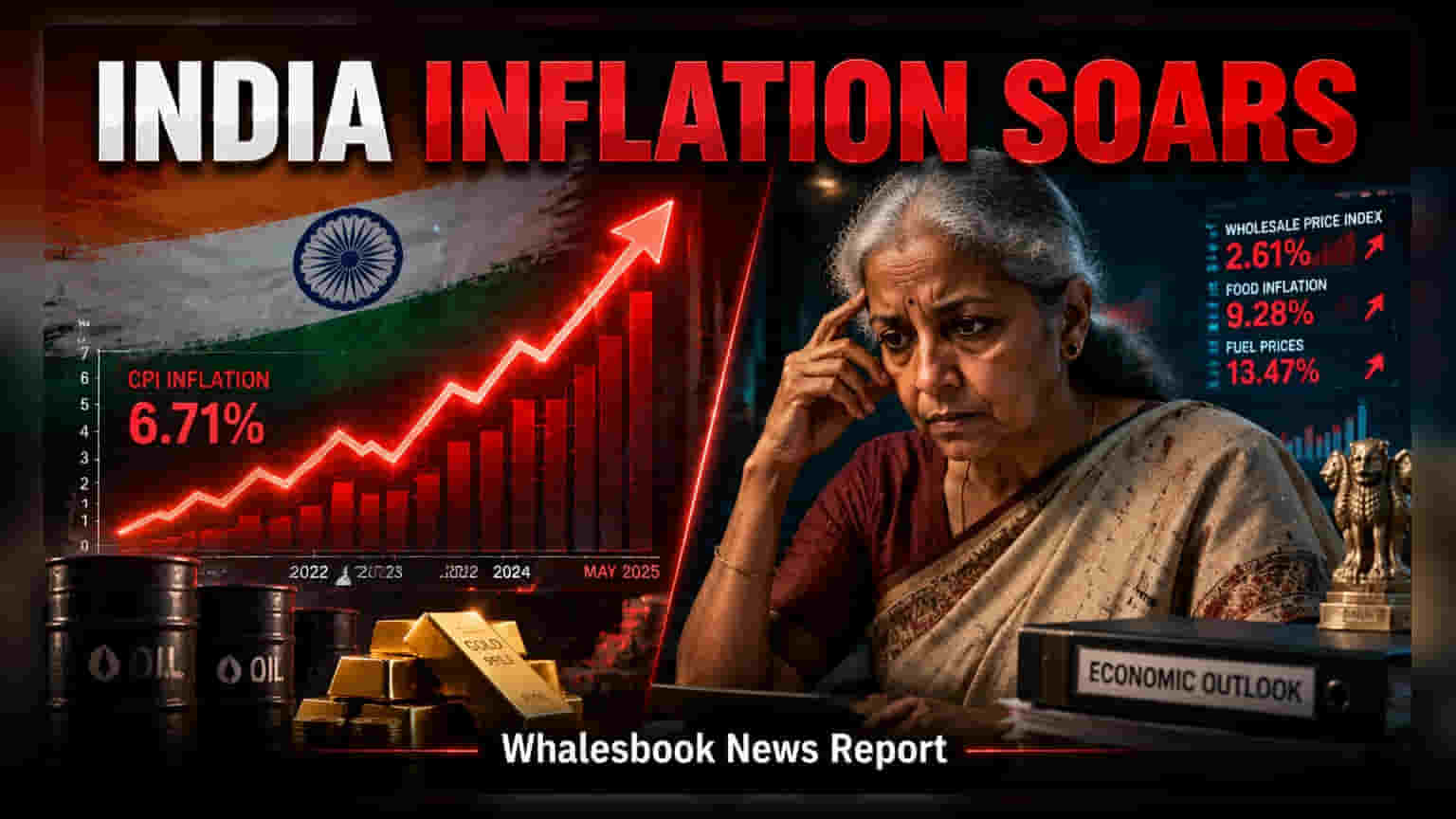
India’s consumer price inflation rose to a 4.4% high in June, driven by increased food and fuel costs. This uptick from 3.9% in May suggests potential pressure on household budgets and purchasing power. Nomura has adjusted its fiscal year 2027 inflation forecast downward to 4.6%.
India’s headline retail inflation, measured by the Consumer Price Index (CPI), climbed to 4.4% in June 2026. This level marks the highest inflation rate recorded since December 2022, rising from 3.9% in May. For investors, this shift indicates that rising costs for essential items like food and fuel are beginning to reflect more noticeably in the economy.
Impact of Trade Deficit and Economic Forecasts
Alongside the rise in retail prices, official data shows that India's merchandise trade deficit increased to $30.4 billion in June, compared to $28.2 billion in May. A wider trade deficit generally means that the value of goods imported exceeds the value of goods exported, which can put pressure on the Indian Rupee if the trend continues.
In response to these economic indicators, analysts at Nomura have updated their outlook for the 2027 fiscal year. They have revised their average inflation forecast for FY27 to 4.6%, down from their previous estimate of 5.0%. Additionally, Nomura updated its projection for the Current Account Deficit—a key measure of a country's trade balance—lowering the expectation for FY27 to 1.2% from the earlier 1.9% estimate.
Investor Considerations
For the stock market, inflation trends are vital as they influence the Reserve Bank of India’s (RBI) approach to interest rates. Persistent inflation often limits the central bank's ability to lower borrowing costs, which can impact sectors sensitive to interest rates, such as banking, real estate, and automobiles. When inflation is higher, input costs for companies often rise, which can squeeze profit margins if businesses are unable to pass these costs on to consumers through higher prices.
Investors should monitor upcoming RBI monetary policy meetings and future inflation prints to gauge if this trend is temporary or if it will lead to more sustained cost pressures for businesses. The focus will remain on whether consumer demand stays resilient despite the higher price levels seen in the food and fuel segments.