

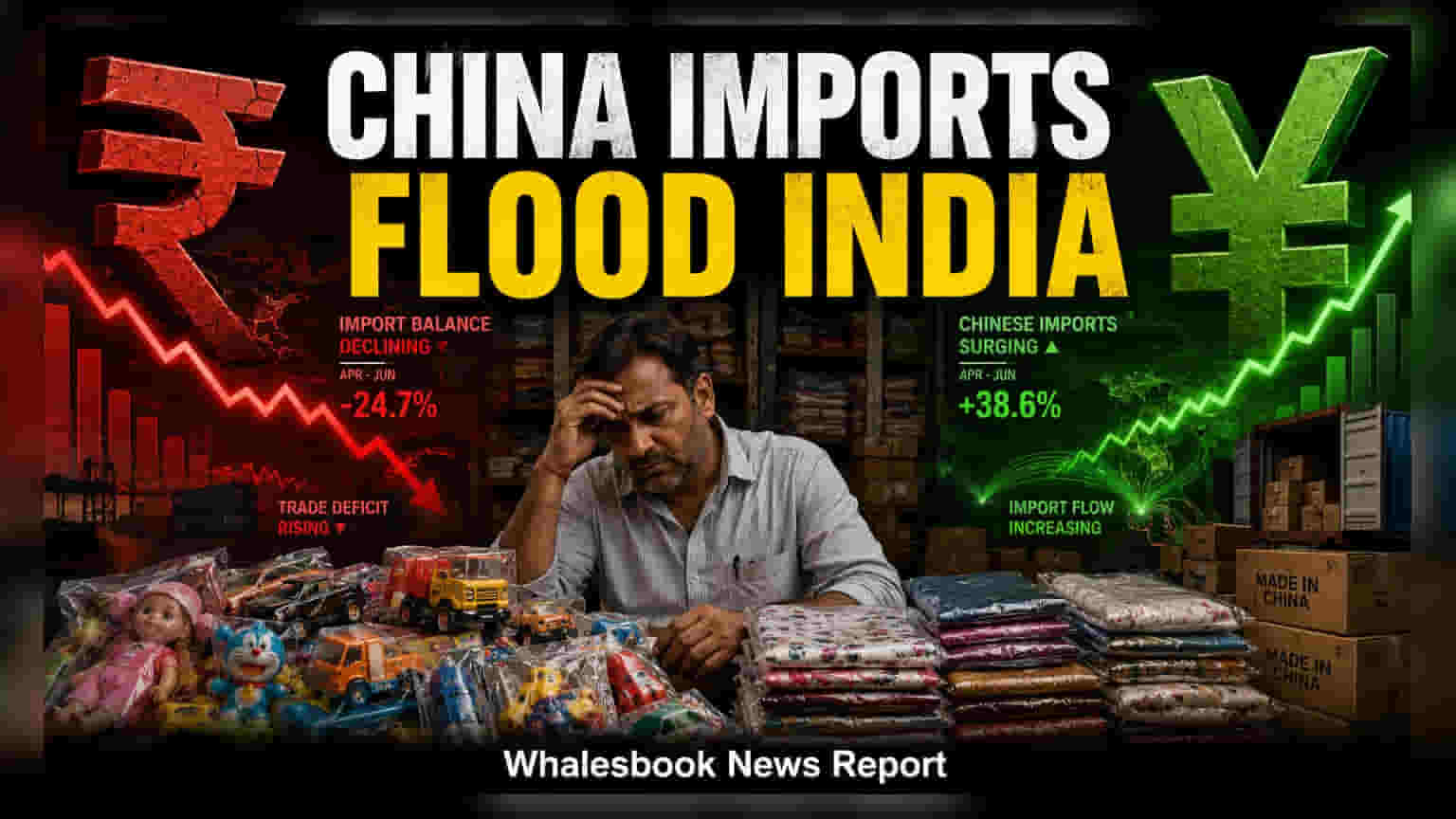
India’s import bill from China climbed to over $131 billion in the 2025-26 fiscal year, driven by higher inflows of engineering goods and textiles. This surge highlights rising competitive pressure on domestic manufacturers and a widening trade deficit. While essential for tech, the trend has prompted increased government focus on quality standards and anti-dumping measures to protect local MSMEs.
India’s trade relationship with China saw a significant shift in the 2025-26 fiscal year, with total imports from the country climbing to $131.63 billion. This figure accounts for nearly 17% of India’s total import bill for the year, resulting in a trade deficit of $112.16 billion. For investors, the breakdown of these imports provides insight into both the country’s industrial dependencies and the challenges facing domestic manufacturing sectors.
Engineering and Textile Imports Rise
The data shows that engineering goods remain a dominant category in bilateral trade, with imports reaching $75.82 billion, marking a nearly 19% increase from the previous year. This segment includes a wide range of capital equipment and intermediate components. Similarly, the textile sector experienced a sharp rise, with imports growing by 22.5% to $4.46 billion. The toy segment also saw a notable increase of 20.7%, totaling $350 million.
This trend has created concern for domestic manufacturers, particularly Micro, Small, and Medium Enterprises (MSMEs). Industry clusters in regions like Tiruppur, Coimbatore, Erode, and Karur in Tamil Nadu have faced increased competition as lower-priced imports compete with locally produced goods. For investors, this can lead to margin pressure for domestic firms if they struggle to match the pricing or scale of these imported products.
Strategic Dependence vs. Domestic Protection
Not all imports from China represent simple competitive threats. A significant portion of this trade is tied to critical inputs required for India's push into clean energy and high-end technology. Essential raw materials like lithium, cobalt, nickel, and graphite—vital for electric vehicle (EV) batteries, semiconductors, and electronics—are largely sourced through these channels. Consequently, domestic manufacturing in sunrise sectors remains tethered to these imports.
To balance this, the government has adopted a two-pronged strategy. While maintaining the supply chain for essential tech inputs, authorities are increasingly using regulatory tools to manage the influx of non-essential low-cost goods. The Directorate General of Trade Remedies (DGTR) has been active in investigating and imposing anti-dumping and countervailing duties where necessary. Additionally, the implementation of stricter quality control orders (QCOs), testing protocols, and mandatory certifications acts as a non-tariff barrier to limit the entry of substandard products.
What Investors Should Monitor
The ongoing trade deficit and the rising import volumes will remain a key focus for market participants. Investors should watch for further announcements regarding anti-dumping duty investigations, as these directly impact the profitability and pricing power of domestic players in the textile and engineering sectors. Additionally, monitoring the pace of 'Make in India' initiatives in sectors like electronics and green energy is crucial to see if domestic production capacity can gradually reduce the current high reliance on imported components, thereby improving the trade balance in the long term.