

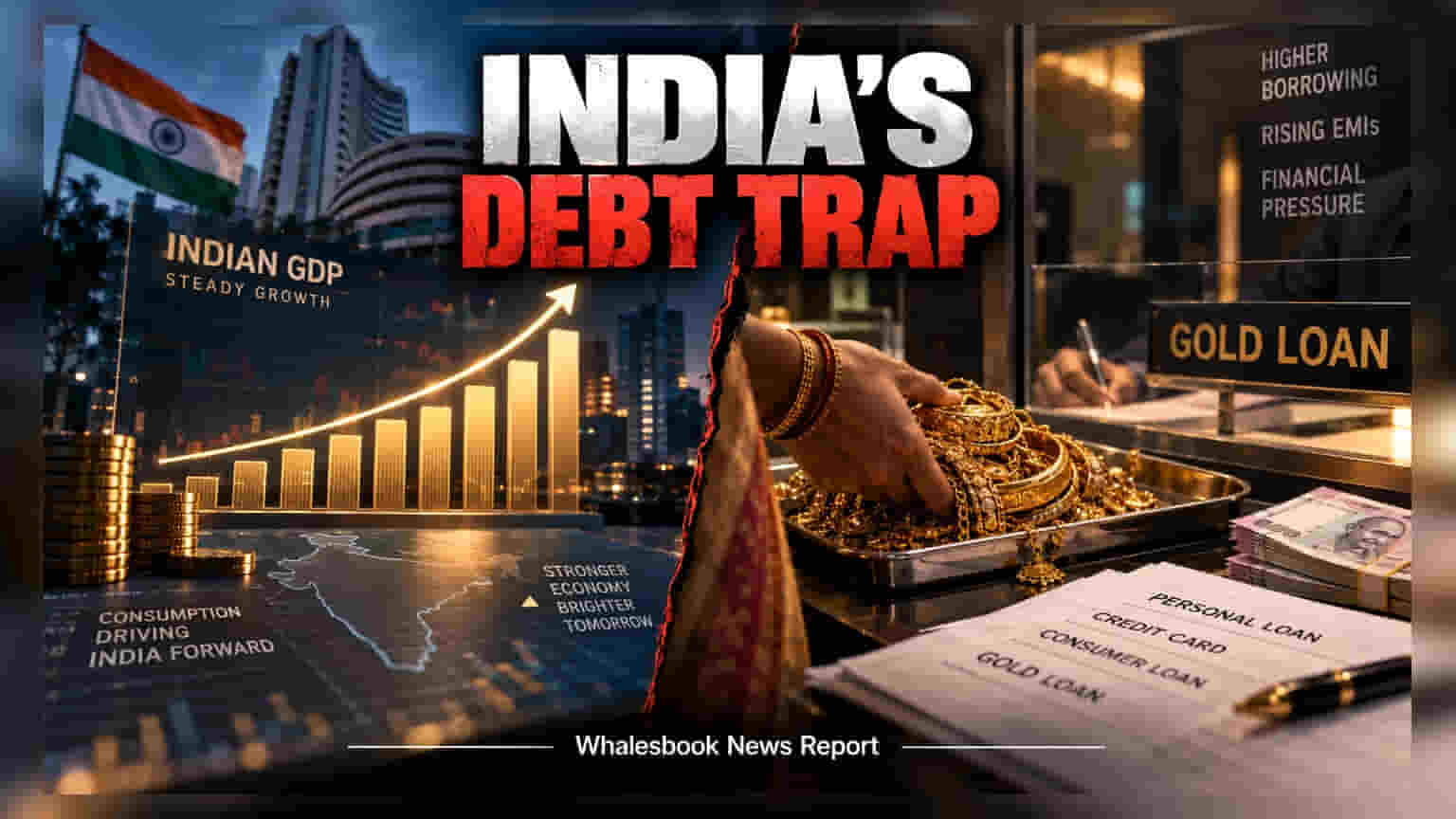
India’s consumption data is being propped up by a surge in retail borrowing, with household debt reaching nearly 48% of GDP. While spending appears strong, the increasing reliance on personal and gold-backed loans suggests growing financial fragility. This shift creates uncertainty for future demand and complicates the Reserve Bank of India’s efforts to balance growth with financial stability.
India's household consumption remains a primary driver of the economy, but recent financial data suggests this engine is increasingly running on debt. As of December 2025, household debt in India climbed to approximately 47.8% of GDP, a notable rise from the levels seen in earlier years. While the official growth figures continue to paint a picture of steady economic expansion, the underlying composition of household liabilities is signaling a shift toward higher financial vulnerability.
The Shift Toward Retail Credit
A critical concern for market analysts and policymakers is the changing nature of household debt. Traditionally, household borrowing in India was dominated by home loans, which are considered asset-backed and relatively stable. However, recent data shows that non-housing retail loans—such as personal loans, credit cards, and consumer durable financing—now account for approximately 58.4% of total household liabilities. This means that a large portion of debt is no longer tied to long-term asset creation but to immediate consumption.
This trend is particularly visible in the surge of gold-backed loans, which have seen a year-on-year increase of over 42%. While pledging gold is a common practice in India, the rapid growth in these originations often points to households using debt to bridge the gap between their income and rising cost of living, rather than for discretionary luxury spending. When households rely on high-interest credit to cover day-to-day expenses, their financial buffer against economic shocks—such as inflation or job instability—is significantly reduced.
Statistical Blind Spots and Policy Challenges
Analyzing the true health of the Indian consumer is further complicated by how official statistics are recorded. The Ministry of Statistics and Programme Implementation (MOSPI) includes unincorporated enterprises, such as local kirana stores and small sole proprietorships, within the household sector data. This creates a statistical blur where business-related borrowing is often counted as personal debt. For the Reserve Bank of India (RBI), this makes it difficult to determine whether a spike in borrowing is a sign of business investment or a symptom of households overextending their finances for consumption.
The RBI, which maintained the repo rate at 5.25% in its August 2026 meeting, now faces a complex policy environment. If consumer spending is fueled primarily by credit rather than sustained income growth, the effectiveness of interest rate adjustments may diminish. When households are already committed to servicing high monthly EMI obligations, further changes in borrowing costs may have a limited impact on their ability or willingness to spend on new goods and services.
What Investors Should Monitor
For investors, the debt-to-consumption dynamic is a vital monitorable. A consumption boom built on debt can be fragile; if borrower incomes face headwinds, demand for discretionary items—such as electronics, automobiles, and luxury goods—could see a sharp correction. Market participants are watching the credit quality reports of major lenders, specifically focusing on delinquency rates in the personal loan and micro-lending segments. Additionally, upcoming commentaries from the central bank regarding financial stability and household leverage will provide further clarity on whether the current pace of debt accumulation is sustainable or if a period of balance sheet deleveraging is ahead.