

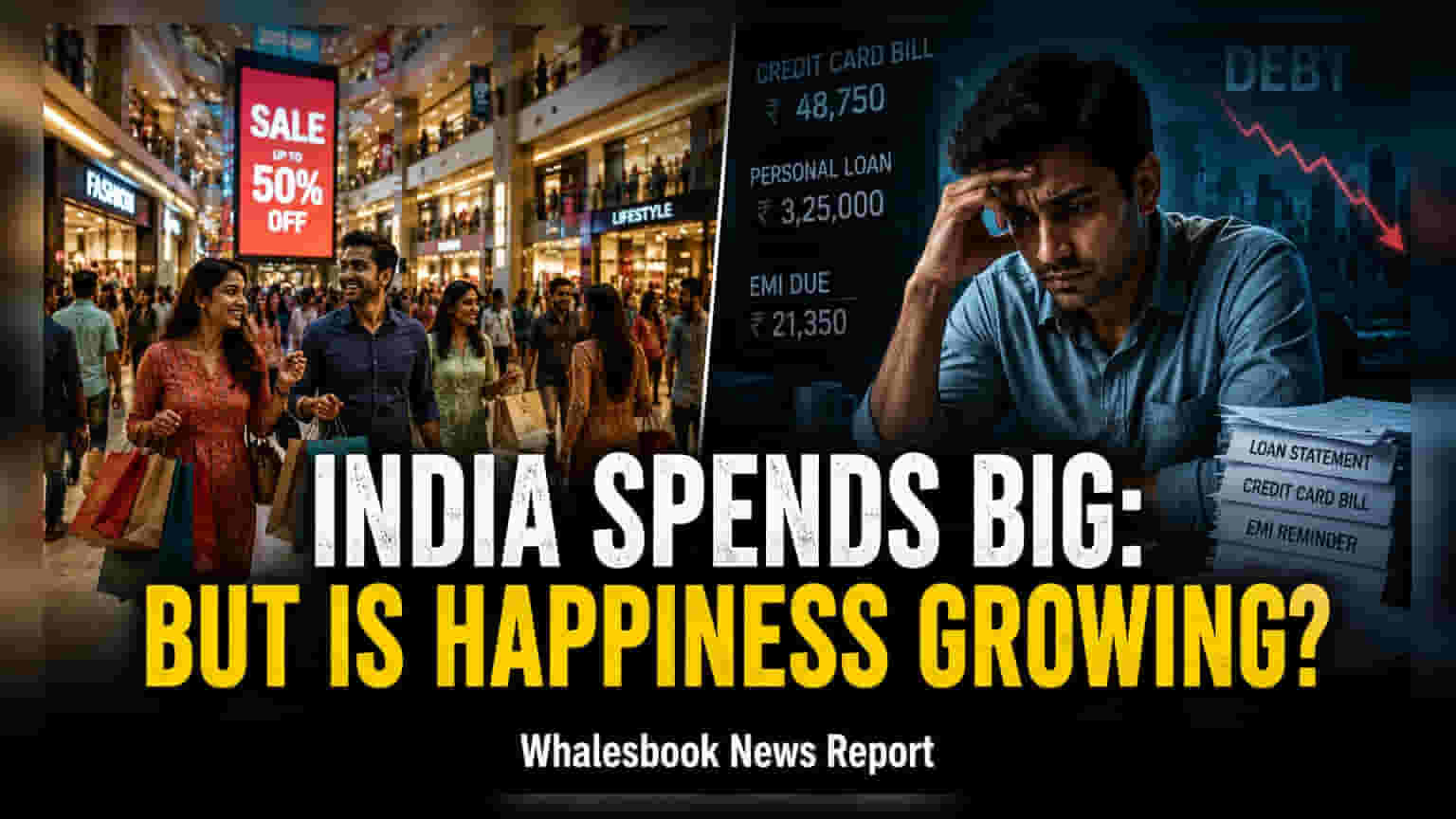
India’s consumer spending now drives nearly 60% of GDP, but rising reliance on personal loans has pushed outstanding debt to ₹17.32 lakh crore. This shift reflects a move toward discretionary purchases even as many young consumers delay major financial goals due to cost pressures.
Detailed Coverage
Consumer spending in India has reached a significant milestone, now accounting for nearly 60% of the nation's total economic output. Recent data from the Household Consumption Expenditure Survey 2023-24 confirms this trend, showing that average monthly per-capita spending increased by 9.3% in rural areas and 8.3% in urban regions. As household incomes rise, the proportion of money spent on basic food items has dropped to 47% in rural households and 40% in urban ones, allowing families to allocate more capital toward non-essential items such as travel, entertainment, and processed food products.
The Shift Toward Discretionary Consumption
The composition of Indian household budgets is changing rapidly. While rural spending is increasingly directed toward medical costs and transport, urban households are prioritizing services, rental properties, and lifestyle-related expenses. This change reflects a broader national shift where convenience and experiences are becoming central to consumer behavior. However, this move toward higher-value products and experiences is occurring alongside a notable increase in the cost of living, particularly in major cities.
Debt Trends and Financial Security
While consumption remains a primary growth driver, it is increasingly supported by debt. The Reserve Bank of India’s Financial Stability Report highlights a dramatic rise in personal loans, which have grown from ₹5.53 lakh crore in 2019 to approximately ₹17.32 lakh crore by 2026. A significant portion of this borrowing is facilitated by the widespread availability of Equated Monthly Installments and Buy Now Pay Later schemes. This ease of credit has shifted the focus of many households from long-term affordability to short-term monthly installment capacity.
Risks of Financial Fragility
Despite the rise in spending, many young consumers report growing financial anxiety. Data from Deloitte indicates that a large segment of Gen Z and millennials are deferring major life events, such as buying a home, because property price appreciation has frequently outpaced salary growth. The reliance on credit for discretionary spending can create a long-term risk for household balance sheets, especially if income growth does not keep pace with debt servicing costs. Investors monitoring the Indian economy should track future Reserve Bank of India reports on retail credit quality and non-housing loan growth, as these will indicate whether this consumer spending trend remains sustainable or leads to increased financial pressure on households.