 Whalesbook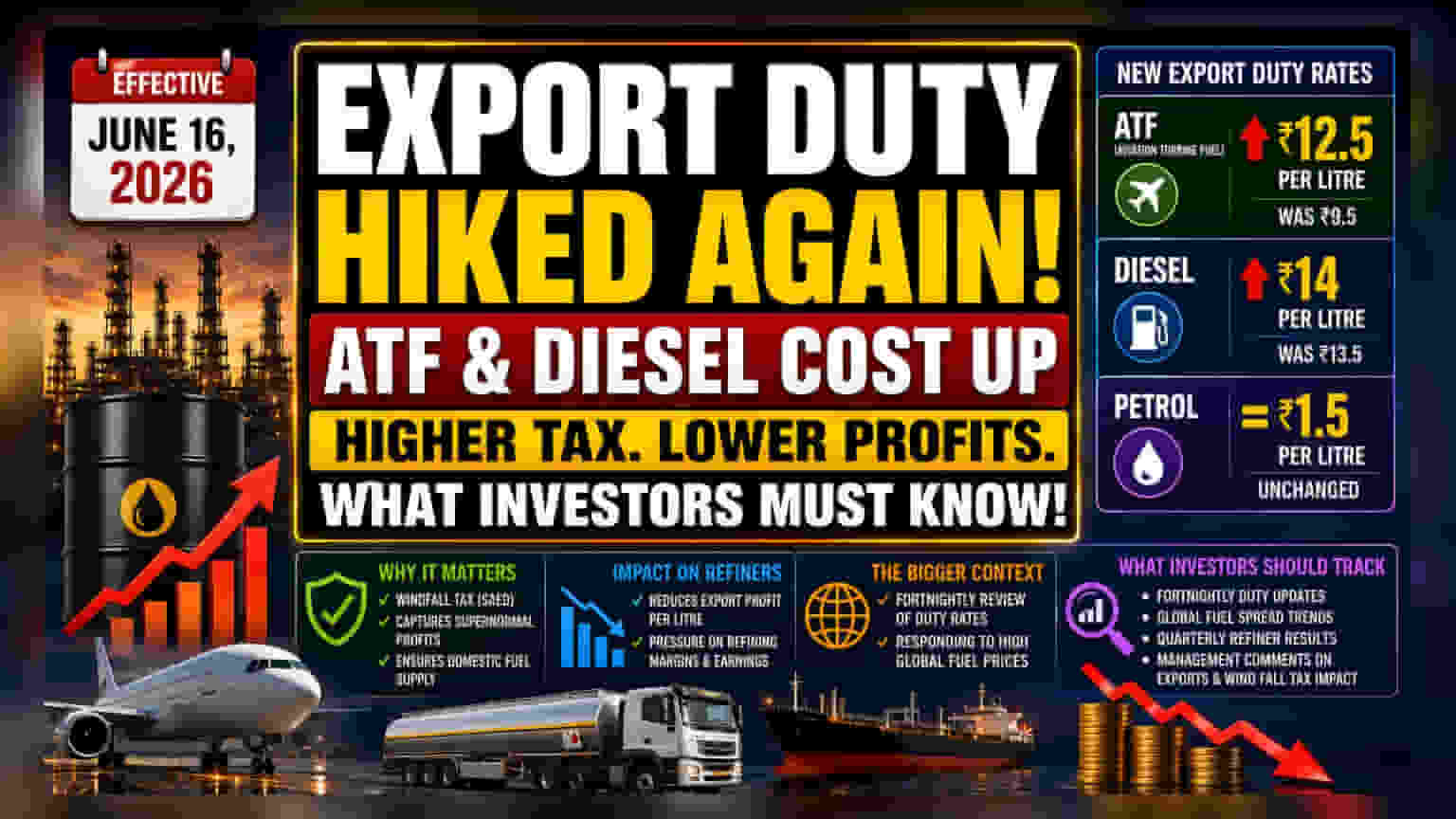


India has raised export duties on aviation turbine fuel and diesel, effective June 16, 2026. This move, aimed at securing domestic fuel supply amid geopolitical tensions, acts as a windfall tax that may squeeze profit margins for major oil refining companies. Investors should monitor how this impacts the profitability of key exporters.
What Happened
The Indian government has announced an increase in export duties on aviation turbine fuel (ATF) and diesel, effective June 16, 2026. According to the latest official notification, the export duty on ATF has been raised to ₹12.5 per litre, up from ₹9.5 per litre. The tax on diesel exports has also been adjusted slightly higher to ₹14 per litre, compared to the previous ₹13.5 per litre. The export duty on petrol remains unchanged at ₹1.5 per litre.
Why This Matters For Investors
This adjustment is part of the Special Additional Excise Duty (SAED) mechanism, often referred to as a windfall tax on fuel exports. When global fuel prices rise, oil refiners typically earn higher profits by exporting their products. The government uses this tax to capture a portion of those excess profits and to discourage exports, thereby ensuring that domestic fuel demand is fully met.
For investors, the core concern is the impact on the profit margins of large oil refining companies. When the government increases these duties, it effectively reduces the per-litre profit that refiners make on every unit of fuel they sell to international markets. Since major Indian refiners, such as Reliance Industries, rely heavily on their export capabilities, these tax changes can directly influence their quarterly earnings.
The Business Context
The government reviews these export duties every fortnight, adjusting them based on the volatility of international crude oil prices and refined product prices. The current hike reflects the government's response to elevated global energy prices, which have been influenced by ongoing geopolitical instability in the Middle East. By making exports less lucrative, the policy creates a clear trade-off: it prioritizes domestic energy security over the export-led profitability of refining firms.
What Could Go Wrong
The primary risk for investors in the oil and gas sector is the potential for margin compression. If the government continues to adjust these duties upward to account for global price spikes, it limits the refiners' ability to fully benefit from higher international fuel prices. Furthermore, if international crude prices drop significantly, the government typically lowers or removes these duties, but until then, the tax acts as a direct cost that eats into the operating margins of refiners.
What Investors Should Track
Investors should pay close attention to the fortnightly updates on these tax rates, as they serve as a leading indicator of government sentiment regarding fuel supply. Key things to monitor include the trend in international fuel spreads, which determines whether the government will keep these taxes high or roll them back. Additionally, quarterly results for oil refining companies will be the ultimate gauge of how much these export duties are affecting the bottom line. Monitoring management commentary on export volumes and the impact of the windfall tax on their realization prices will also be useful for understanding the long-term business impact.