

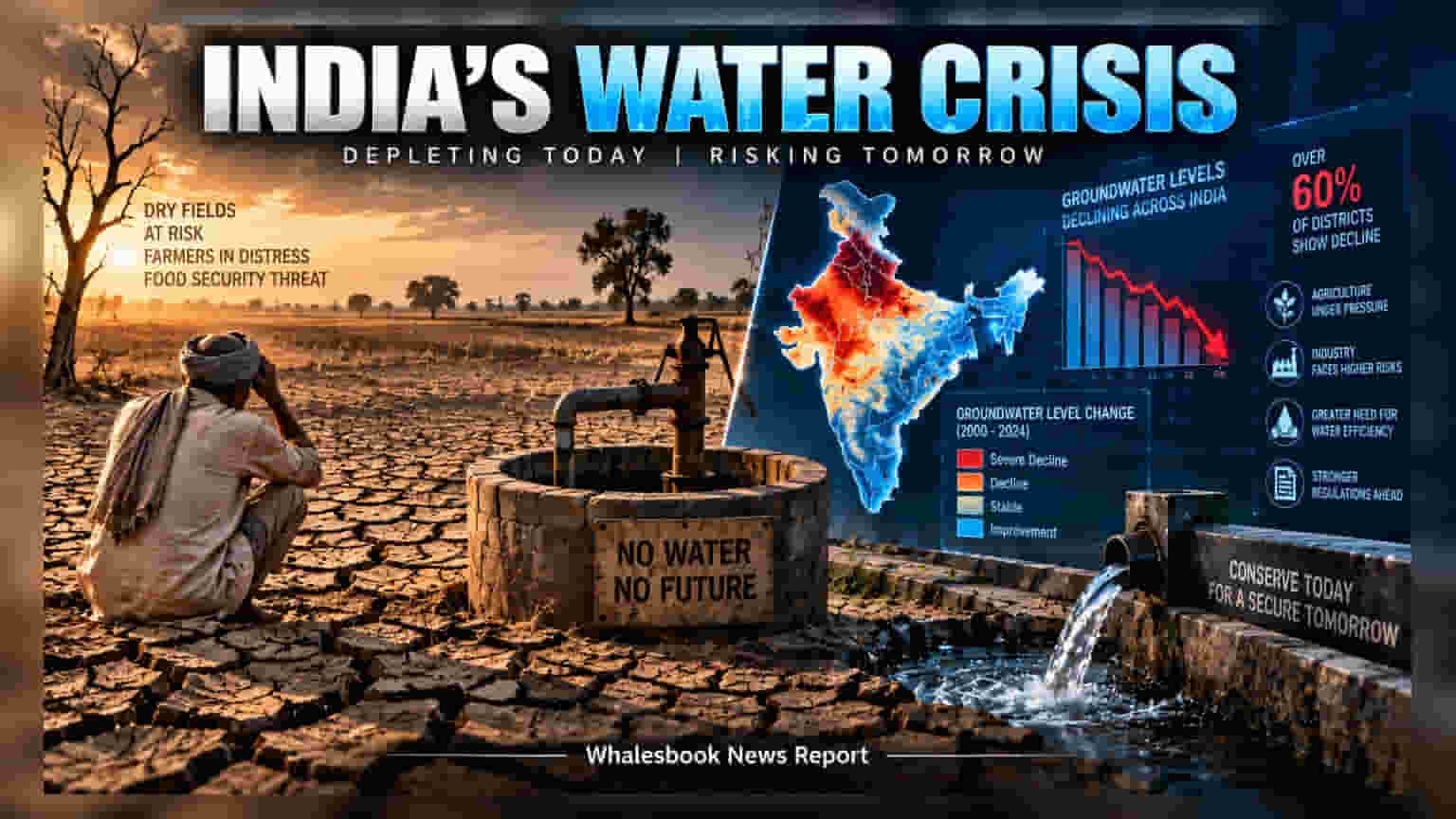
A World Meteorological Organization report warns of a structural groundwater deficit in Northern India due to excessive extraction. This trend poses long-term risks to agricultural productivity, forcing investors to assess potential impacts on companies dependent on irrigation and stable crop yields.
The World Meteorological Organization (WMO) has issued a warning regarding the long-term water security in India. The latest data indicates a structural decline in groundwater levels, particularly across Northern India, where consumption has consistently exceeded natural recharge rates. This is not a temporary seasonal fluctuation but a fundamental change in the hydrological balance that poses significant operational risks for the agricultural and industrial sectors.
For investors, the primary concern lies in the vulnerability of the agricultural economy. A large portion of India’s farming relies on groundwater for irrigation, especially in regions that are critical for food production. As water tables continue to drop, the cost of irrigation is likely to rise, and agricultural output could face increasing volatility. This creates a challenging environment for companies involved in the agri-input, seed, and crop protection sectors, as their success is closely linked to stable farming conditions and predictable crop cycles.
At the same time, the situation highlights the growing importance of water management and irrigation efficiency. Companies that manufacture micro-irrigation systems, advanced pumps, and water conservation technology may see a shift in market demand as farmers and industries are forced to adopt more efficient water usage methods. However, this transition is capital-intensive and may require significant investment from both the government and the private sector.
From a regulatory and risk perspective, the persistent water deficit could lead to stricter government policies. Increased regulation around groundwater extraction and water usage reporting may impose additional compliance costs on industries that are heavily dependent on water. Firms with high water intensity in their manufacturing processes may need to invest in water recycling and treatment infrastructure to manage potential supply disruptions and regulatory pressure.
Investors monitoring the agricultural and manufacturing sectors should track several key indicators going forward. These include upcoming government policies regarding water rights and irrigation subsidies, data on monsoon performance, and investments in water infrastructure. Furthermore, as companies begin to report on their sustainability and environmental practices, management commentary regarding water usage efficiency will become an important monitorable for assessing long-term operational risk.