 Whalesbook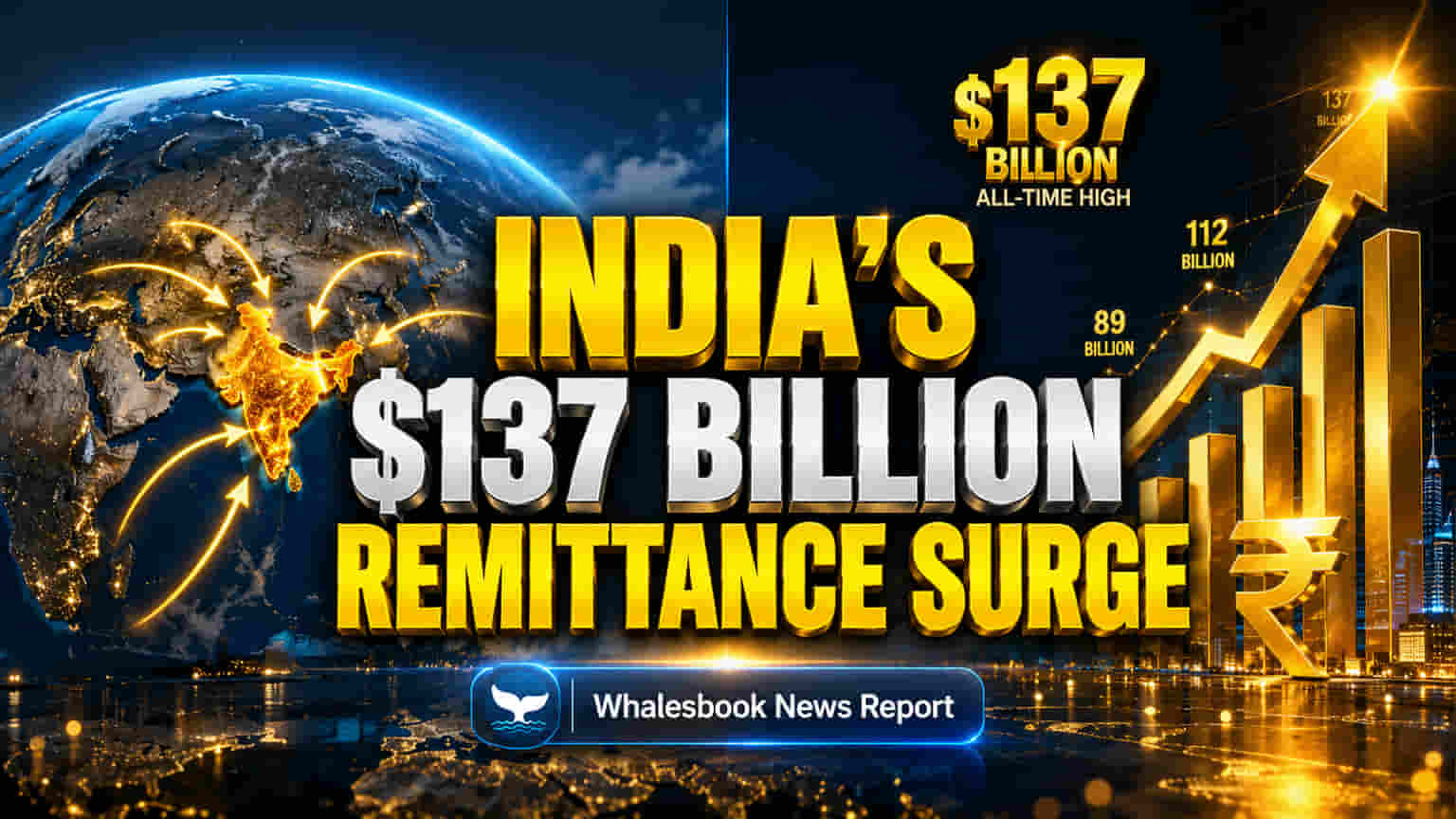


Record Inflows Strengthen India's Economy
The record $137 billion in remittances flowing into India in 2024 is more than just money. It's a vital financial support that helps balance the country's economy, drives growth, and boosts sectors like technology. Changes in where these funds come from, along with smart policies, show India effectively using its global community.
A Vital Economic Stabilizer
India received $137.67 billion in remittances in 2024, making up 3.5% of its GDP. This inflow is crucial for India's finances, more than double the $64.7 billion received by Mexico, the second-largest recipient. These funds now cover about 40-45% of India's trade deficit, providing essential stability. In fiscal year 2023-24, the current account deficit shrank to 0.7% of GDP, partly thanks to an 11.9% jump in private transfers (mostly remittances). The deficit is expected to stay around 1.1-1.2% of GDP for FY2026, showing how much these inflows help.
Diversifying Sources Boost Resilience
Remittance sources are diversifying. Historically, Gulf Cooperation Council (GCC) countries were the main origin, but their share dropped from 47% (2016-17) to about 38% (2023-24). Meanwhile, funds from advanced economies now make up around 42% of inflows, up from 30%. The U.S. alone sends 27.7%. This shift to more stable sources, less tied to oil prices, makes India's remittance flow more robust against regional instability or price swings.
Harnessing Diaspora Talent
Beyond money, the Indian diaspora is key to the growth of the nation's technology sector. India is actively working to bring back skilled professionals and entrepreneurs through global conventions and innovation centers. This 'brain gain' strategy encourages them to mentor startups and invest in India. The goal is to turn 'brain drain' into a strength, bringing knowledge and expertise back for national progress.
Rupee, Fintech, and Forex
The Indian Rupee has weakened, trading around 83.679 against the U.S. Dollar in 2024, with expectations of further decline. This is partly due to global interest rate hikes by the US, which can pull investment from emerging markets. However, strong remittance inflows and India's own economic growth help offset these pressures. Digital and fintech firms are making these money transfers more efficient and transparent. Companies like BookMyForex, Fable Fintech, and EbixCash are key players, alongside giants such as Paytm and PhonePe. A potential 1% US remittance tax is expected to have only a small effect on India's total inflows.
Potential Risks to Remittances
Risks remain despite positive trends. A global economic slowdown might reduce job opportunities for Indian workers abroad, lowering remittance amounts. Oil price swings still affect money sent from GCC countries, which depend on oil income. Higher U.S. interest rates could also lead to more money leaving India, weakening the Rupee and widening the trade deficit, though India's central bank actions and strong domestic growth may help. While diversified sources reduce overall risk, Middle East conflicts could still disrupt flows for workers in affected areas.
Future Prospects
Worldwide, remittances to low- and middle-income nations are expected to rise, with India likely to remain the top recipient. Continued growth and diversification of these funds are set to support India's finances and economic stability, reinforcing its status as a rapidly growing major economy.