 Whalesbook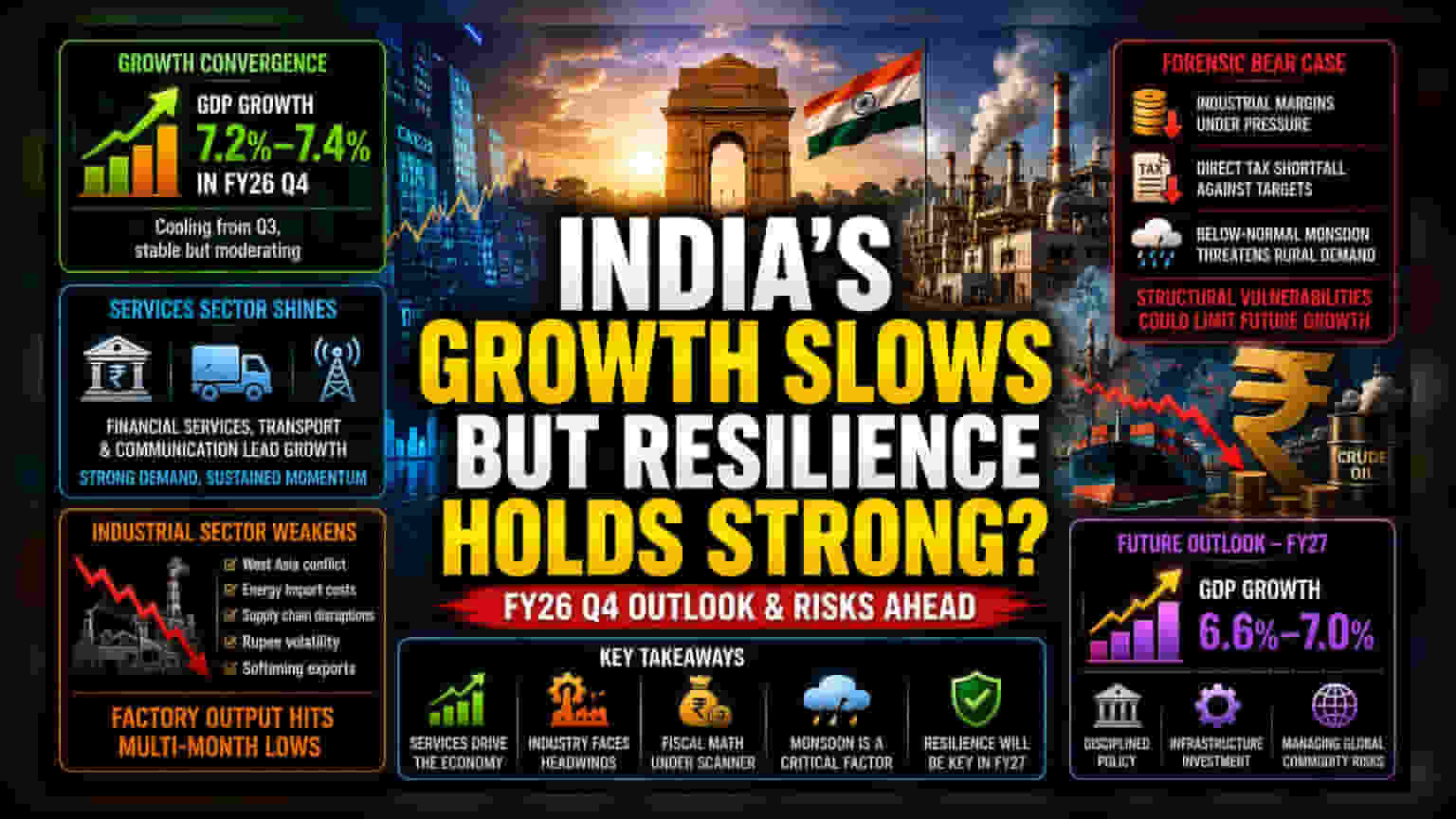


The Growth Convergence
As the fiscal year 2026 concludes, the Indian economy is navigating a transition from high-velocity expansion to a more measured growth phase. Projections for the fourth quarter indicate a slight cooling in real GDP, with consensus estimates hovering between 7.2% and 7.4%. This shift follows a robust third quarter and reflects an increasingly complex environment where internal service-sector strength competes with external industrial headwinds. The anticipated divergence between Gross Value Added and final GDP figures remains a focal point for analysts, primarily driven by volatility in net indirect tax collections and elevated subsidy outlays throughout the quarter.
Sectoral Divergence and External Pressures
The services sector continues to serve as the economy's primary engine, bolstered by broad-based demand in financial services, transport, and communication. High-frequency indicators throughout the final quarter have pointed to sustained momentum in these areas. Conversely, the industrial sector has faced a notable deceleration. This slowdown is largely tied to a confluence of factors: the West Asia conflict has intensified energy-import costs, while supply chain disruptions and a volatile currency environment have placed substantial pressure on manufacturing margins. Consequently, factory output has trended toward multi-month lows, reflecting a cautious stance among producers who are grappling with higher input expenses and softening export demand.
The Forensic Bear Case
A more cynical view of the current data highlights structural vulnerabilities that could impede future growth. While the headline figures suggest stability, the underlying composition reveals potential stress points. The industrial sector’s struggle to maintain production volumes in the face of imported inflation suggests that the economy’s reliance on capital expenditure may be tested if profit margins continue to compress. Furthermore, while tax compliance has improved, the recent shortfall against revised direct tax targets raises questions regarding the sustainability of current fiscal math. The risk profile is further complicated by the prospect of a below-normal monsoon, which could dampen rural demand—a key pillar that has historically provided a floor for economic activity when urban consumption fluctuates.
The Future Outlook
Looking toward fiscal 2027, the central bank and independent analysts have calibrated their expectations to a more moderate trajectory, with growth projections typically ranging from 6.6% to 7.0%. The economic narrative is shifting from pure acceleration to one of resilience, emphasizing the need for disciplined policy calibration. Future performance will likely depend on the government’s ability to manage the delicate balance between sustaining large-scale infrastructure investment and addressing the persistent inflationary risks stemming from volatile global commodity markets.